Sometimes a photobook can go straight to your dreams.
I remember countless hours as a child, building model cars, model airplanes, and model boats. There was something about the intimacy and a desire for accuracy that was appealing. Little bits of glue, usually stuck to my hands, and little bits of paint, usually not where they were supposed to be, helped create something intangible I could nonetheless hold in my hands.
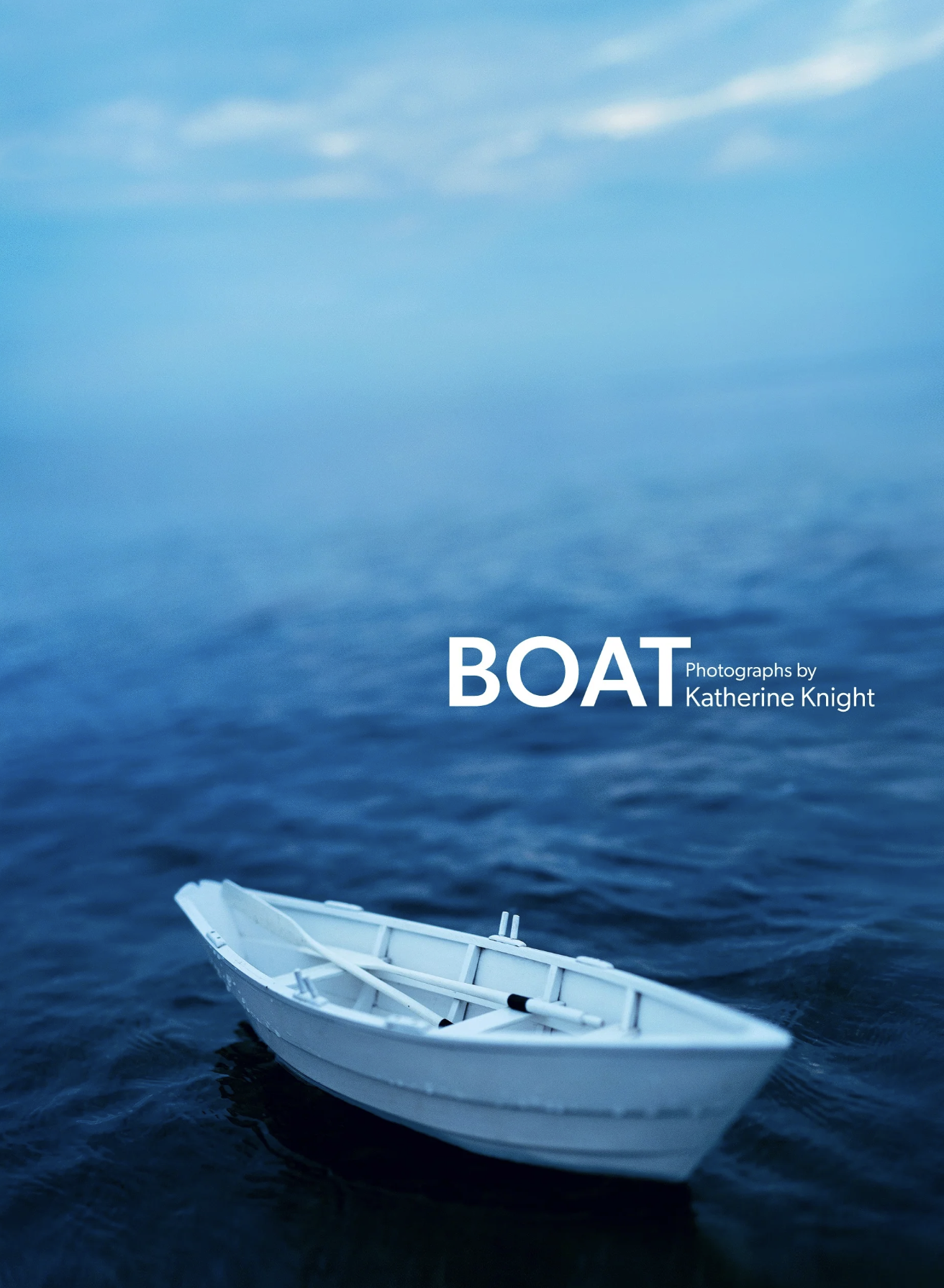
Katherine Knight – “Boat”
Published by Goose Lane Editions in 2025
Review by W. Scott Olsen
Images and excerpts from BOAT copyright © 2025 by Katherine Knight. Reprinted by permission of Goose Lane Editions. For more information, please visit www.gooselane.com.
I am a long way from alone here. While model building may not be as popular today as it was when I was young, model building is centuries old. Professionals build them to test a design. The rest of us build not so much a replica of an object as the replica of a dream.
Models have always intrigued us. There is something about the object made into art that holds a profound kind of double meaning. There is the beauty of the made object—the object itself—and then there is the beauty of the thing and the dream it represents.
Models are, by definition, symbolic. But not only that. When I made a model of the Saturn V rocket as a child, or a Shelby Mustang, or the Cutty Sark, even then, I was not deluding myself that I would become an astronaut, a racecar driver, or a sailor. But oh, what dreams I had of exploration and speed and adventure. To spend time in a small room, assembling details nobody else would ever see, was a way for me to join a story, a story that spoke directly to my soul. Even today, when I see or hold a model, it has the power to speak directly to my nostalgia, to my historic sense of self, and oftentimes to dreams I still hang on to.
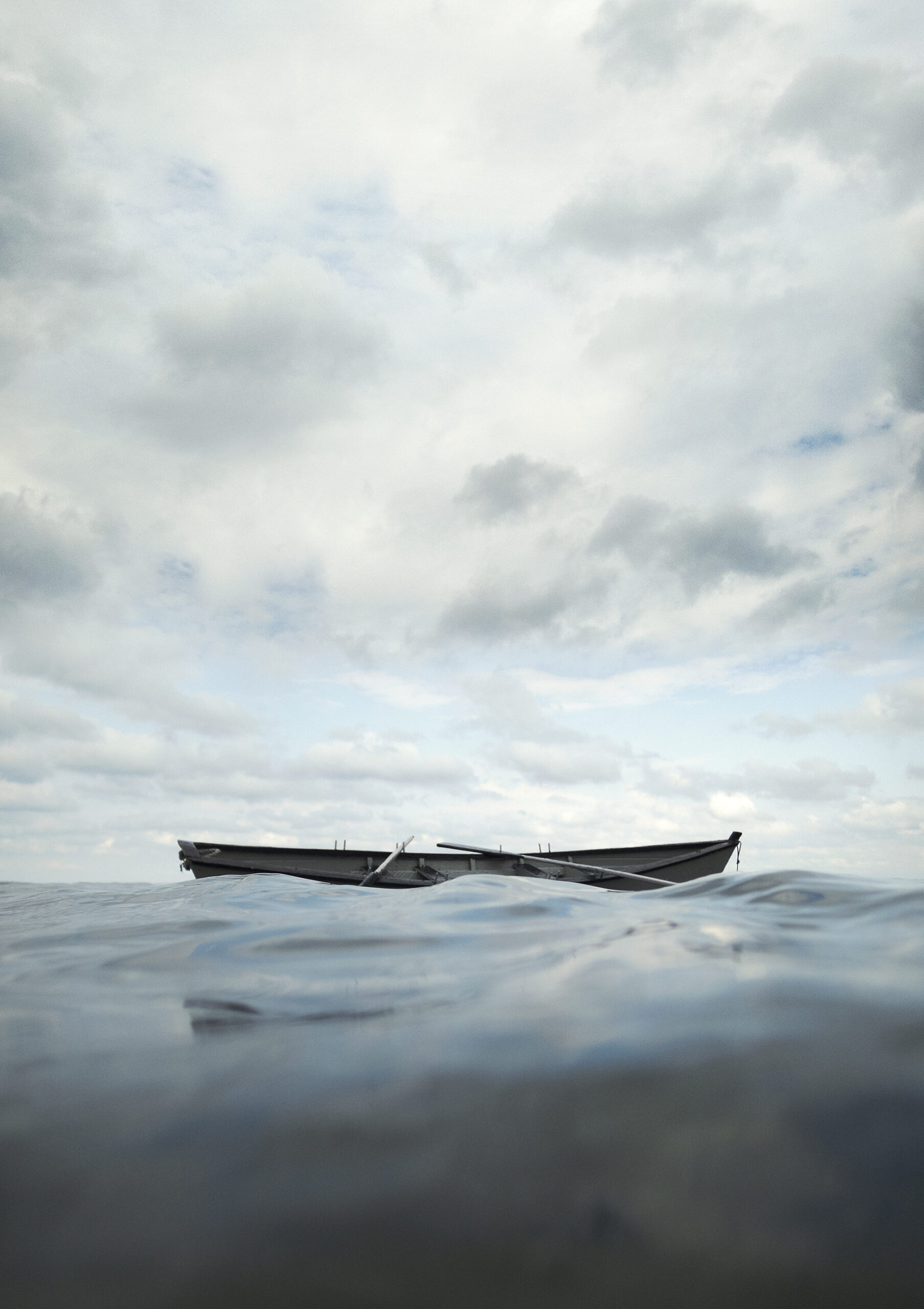
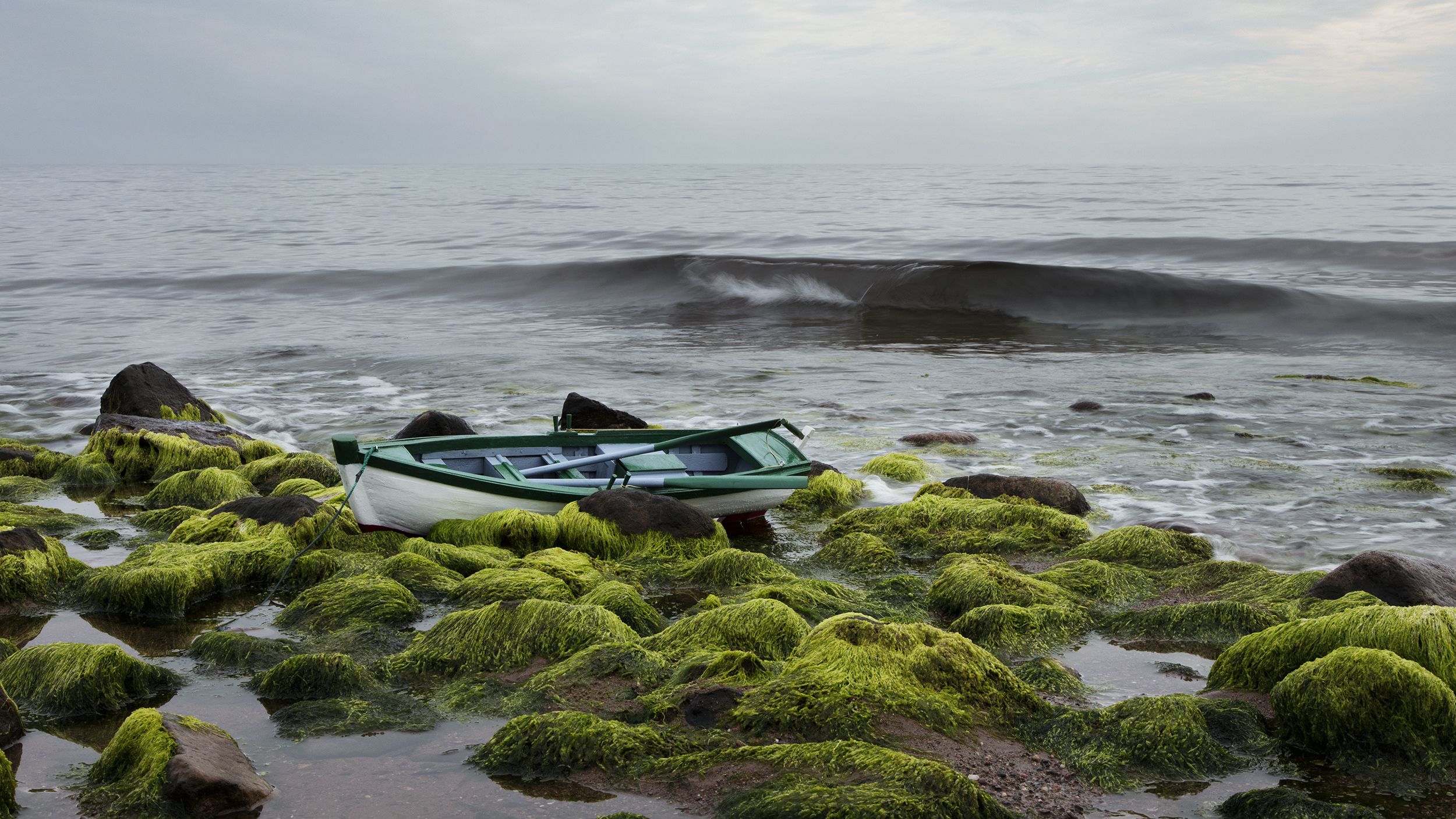
Boat, a collection of photographs by Katherine Knight, is an extraordinary book. The book is a collection of photographs of model boats: punts, dories, three-masted schooners, lobster boats, ocean liners, lake freighters, longliners, passenger boats, a whole gamut of boats and ships. Some of the images are in a studio or a museum, but most have placed the model in water. The result is that the models of boats and ships photographed here become a kind of porthole to a dream. If a symbol, metaphor, or representation can be in situ, here it is. Poignantly.
The book includes a number of short essays that are, in turn, beautiful or horrifying, romantic and gritty. In her own introduction, called “Out of the Museum into the Wild,” Knight writes—
“Boat” connects handmade models to stories and geographies: memory makers linking Atlantic people and places. Crafted by fishermen in their leisure time or fabricated to plan and commemorate ships—new, old, and remembered—models are the material residue of historical patterns of leisure and labor…
Like the models themselves, “Boat” lays anchor in its maritime home, reanimating the experiences, imaginings, and remembrances both of creators and those that love this craft.
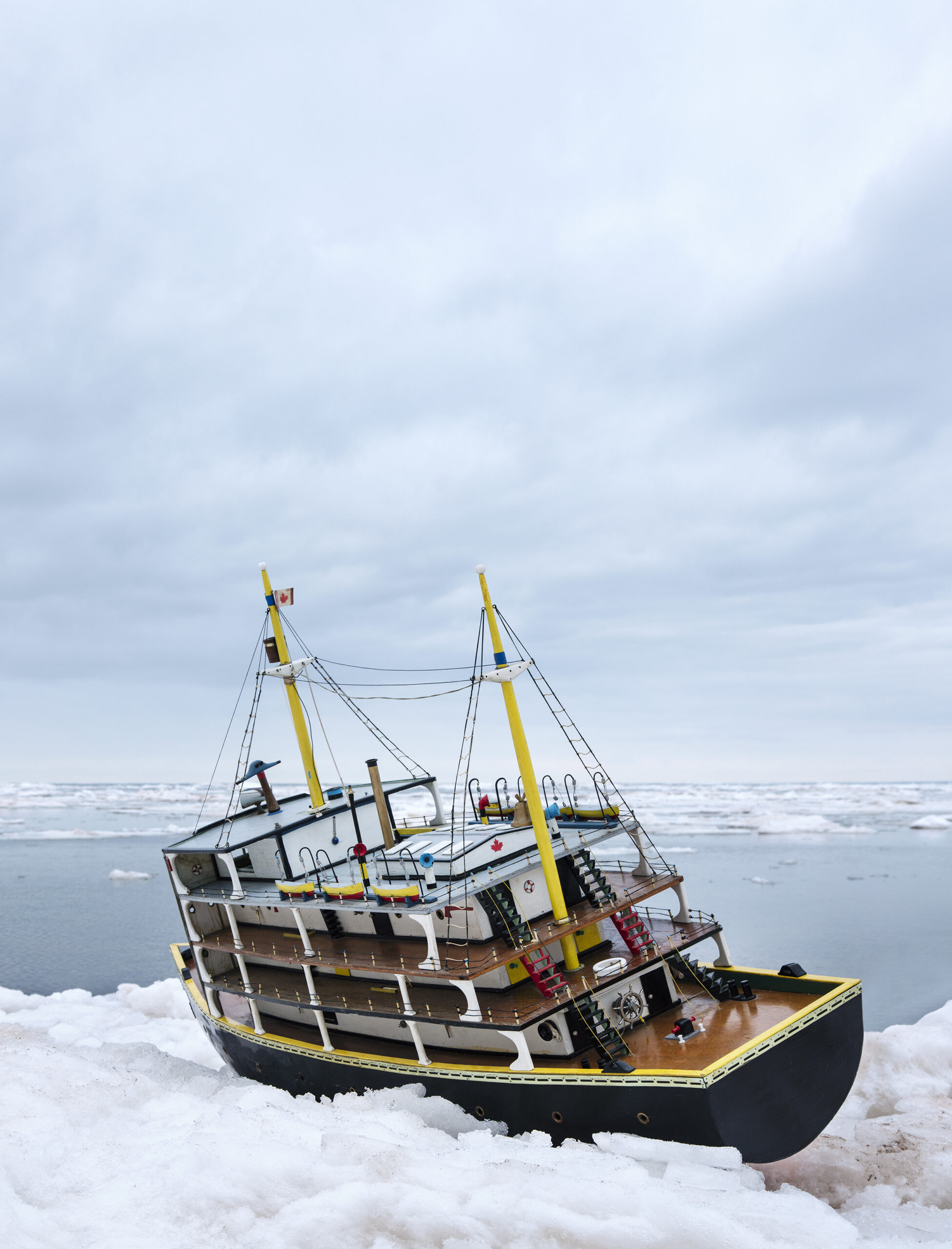
In many of the images, the model boat is placed in a setting as if it were truly afloat, ready and able to carry passengers or freight. It’s a kind of verisimilitude which has the extraordinary effect of enhancing the dreamlike quality. Not only is there a model, a representation, but the model is at sea. What we get is not only the ship itself, but the dream made real.
In an essay called “Listen for What Swims,” poet and educator Sue Goyette writes—
I’m interested in the species of devotion that calls us to make things. Whatever it is that gets our attention and keeps it. The things we make, not for money and not necessarily for the outcome but more for the quality of time we inhabit when possessed by and pursuing that frisson of passion that’s hanging on to something just beyond legible. The sacred allure of the unsayable, the yet unnamed that is the sap of our humanity for how it recharges pollinates us. And the thing we end up making, like all things holds our fallibility, our coming-close-but-not-quite-getting-it, which is its glory…
A model can be considered both an object (a boat) and a site that holds a recharge of our best selves in the company of the wild expanse of water, land and sky that holds the memory intact. In this way, the transformative aspect of making is activated and reciprocal.
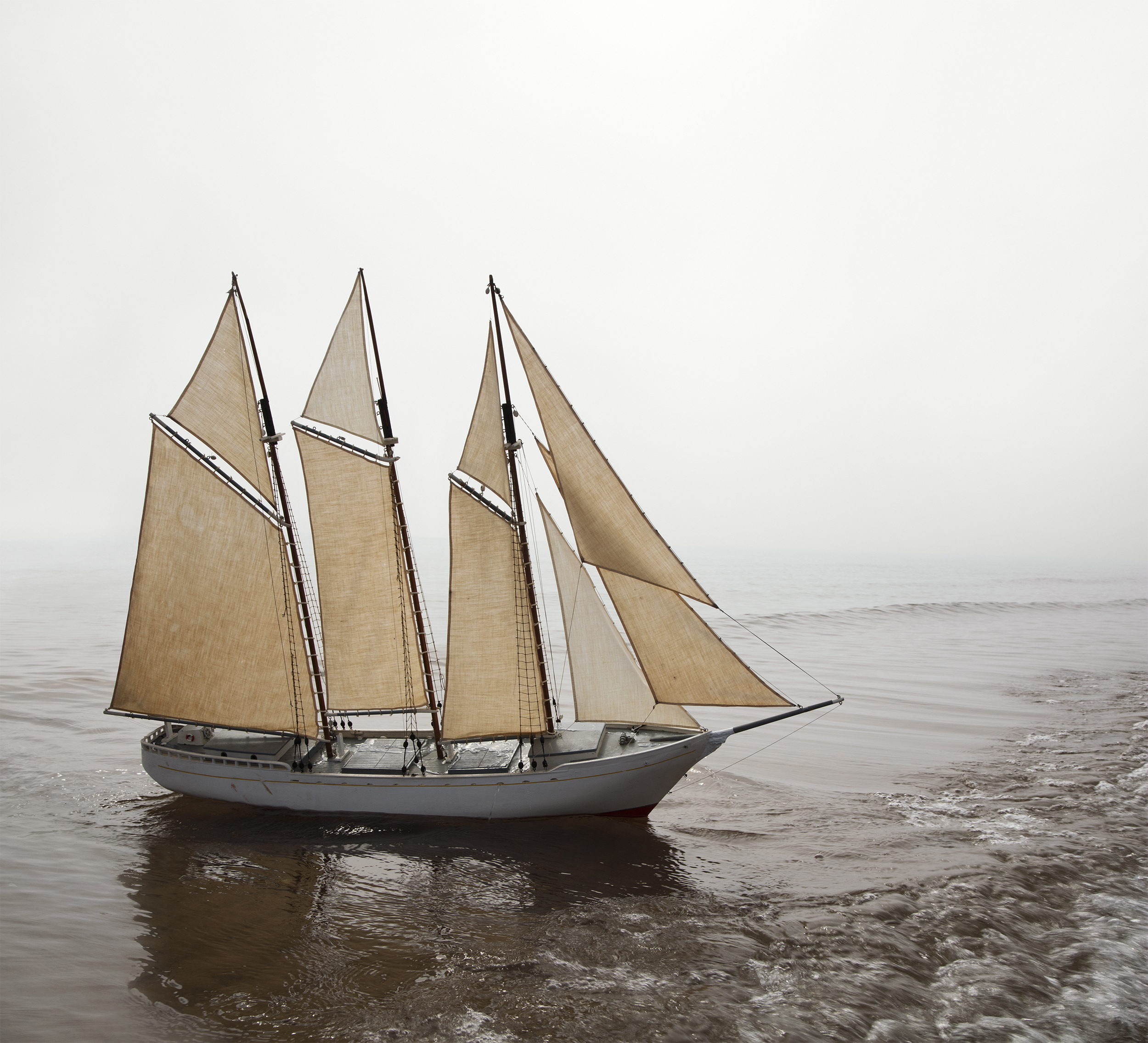
One of the curious and wonderful things about Boat is that the authors of the brief essays (there are eleven) are often model makers and frequently sailors. The models represent not only their dreams, but their experience. Their experience and gravitas enhance the dreamlike quality embedded in looking at the images.
For example, Watson Knickle wrote a brief piece called “Fishing was Supposed to be my Life,” in which he writes—
I made a model of the boat I was shipwrecked on. I don’t know if I’m proud of it, because it was a terrible experience, but I was happy when I had that finished with the bunks inside, a table and everything. Even though you can’t see it, I know it’s there.
Knickle goes on to describe his experience being shipwrecked and rescued, which reads as harrowingly as any seaborne drama.
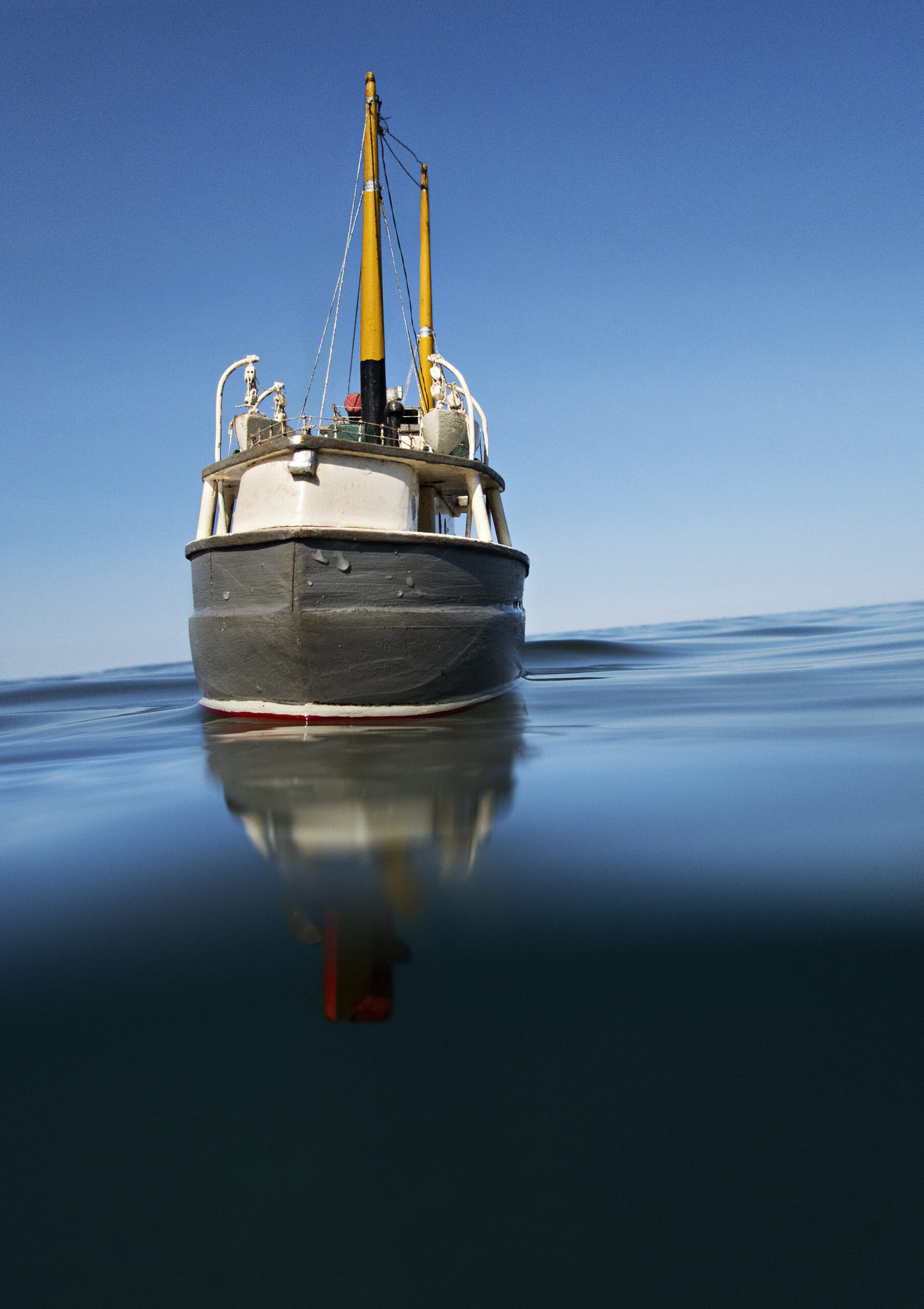
What is really extraordinary about this book is how, turning to any page—for example, a punt built by Clayton Dominey, or a sloop and hull built by William Francis Durant—how clearly and quickly imagination takes over. The same way I would hold a model car, or the Saturn V, or the Cutty Sark, and imagine not so much myself on the decks, but myself in that way of breathing, the pages of this book transport me into a quality of air I treasure.
Many of the models photographed in this book have unknown makers. All of them show a sense of love and devotion. The images themselves, as images, are excellent, with tremendous framing and color. This is a kind of portraiture at its very best, both studio and environmental, but for me, the model boat placed in its environment was an unexpected tether to not only the experience of my youth, but the dreams of my youth.
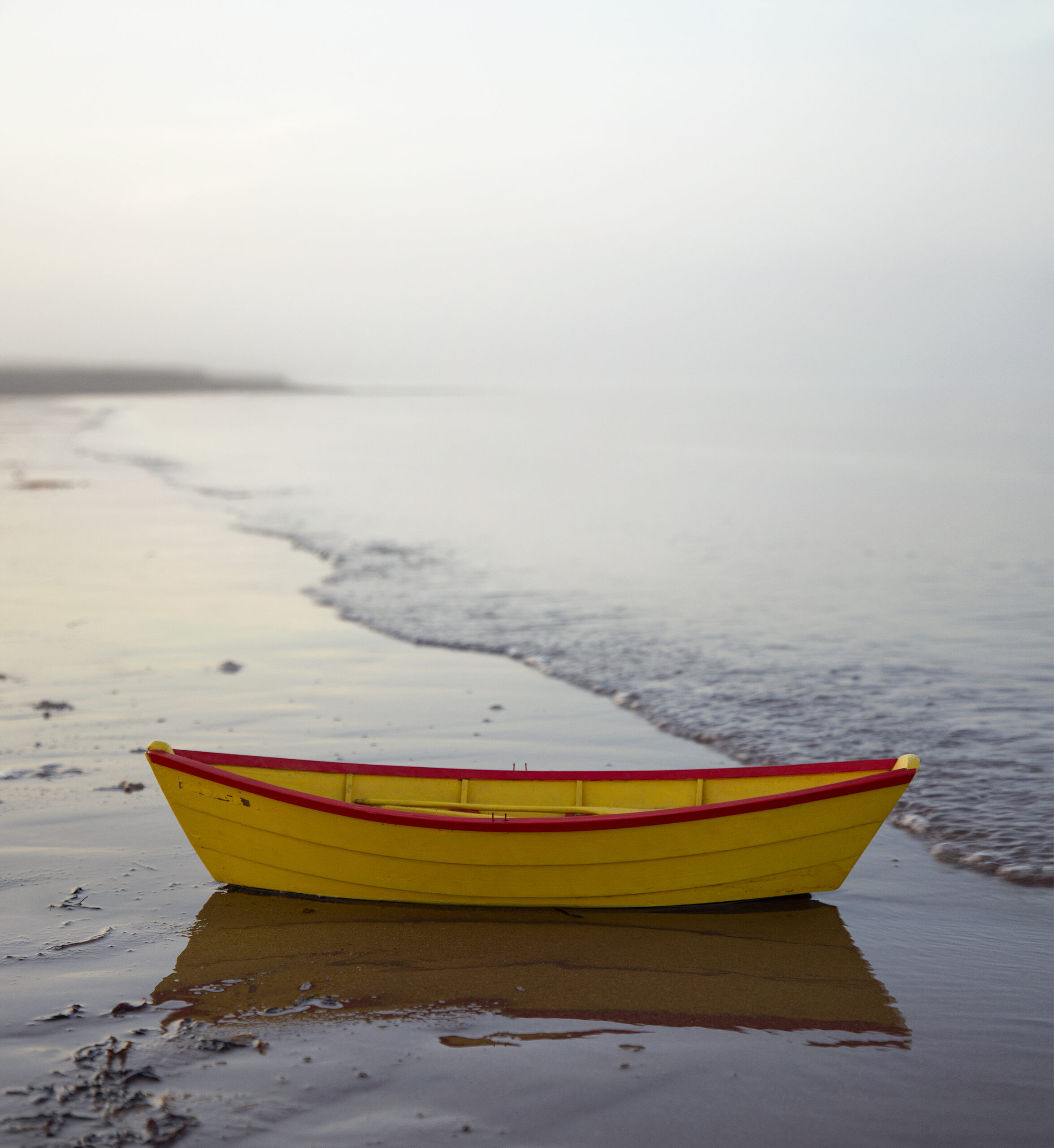
Perhaps very much the same way a photograph may capture a moment in 1/250 of a second, the model captures something huge in micro form and exquisite detail. Boat manages to capture the model and evoke the dream.
Boat is a surprising, elegant, and personally evocative collection.
A note from FRAMES: Please let us know if you have an upcoming or recently published photography book.

FRAMES is a unique international photography community that combines the best of all worlds, bringing you print and digital publications, a global membership platform, access to live events, and a dedicated mobile application.
EXPAND YOUR PHOTOGRAPHIC VISION
JOIN FRAMES TODAY