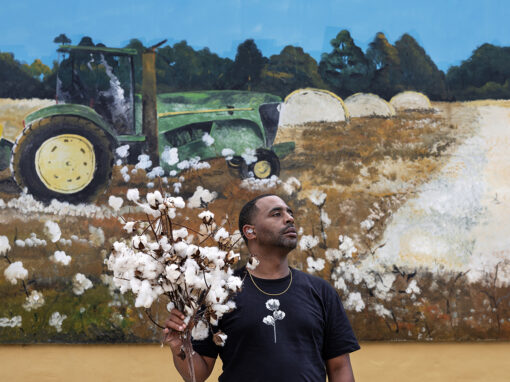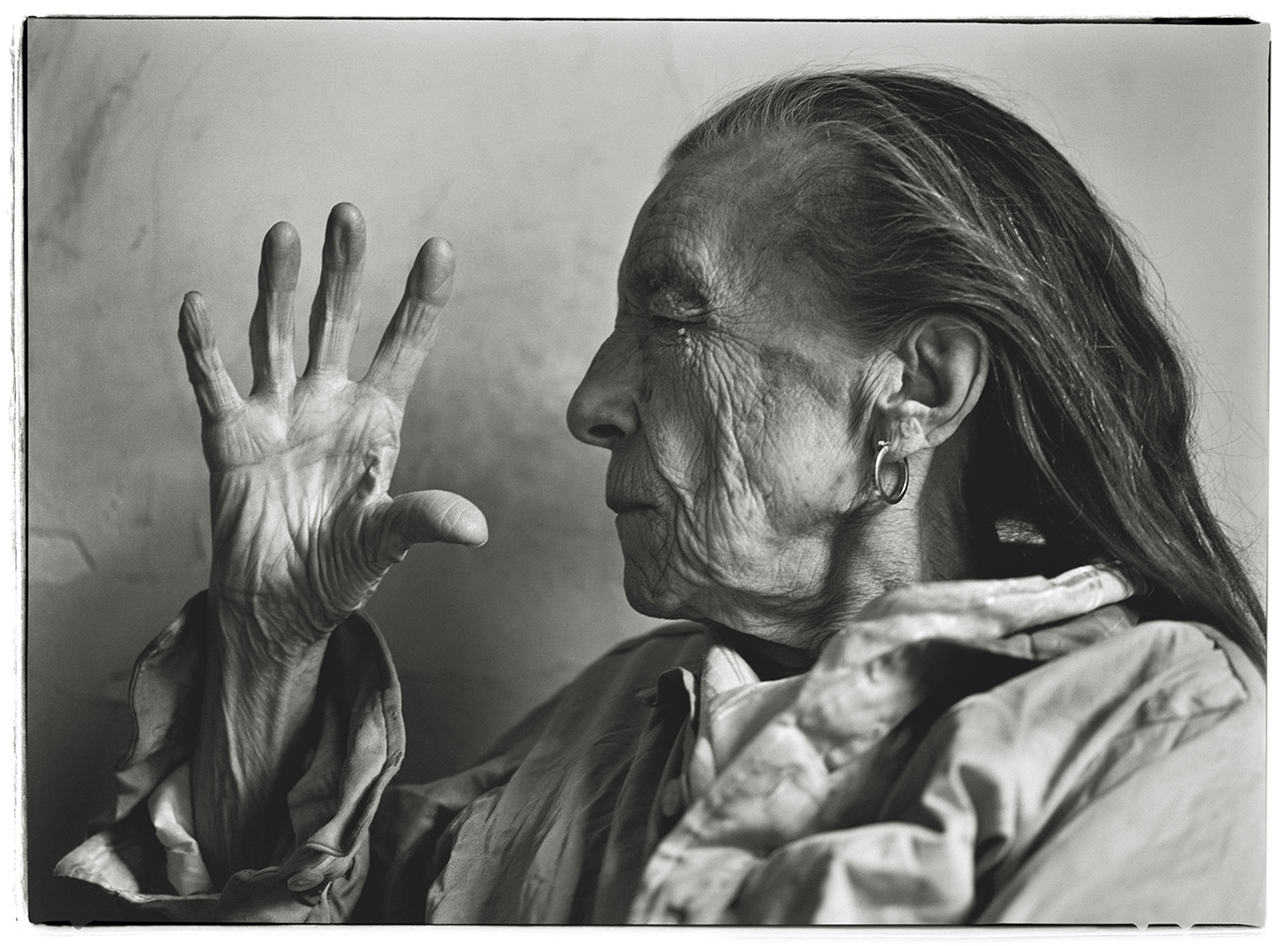
Every now and then, when I am sent a photobook to review, I am struck by the desire to write something entirely different. A love sonnet, perhaps. Or maybe a dissertation.
When this happens, it’s usually because the photographer has already joined the immortals. There are already reams of scholarly and popular articles, truckloads of tomes extolling the talent and virtue of the work. What can I say in the brief space of a review that will open some new insight?
Annie Leibovitz – “Women”
Published by Phaidon, 2025
Review by W. Scott Olsen

Annie Leibovitz is one of those photographers whose work has become foundational to the art form. Ever since the 1970s, she has been defining, and re-defining, the technical possibilities, the aesthetics, the politics, the challenges, and the voice of photographic portraiture. Her 1999 book Women was a celebration of women’s identities and the wide-ranging scope of not only what was possible, but what was already evident. With portraits, both in-studio and in the field, of everyone from athletes, to writers, to politicians, to coal miners, cheerleaders, victims of domestic violence, and scientists, ranging from Eileen Collins, space shuttle commander, to Lil’ Kim, rap artist, to Shen Chu, sewing machine operator, to Ruth Bader Ginsburg and Sandra Day O’Connor, Supreme Court Justices, the book is on every page an articulation of identity that goes way beyond documentation. Whether it’s the lighting or the set design, the wardrobe or a sense of nearly kinetic energy, every image is an original answer to the ongoing question of what it means to be a woman.
Of course, the 1999 edition of Women began with a famous introduction by Susan Sontag, titled “A Photograph is not an opinion. Or is it?” Sontag’s unpacking of photography, of photography of women, is necessary reading for anyone trying to understand the power and responsibilities of image-making. Reading that introduction again, in 2025, I am struck anew by a paragraph near the end. Sontag writes—
Photography is in the service of the postjudgmental ethos gaining ascendancy in societies whose norms are drawn from the practices of consumerism. The camera shows us many worlds, and the point is that all the images are valid. A woman may be a cop or a beauty queen or an architect or a housewife or a physicist. Diversity is an end in itself–much celebrated in today’s America. There is the very American, very modern faith in the possibility of continuous self-transformation. A life, after all, is commonly referred to as a lifestyle. Styles change. This celebration of variety, of individuality, of individuality as style, saps the authority of gender stereotypes, and has become an inexorable counterforce to the bigotry that still denies women more than token access to many occupations and experiences.
It’s been twenty-five years, and this afternoon, I am not so sure about the American faith in diversity and transformation.
However, now we have this new, wonderful, two-book box set of evidence that women’s voices remain varied and strong. In this new edition, the 1999 edition of Women is reproduced alongside an equally sized separate volume of new work with the same, shared title. In the new volume, there is an introduction by Gloria Steinem titled: “Women, Twenty-Five Years Later: Beyond Categories,” in which she writes—
Looking at Annie’s book “Women” from twenty-five years ago, I see women represented in all of their diversities. Many project strength in those images, but it didn’t mean that came to them naturally. Her subjects didn’t always have easy or comfortable lives, but they did share a common theme of using even their weakest moments to turn their lives around. Those brave bold women were still exceptions in our society and Annie’s attention legitimized them…
The images show women negotiating with the world that didn’t quite value femaleness. As Susan Sontag said in her important introduction to Annie’s book, “A man can always be seen. Women are looked at… “
The women portrayed in this new edition of “Women” are a proud reflection of that feminist rebellion, self-respect, visibility and humanity. I’m happy to see that women now are likely to value our own minds and hearts, and to have faith in the importance of our own making. Most of these women have succeeded beyond their own imaginations and are filling out a historical documentation that hasn’t been equal. Many of these women are succeeding at the highest levels and in doing so have made it possible for every woman to raise our expectations.
While these photos focus on unique individuals, each image invokes multiple questions about its subject. The goal isn’t solely to appreciate an image but to respond to the emotion it excites. We expand our consciousness by taking in the reality of others.
There is a second introduction to this second volume of Women, written by Chimamanda Ngozi Adichie, titled: “What is she really like?” and within that introduction, there is this striking paragraph—
Any book of photographs of women, simply by existing, has taken a political position about the value of women’s stories. It signals a double perception of what the world is and what it ought to be. But the point, if we may crassly call it that, being made in this collection of photographs is more imaginative than rhetorical. Because the images are so strikingly attentive to aesthetic and to pleasure, what I see is not so much an absence of rhetoric as an intrinsic lack of indebtedness to the very idea of rhetoric. There is freedom here…
The new edition of Women carries every bit of power of the first edition into the future, or what is our present. The images, black and white and color, in studio and out, display every bit of the insight and revelation we celebrate in Leibovitz’s work. There are a handful of images that do not contain people, such as a rattlesnake skeleton from Georgia O’Keeffe’s living room, some construction at the Frick Museum in New York City, a scene from Martha Graham’s warehouse in New York, but even these images get at the heart and soul of the women behind them. There are celebrities such as Oprah Winfrey, Taylor Swift, Martha Stewart, Jane Goodall, Queen Elizabeth, as well as a whole host of people whose lives occupy quieter areas of success and power. There are journalists, activists, soldiers, other photographers such as Lynsey Addario and Sally Mann, writers such as Joan Didion and Maya Angelou, botanist Robin Wall Immerer, and politicians like Hillary Clinton and Stacey Abrams.
People who view this book will see and react to the images and stories of remarkable women. That’s the whole point. But it’s worth pointing out that the very best art renders itself nearly invisible. The technique, the mechanics, the work of the art no longer call attention to itself, and so we are free to react to the subject alone. But photographic portraiture—especially portraiture—is a made-object. There is nothing spur-of-the-moment about it. Every element, from lighting (natural or studio), to set choice, to wardrobe, to pose, to framing and composition, is a considered decision. Yes, those decisions can be made quickly if need be. But they are still choices made with a goal of creating a compelling, provocative, evocative story. For example, there are very few smiles in these books. A few moments of laughter. But the women do not look unhappy, either. They look thoughtful. I do not know what conversations Leibovitz may have with her subjects, but I’m sure facial expression is one of them. And every woman in these books has an idea I would love to learn.
For me at least, it is impossible to look at any page in either volume and not be impressed and inspired by both the women whose images those pages reveal and the deep talent in Leibovitz’s approach to portrait photography. There is love and respect and empathy and an edge to every shot.
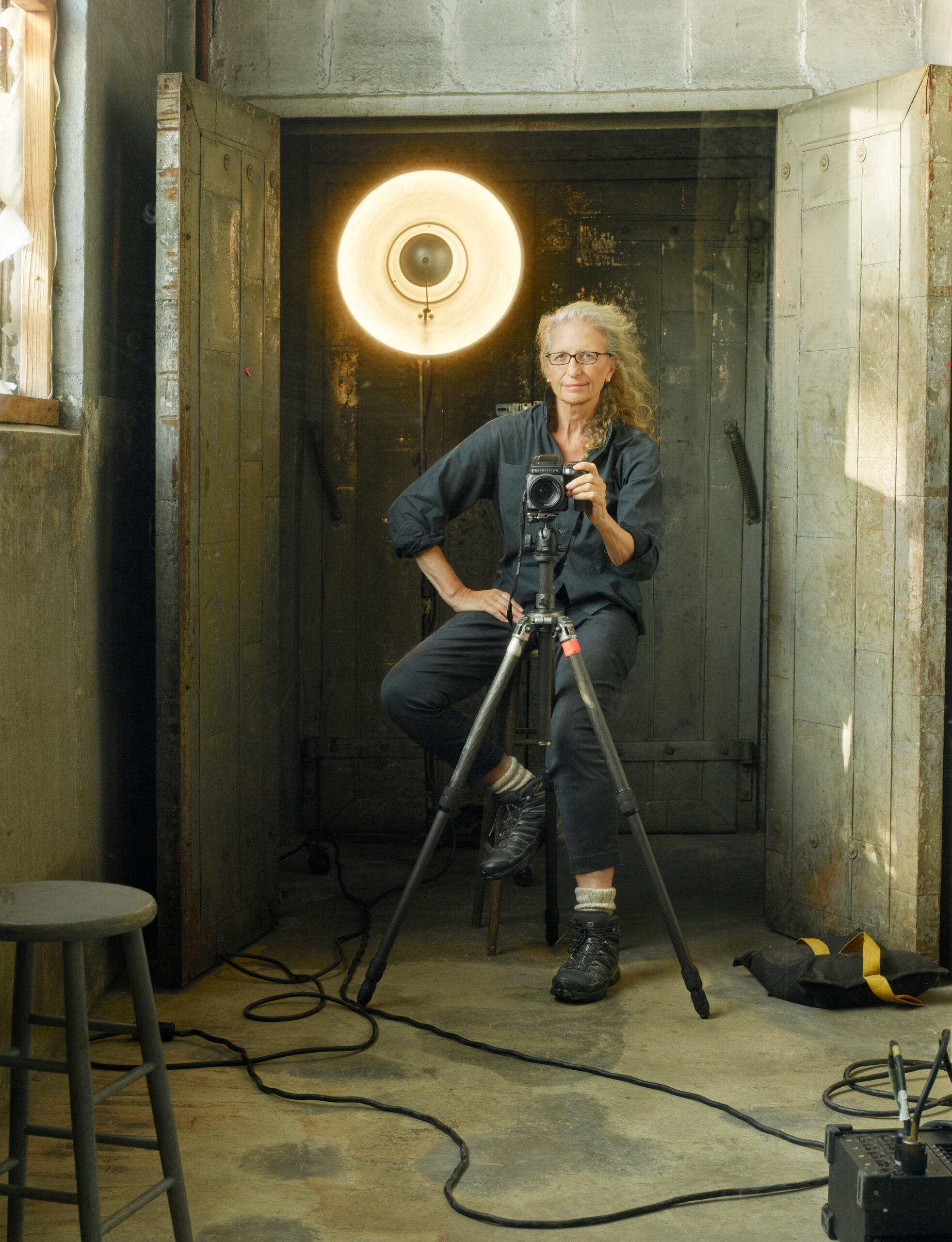
© Annie Leibovitz
A note from FRAMES: Please let us know if you have an upcoming or recently published photography book.

FRAMES is a unique international photography community that combines the best of all worlds, bringing you print and digital publications, a global membership platform, access to live events, and a dedicated mobile application.
EXPAND YOUR PHOTOGRAPHIC VISION
JOIN FRAMES TODAY