I will admit, my first reaction when I opened Anastasia Samoylova’s Atlantic Coast was “Oh my, we’ve been here before.” The road trip book. Lots of patina and kitsch. Weathered and decayed this and that. An ironic, nostalgic song that’s wearing thin.
And, I will quickly admit, my first reaction was wrong in every way possible.
“Atlantic Coast” by Anastasia Samoylova
Published by Aperture, 2025
Review by W. Scott Olsen
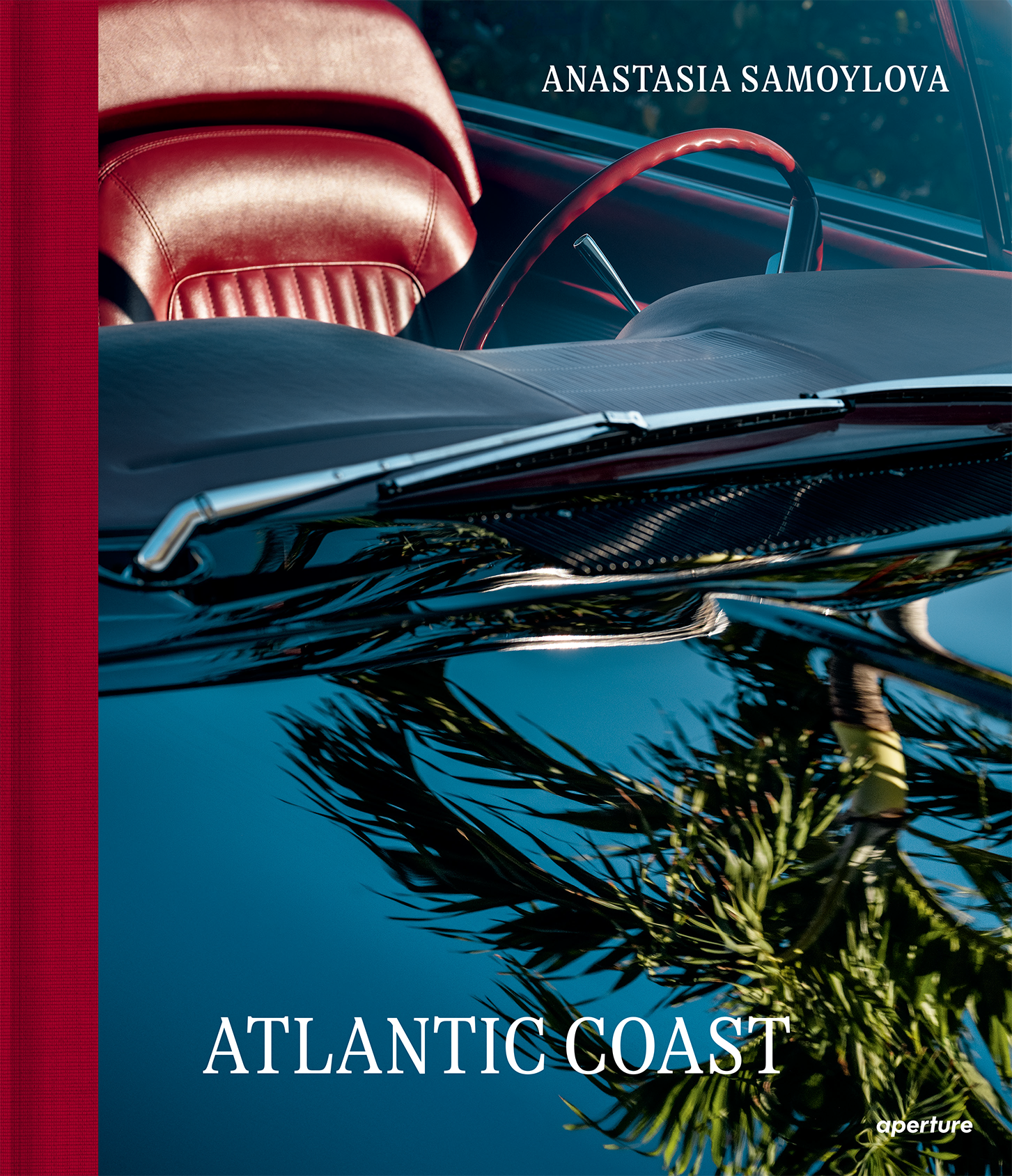
Atlantic Coast is a wonderful, intriguing, and rewarding journey. Yes, Atlantic Coast is a road trip book. And yes, at one level, it’s an homage. Samoylova drove US Route 1 from Florida to Maine to retrace the trip taken by photographer Bernice Abbott and a couple of companions in 1954.
According to the book’s press materials—
Inspired by Berenice Abbott’s 1954 photographs of the same route, Samoylova retraces Abbott’s path 70 years later, in reverse. Her richly layered images—shot in both color and black & white—capture the contemporary American landscape shaped by commerce, migration, climate change, and cultural myth.
A continuation of a visual lineage that includes Robert Frank’s “The Americans”, “Atlantic Coast” explores a country fractured by political nostalgia and environmental precarity.
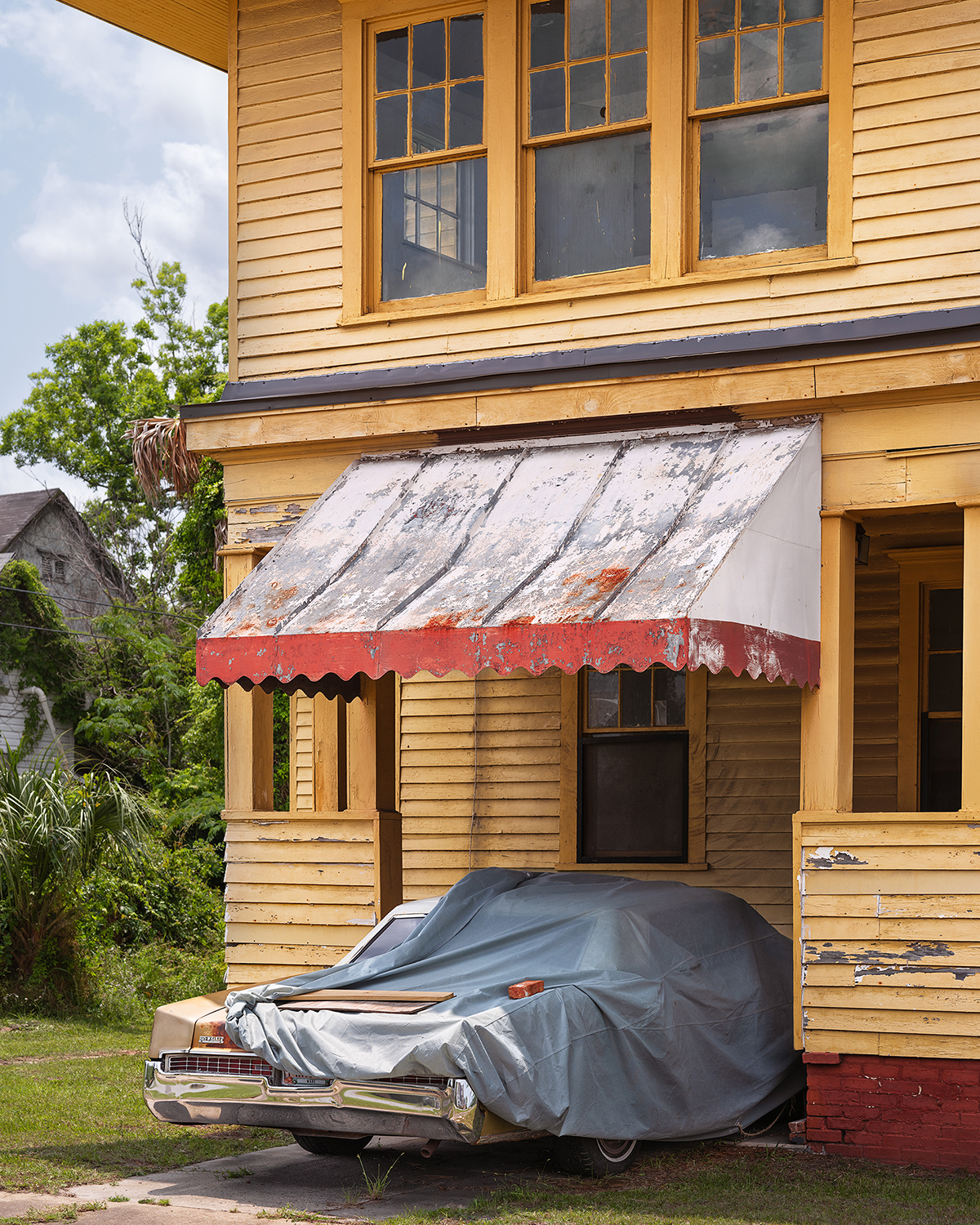
from Anastasia Samoylova: Atlantic Coast (Aperture, 2025). © 2025 Anastasia Samoylova
Back in the 50s, Abbott’s intention was clear. She wrote, “We wanted to capture visually the character of an historic section of the United States, its beauties and incongruities and all. If visible evidence of the past survived, we wanted to photograph it before bulldozers and derricks moved in.” The result was what many people consider her most interesting and most unknown work.
To revisit something someone else has already discovered always runs the risk of simple repetition, of the idea if not the images, and Atlantic Coast avoids this brilliantly. Samoylova was born in Russia, in Moscow, in 1984, and came to Miami in 2016. That’s a bit more than 30 years of developing one set of sensibilities and contexts and then having to learn another set. Personal history is always an interpretive lens we use to point the glass lens.
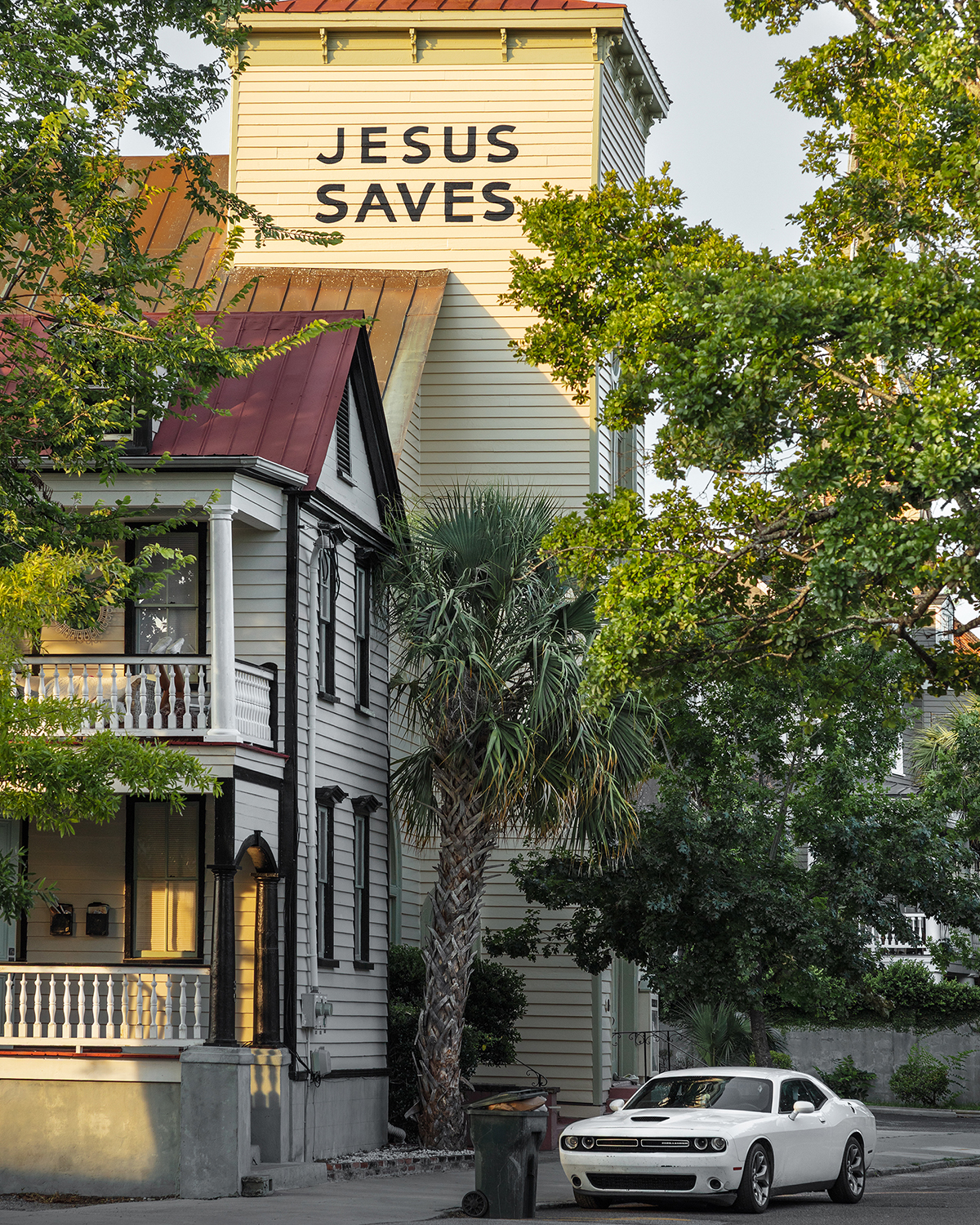
from Anastasia Samoylova: Atlantic Coast (Aperture, 2025). © 2025 Anastasia Samoylova
Along these lines, the book benefits from some wonderful introductory essays. The first, titled “America Past, Present, and Future,” by Aruna D’Souza, explains—
Like [Robert] Frank, Anastasia Samoylova has an immigrant’s view of the United States, one conditioned by a life outside it. But in 2023, when she began roughly retracing Abbott’s route from the tip of Florida, her adopted state, to Maine, her status as an “outsider” documenting aspects of American life was conditioned, too, by the photographic history of the American Road Trip…
This self-referentiality shows up in the way the past bumps up against the present in “Atlantic Coast”. It is a comment on the way this country has never truly reckoned with the original sins of its founding–slavery and genocide above all—so that the past appears, like the return of the repressed, in many of Samoylova’s images. But it is also an engagement with photography’s development over time…
Ruination is not simply the entropic erosion of the past but a condition of life in the present, according to the photographs in “Atlantic Coast”. Witness the collapse of Francis Scott Key Bridge in Baltimore…
But there is vividness too—reminders that life persists in the United States, that joy persists, that pleasure persists.
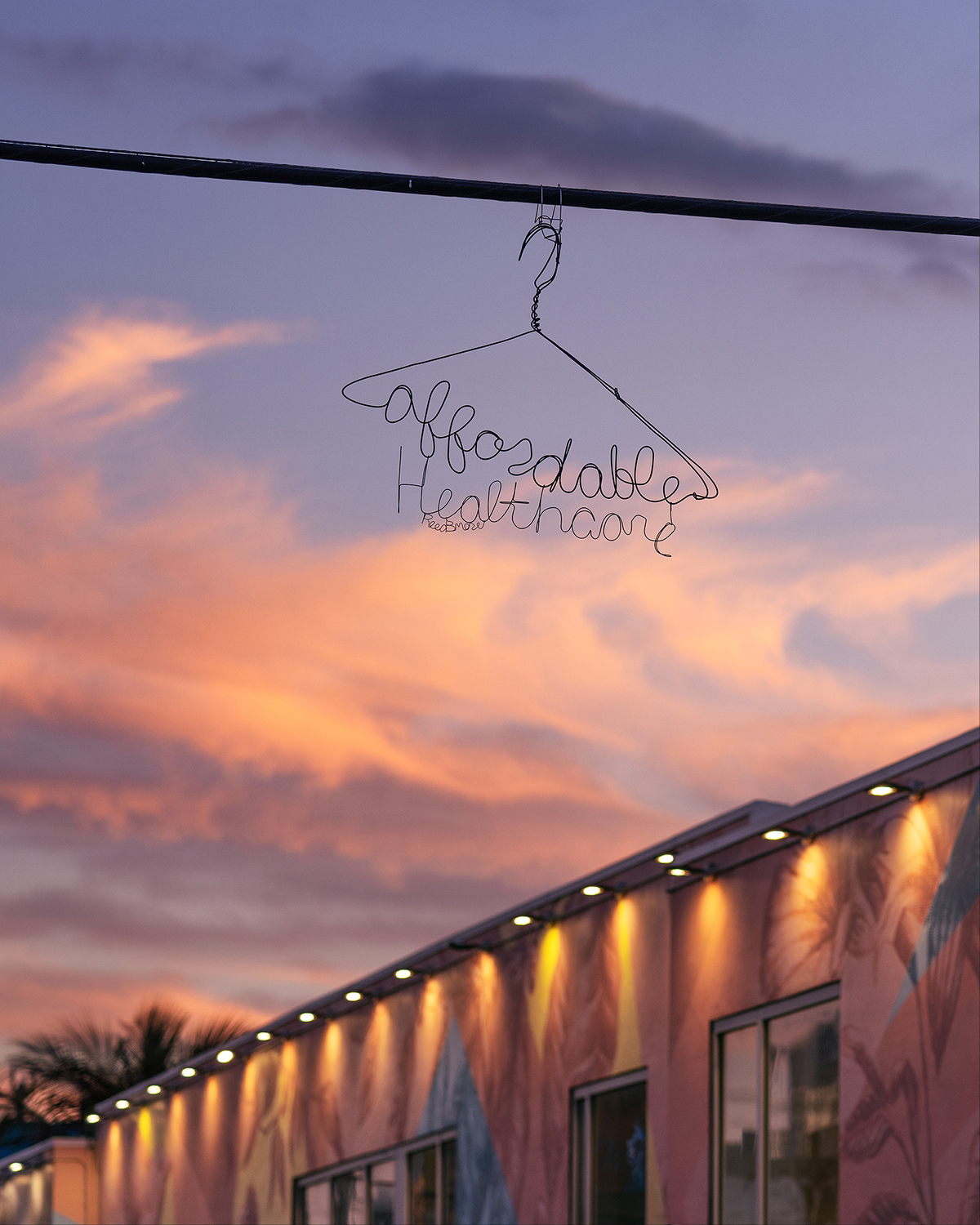
from Anastasia Samoylova: Atlantic Coast (Aperture, 2025). © 2025 Anastasia Samoylova
In another essay, titled “Nostalgia on the Elder Coast,” by Lauren Richman, we learn—
In this sense, considerations of construction and performance are vital to reading Samoylova’s photographs, because they do not tell a linear story, and that is not their purpose. As in her past projects. Samoylova excels in moments of fragmentation, artifice, doubling and layering. It is the inventive formal components of her pictures that move them beyond the otherwise documentary structure.
Samoylova’s images operate firmly within the tradition of road trip photography. There are gas stations, ghost signs, abandoned lots, and broken windows. There are the incongruous and ironic—something new pressed up against something old—but whether in color or in black and white, there is something in each of them which has that different flavor which makes this book extraordinary. Samoylova’s talent for light and color and framing within the composition allows the images to appear effortless and spontaneous while also having the depth of insight and emotional/intellectual focus.
As much as this book focuses on evidence of former vitality, it occurs to me that the genius of this book is that it is insistently contemporary. This is not a picture of what was. This is a picture of what it is. There is a presence in the images, even the black and white ones (which tend to be less time-bound), which says this book is news and not history.
Although there is an index in the back that explains where and when each image was taken and what the subject is, throughout the book, the images are offered without captions or commentary. They are, as the best photography always is, their own explanation. Every one is multi-layered, both in terms of composition and in terms of their proposition.
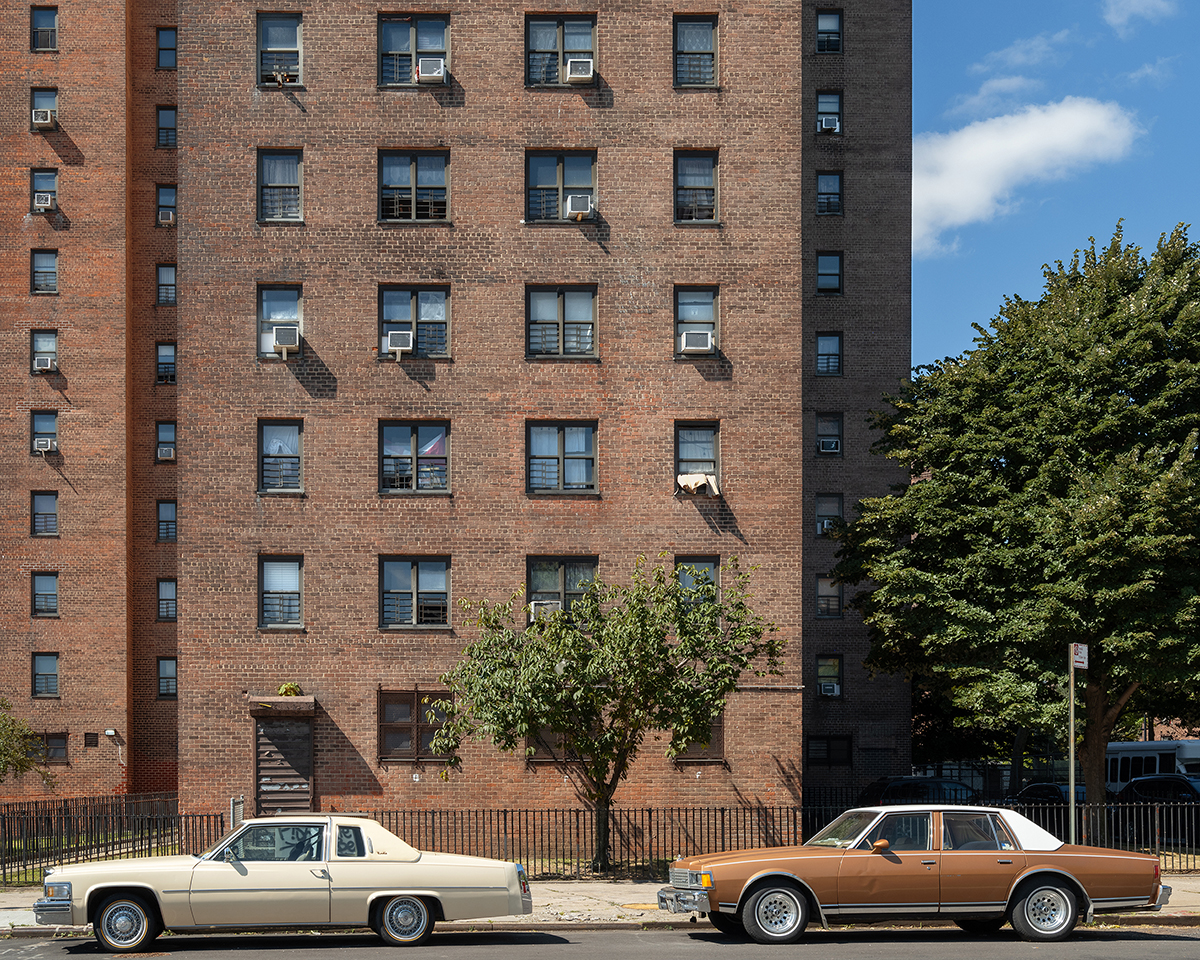
from Anastasia Samoylova: Atlantic Coast (Aperture, 2025). © 2025 Anastasia Samoylova
The images are neither celebrations nor indictments. While an image’s subject could be a pig in the back of a truck, or the ruins of a drive-through, just a neon sign, or the Francis Scott Key Bridge with the container ship still pressed against it and cranes trying to remove the disaster, they are, instead, examinations. Articulations.
A great many of the images are traditionally beautiful, both in terms of form, color, and content, yet none of them are simplistic. There are portraits and landscapes, for example, and every single one is curious.
It is an old idea that questions are more important than answers, and this book is one of the ones that proves that saying true. Atlantic Coast does not present an argument or an interpretation (at least not explicitly). What it provides is the state of what exists today in a region that was visited earlier. If you don’t know Abbott’s work, Atlantic Coast will still be rich, informative, and pleasing. If you do know Abbott’s work, this book takes on that extra layer of the extraordinary.
A note from FRAMES: Please let us know if you have an upcoming or recently published photography book.

FRAMES is a unique international photography community that combines the best of all worlds, bringing you print and digital publications, a global membership platform, access to live events, and a dedicated mobile application.
EXPAND YOUR PHOTOGRAPHIC VISION
JOIN FRAMES TODAY