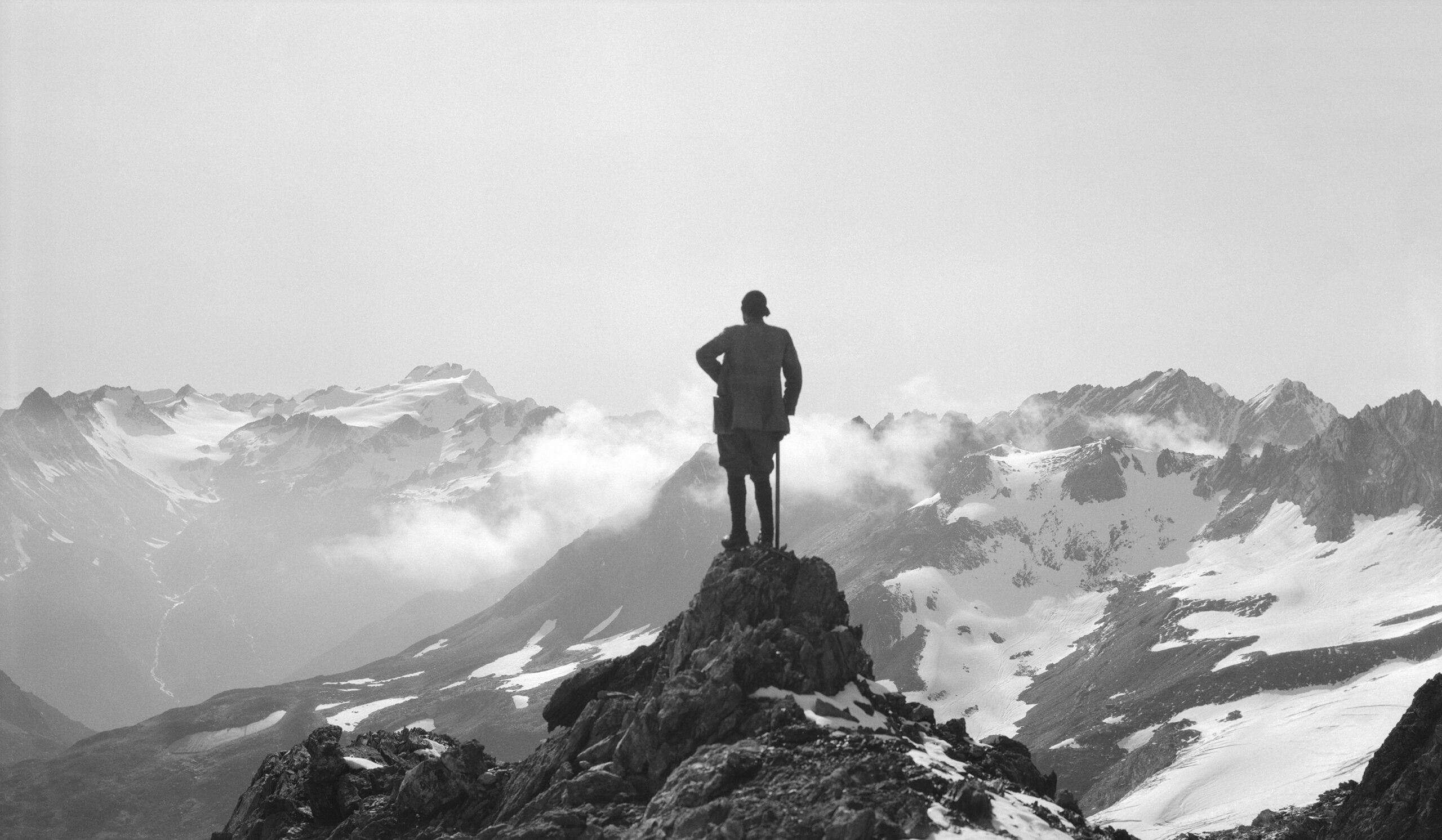
Sometimes, marvelling at the feats of great mountaineers as they climb the highest Alpine peaks first requires descending deep into a basement. In late 2025, an unexpected discovery was made in the warren-like storage rooms of the Alpine Club’s premises in Shoreditch, London. There, gathering dust amid ice axes, tents and geological samples, lay a collection of glass and celluloid negatives dating from the late nineteenth and early twentieth centuries. They were discovered by Philip Meredith, Chair of the Alpine Club Library, and Georges Charlier, founder of the photographic publisher and printer Salto Ulbeek.
Based in Belgium, Salto Ulbeek is reputed for its work with photographic archives, producing platinum-palladium prints and publications. Celebrated for their rich tonal range and subtle gradations, these prints, when made with the care and expertise that Salto Ulbeek has perfected over decades, are not only beautiful but also durable. Among the most stable photographic mediums ever devised, platinum-palladium prints can survive for centuries and possibly millennia, far outlasting the less stable silver-based negatives from which they originate.
Among the renowned photographers who have employed Salto Ulbeek to print their finest work are George Tice, Hiroshi Sugimoto, Nick Brandt and Sebastião Salgado. In addition, Salto Ulbeek has sought to valorise equally significant visual heritage and photographers such as Emil Otto Hoppé, Imogen Cunningham and Brett Weston. To date, one of its most extensive heritage projects has focused on early Antarctic photography, in particular the glass-plate negatives exposed by Herbert Ponting, who accompanied Captain Scott on his second and fateful Antarctic expedition of 1910–13, and Frank Hurley, official photographer of Ernest Shackleton’s iconic Endurance expedition of 1914–17. The latter remains among the greatest survival stories in the history of exploration, and the photographic negatives that survived it among the most precious.
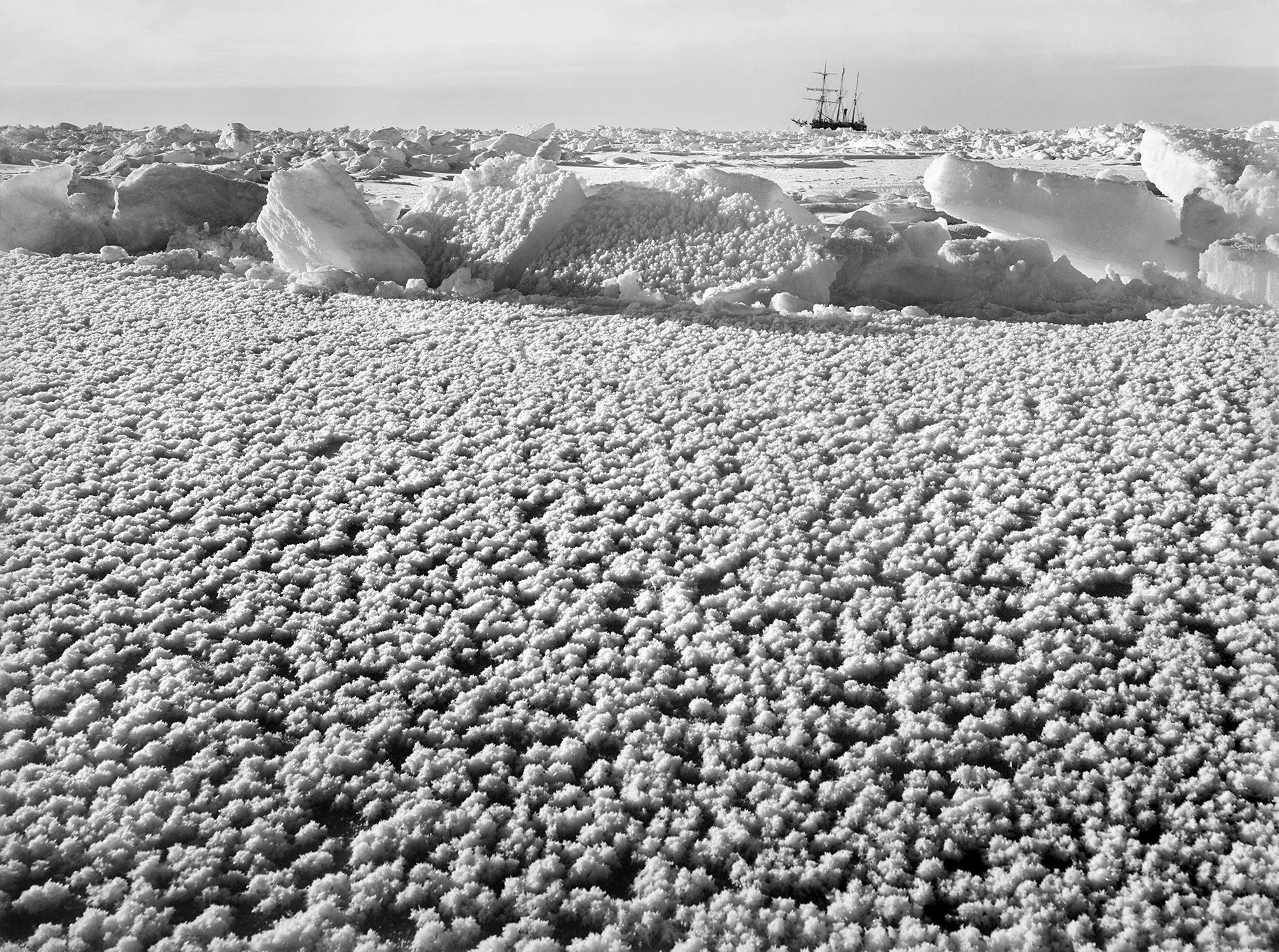
Frank Hurley / © Royal Geographical Society & Salto Ulbeek
Also encompassing the more amateur photographs taken by Captain Scott himself – a kind of visual diary – this body of work reminds audiences that these photographers were indeed artists in their own right, ‘camera artists’, as Ponting liked to call himself, rather than merely visual recorders hired to illustrate lectures and published accounts of the expeditions upon their return from Antarctica. Through their technical and compositional skills, as well as their willingness to take risks – climbing a ship’s mast, for example, to secure an unusual vantage point – Ponting and Hurley produced works that deserve to be viewed with the same attentive eye as those of the other more famous photographers with whom Salto Ulbeek has worked.
Awarded the privilege of accessing and printing from Ponting and Hurley’s Antarctic negatives preserved in the archives of the Royal Geographical Society in London and the Scott Polar Research Institute at the University of Cambridge, Salto Ulbeek’s work consists not only in printing individual images, but also in publishing limited edition portfolios that, for the first time, draw together, contextualise and preserve the surprisingly varied and contrasting facets of their photographic work, some of which were hardly known.
Ranging from landscapes and seascapes to ships locked in ice and intimate scenes taken inside during the months of winter darkness, these facets also comprise magnificent portraits, made all the more powerful by being posed for in blistering cold or taken as the men returned from outdoor work, their eyes betraying their impatience for food and warmth. Thoughtfully edited and accompanied by evocative texts, these exquisitely realised publications stand as a tribute to the grandeur of exploration photography, to Salto Ulbeek’s skills in bringing its qualities to the fore and, ultimately, to the art of photography itself.
Indeed, Salto Ulbeek’s approach to Antarctic photography could hardly have provided a better foundation for what followed when Philip Meredith and Georges Charlier came upon that treasure trove of historical negatives hidden away in the basement of the Alpine Club. Captured in the late nineteenth and early twentieth centuries by pioneering British mountaineers and photographers such as William Abney, George Finch, Frank Smythe and Sydney Spencer, these images take us back to a halcyon age of British mountaineering. An era when glaciers were thicker, mountains seemed taller, queues had not yet formed at the summit of the highest peaks, and rockfalls were rare enough to live with.
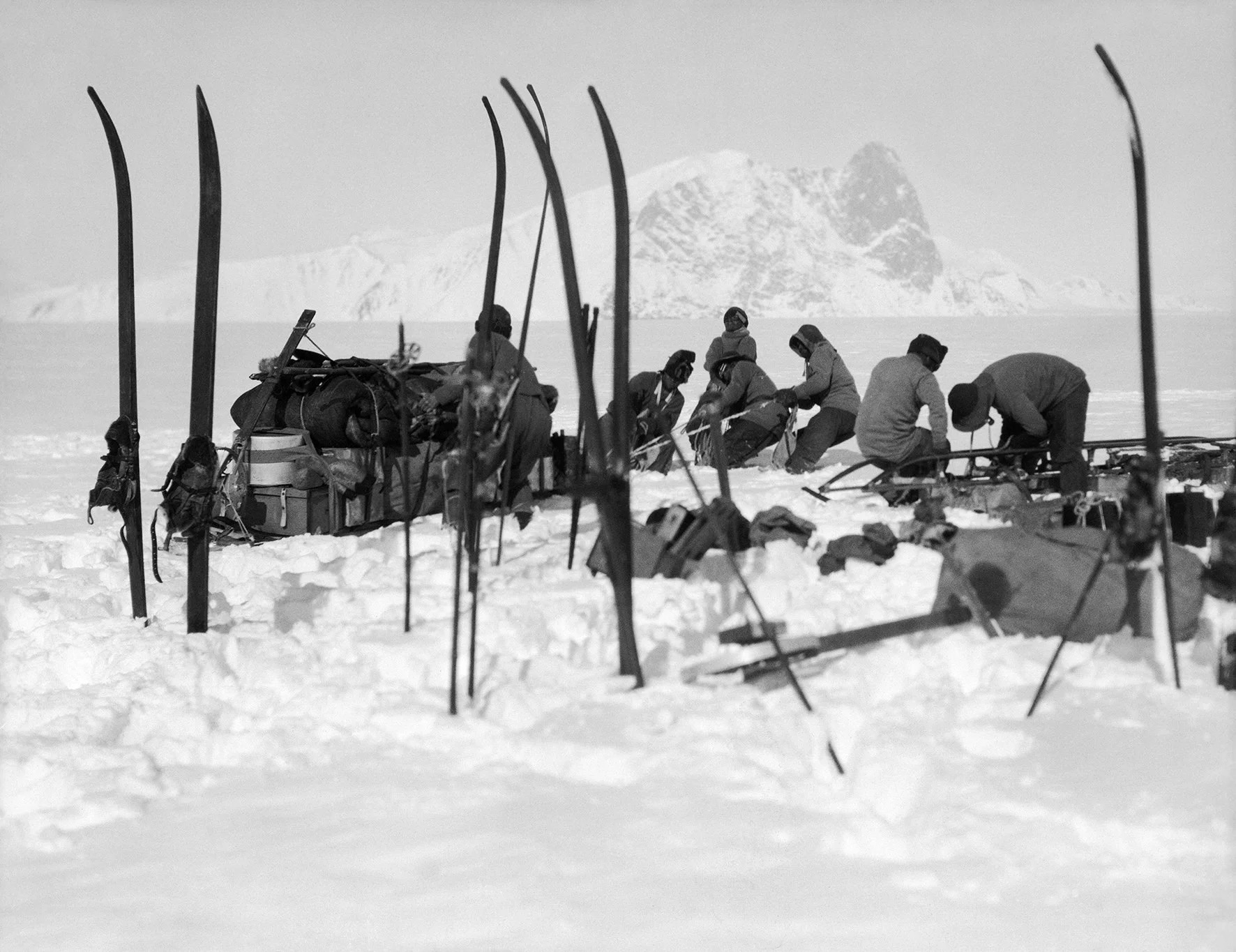
Captain Scott / © Royal Geographical Society & Salto Ulbeek
In the words of Duncan Sperry, President of the Alpine Club, “Abney, Spencer, Finch and Smythe were among the most remarkable figures in the history of British mountaineering. Not only were they united by their love of the mountains, but by an extraordinary richness of talent and achievement. Collectively they were soldiers, scientists, engineers, chemists, authors, explorers, lecturers and administrators whose influence extended far beyond the summits they climbed. Each recognised that photography should be more than an image: it could preserve the character of landscapes, record pioneering ascents, document the people who made them possible and communicate the experience of the mountains to audiences who would never venture there themselves. Recording the formative years of Alpinism, their photographs are both historical documents and works of art”.
As they had done with early Antarctic photography, the Salto Ulbeek team collaborated with the Alpine Club in the rigorous and often painstaking process of examining the condition of each negative, cleaning them where appropriate, then cross-referencing and cataloguing them for posterity. From this extensive archive, they selected a relatively small number whose historical importance was matched by their visual and technical excellence and, in some cases, by that indefinable magic associated with what Henri Cartier-Bresson famously termed the moment décisif.
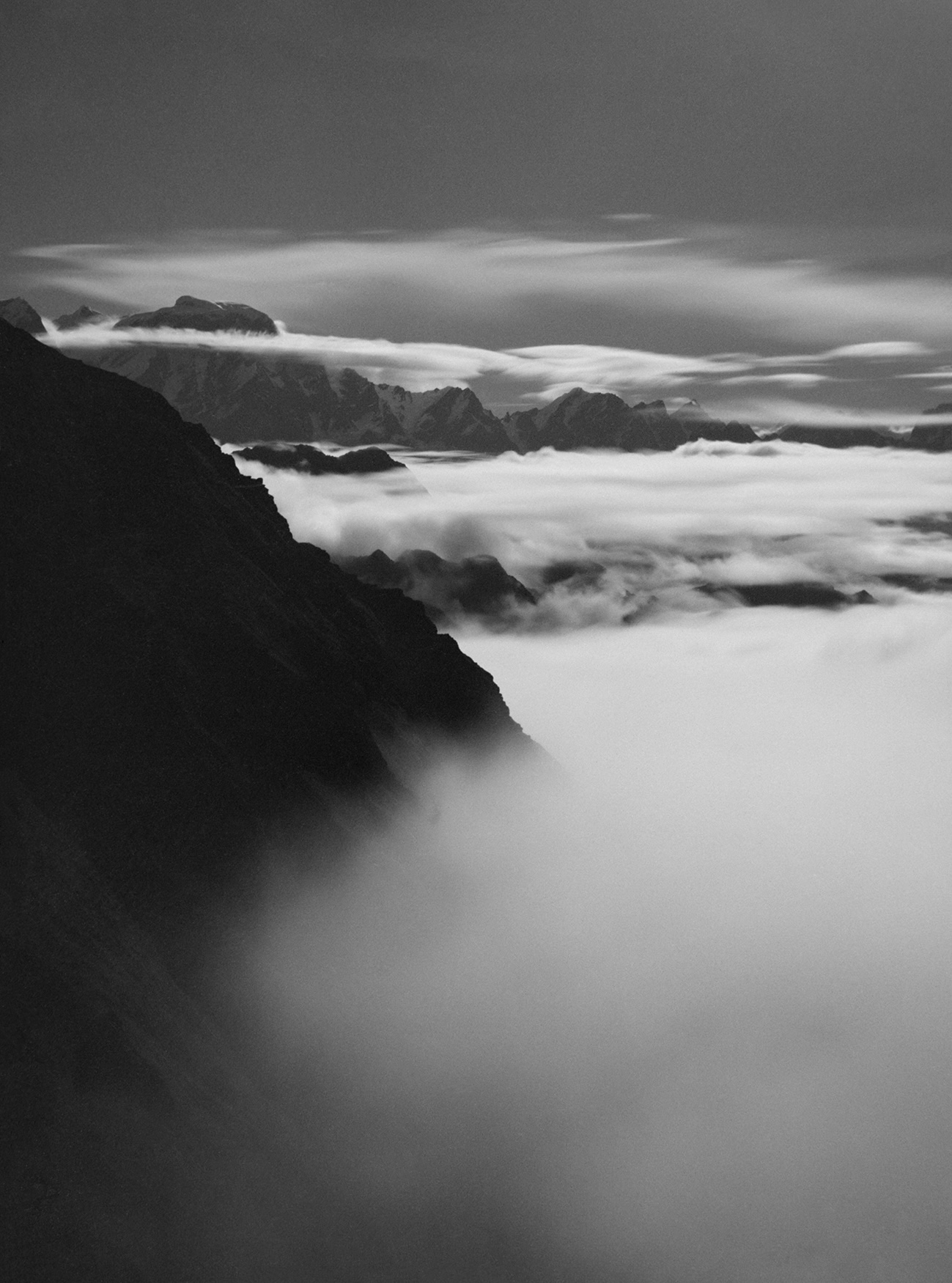
Frank Smythe / © Albine Club & Salto Ulbeek
This done, they extracted the wealth of pictorial detail contained in the selected negatives through a highly precise, high-resolution scanning process. Finally, through the platinum-palladium printing process and the manual skills refined over decades of experimentation, they brought out the three-dimensionality and subtle textures of the mountains captured in each negative – from rock to ice to snow – while also emphasizing the physical engagement of the human figures crawling up vertiginous faces or clinging to sheer cliffs.
The result has been a fresh appreciation of a chapter of mountaineering that might have been lost forever. Through their shared passion, the Alpine Club and Salto Ulbeek have been able to rediscover, research and retrace some sixty years of mountaineering history, drawing together photographic excellence with the physical courage and lofty ideals that lie at the heart Alpinism.
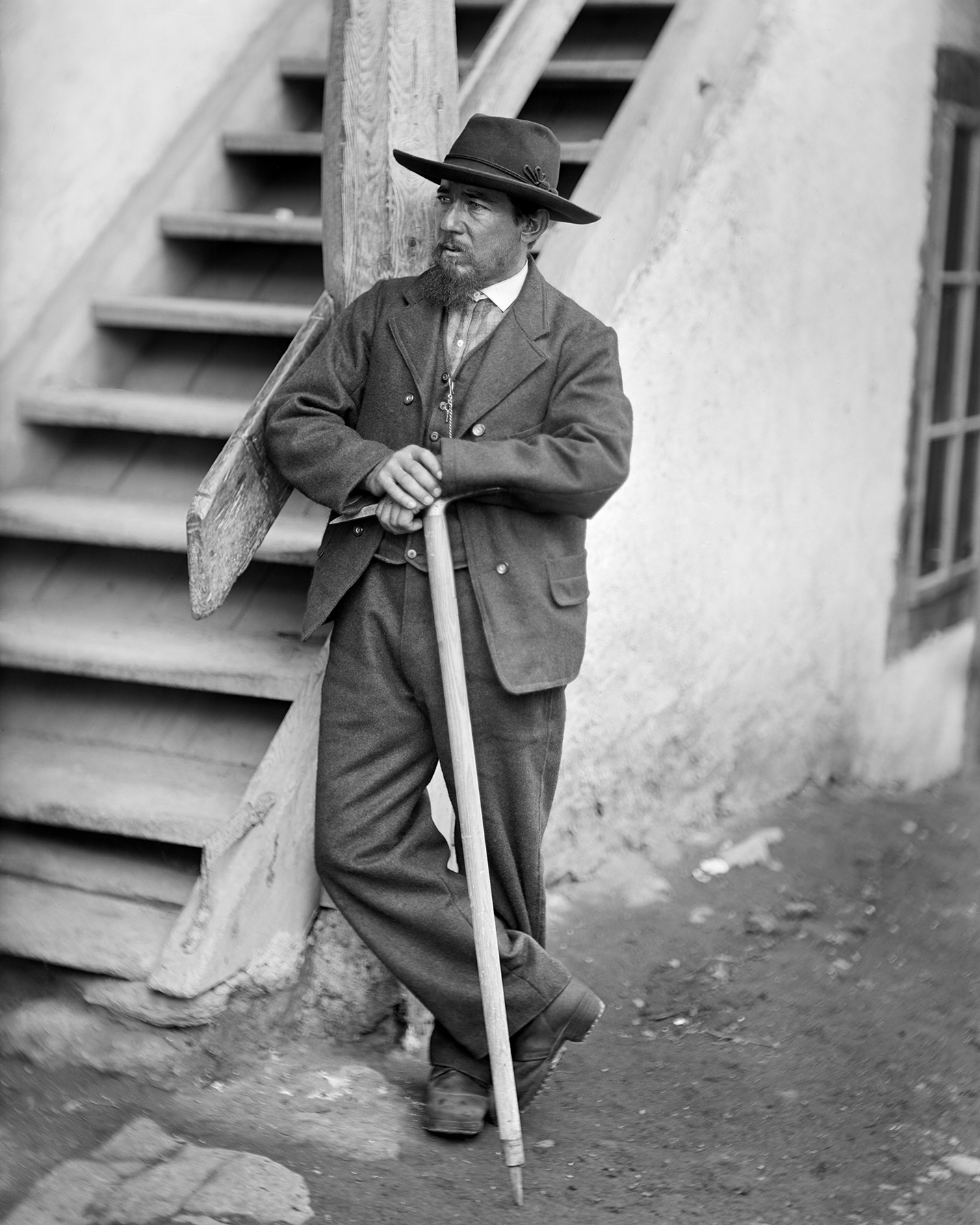
William Abney / © Alpine Club & Salto Ulbeek.
“Long Exposure; Men & Mountains from the Dawn of Alpinism” is open by appointment on Tuesdays and Thursdays from 8 September until 30 October at the Alpine Club’s Charlotte Road exhibition space.
For interested parties, details of how to purchase limited edition platinum-palladium prints of the exhibited photographs will be available at the exhibition.
From 1 October, the exhibition will also include folios for each of the featured photographers containing a selection of prints and an accompanying essay.
Visitors are kindly asked to book in advance via the Alpine Club website.
Failure to do so may lead to you being turned away.
If you’d like to visit outside of the regular opening hours, please contact chair.acl@alpineclub.org and the Club will do its best to accommodate you.
ABOUT THE AUTHOR
Jean de Pomereu is a Research Fellow at the Scott Polar Research Institute, University of Cambridge, specialising in the history and visual culture of polar exploration. A photographer and editor with Salto Ulbeek, he has a particular interest in the representation of frozen environments and is co-author of Antarctica: A History in 100 Objects (Bloomsbury).

FRAMES is a unique international photography community that combines the best of all worlds, bringing you print and digital publications, a global membership platform, access to live events, and a dedicated mobile application.
EXPAND YOUR PHOTOGRAPHIC VISION
JOIN FRAMES TODAY