Every photographer is a historian. Every time we press the shutter release, we are capturing a moment and preserving it. We hold it outside of its own time so that it can be examined and re-examined in the present moment to see what it reveals. And it can be reexamined decades or more afterward as evidence of what used to be. Even the most mundane snapshot, given time, garners a bit of depth. And those images taken with some talent or insight can open a host of new insights.
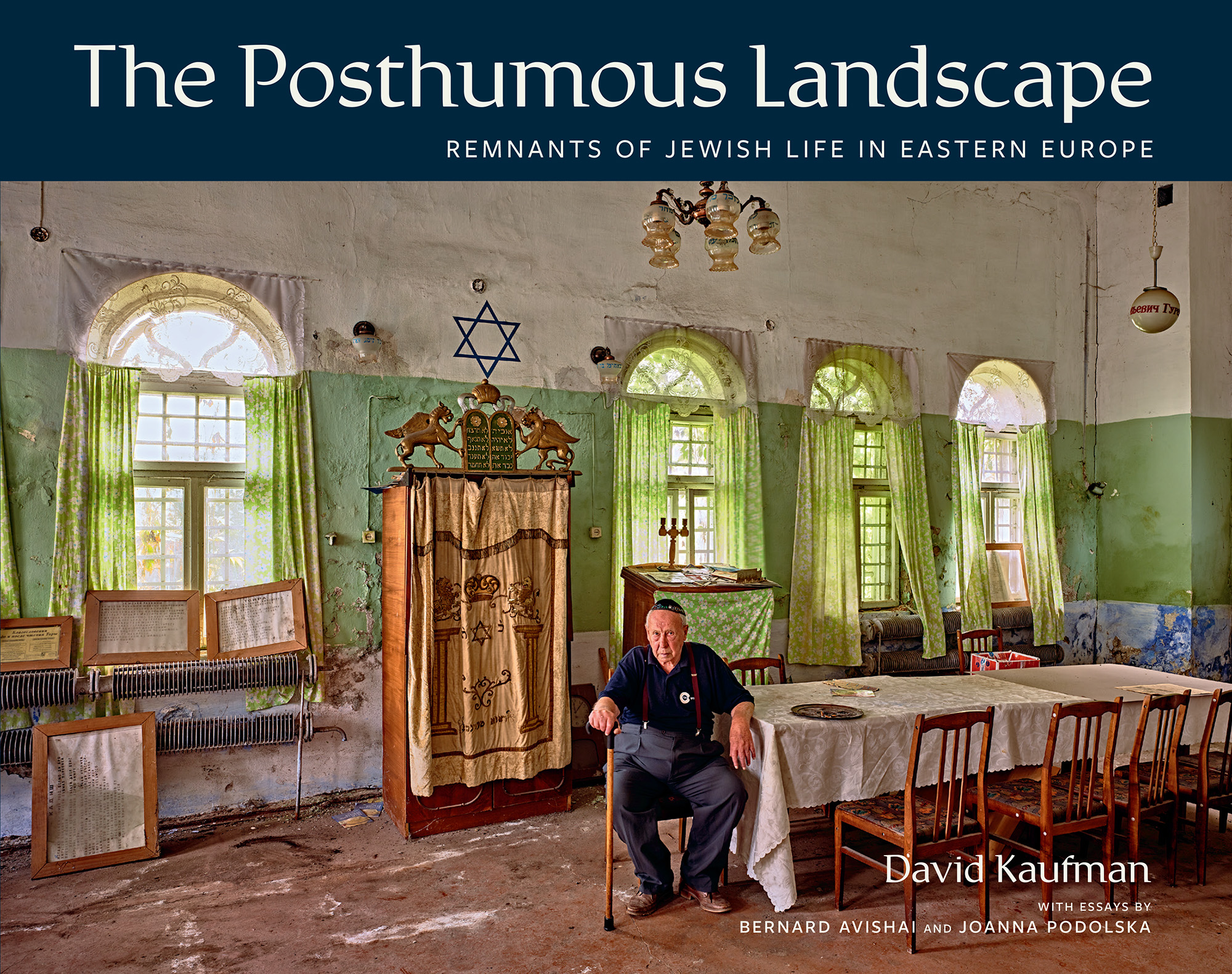
David Kaufman – “Posthumous Landscape: Remnants of Jewish Life in Eastern Europe”
Published by Figure 1 Publishing in 2025
Review by W. Scott Olsen
Documentary photography leads to this understanding. Not only does this work seek to preserve the present moment for history, for examination, but the documentarian also understands the present moment as part of a multi-faceted, many-branched timeline. For the documentarian, purpose, subject, and viewer are all slightly more nuanced terms than for many of the rest of us.
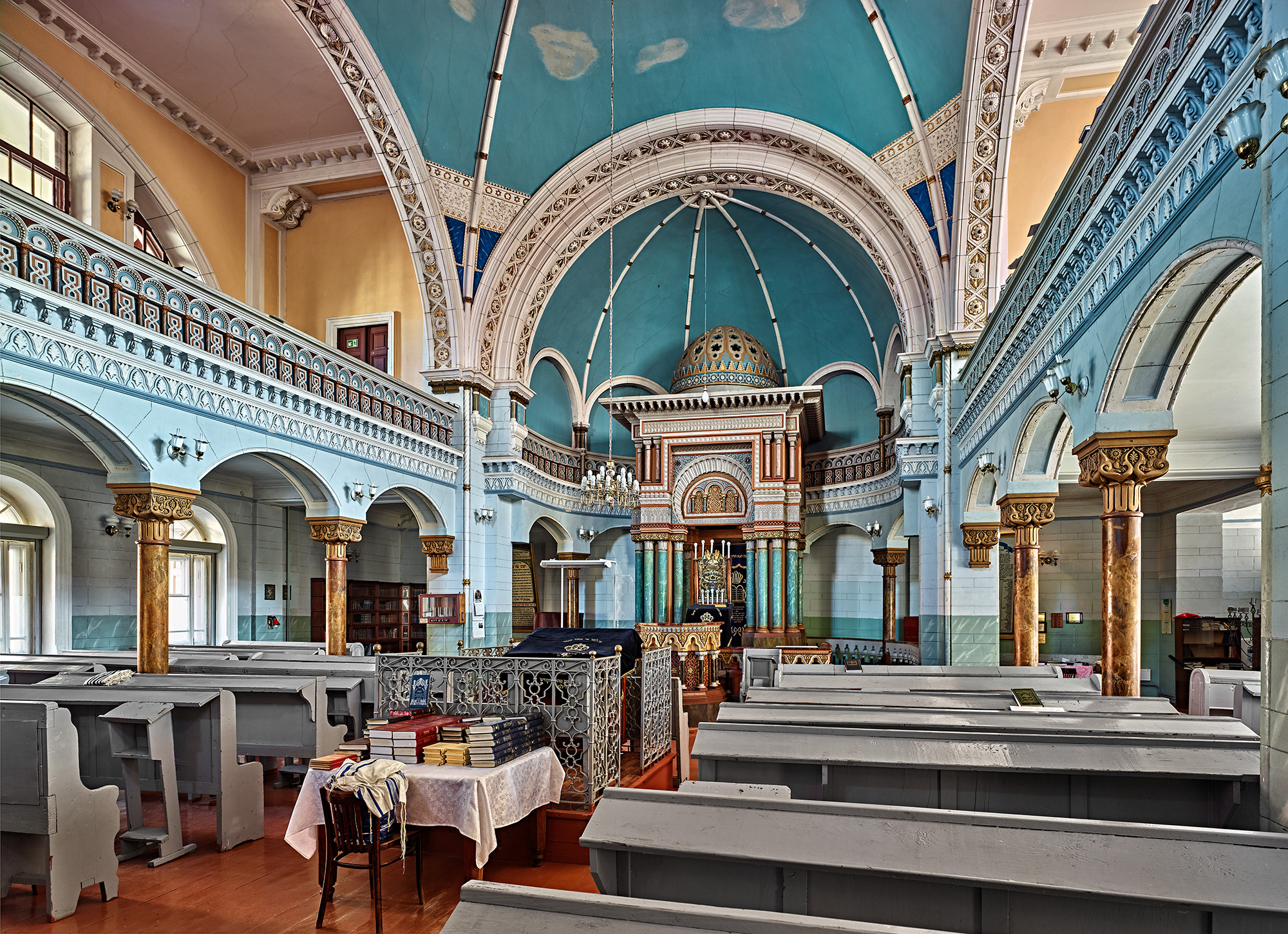
Consider also the well-known idea that architecture is evidence of humanity, and the quote by Frank Lloyd Wright, “Architecture is life; or at least it is life itself taking form and therefore it is the truest record of life as it was lived in the world yesterday, as it is lived today, or ever will live.” Even if a photograph of a building contains not a single person or animal, everything about the building is evidence of humanity’s history, values, ambitions, and hopes. This is why architectural photography is fascinating, not only because there are intriguing shapes and lines and shadows and colors in a building, or the unusual way light can hit a facade or an interior, but also because these are the spaces we inhabit with our arms and legs, but also with our history and soul.
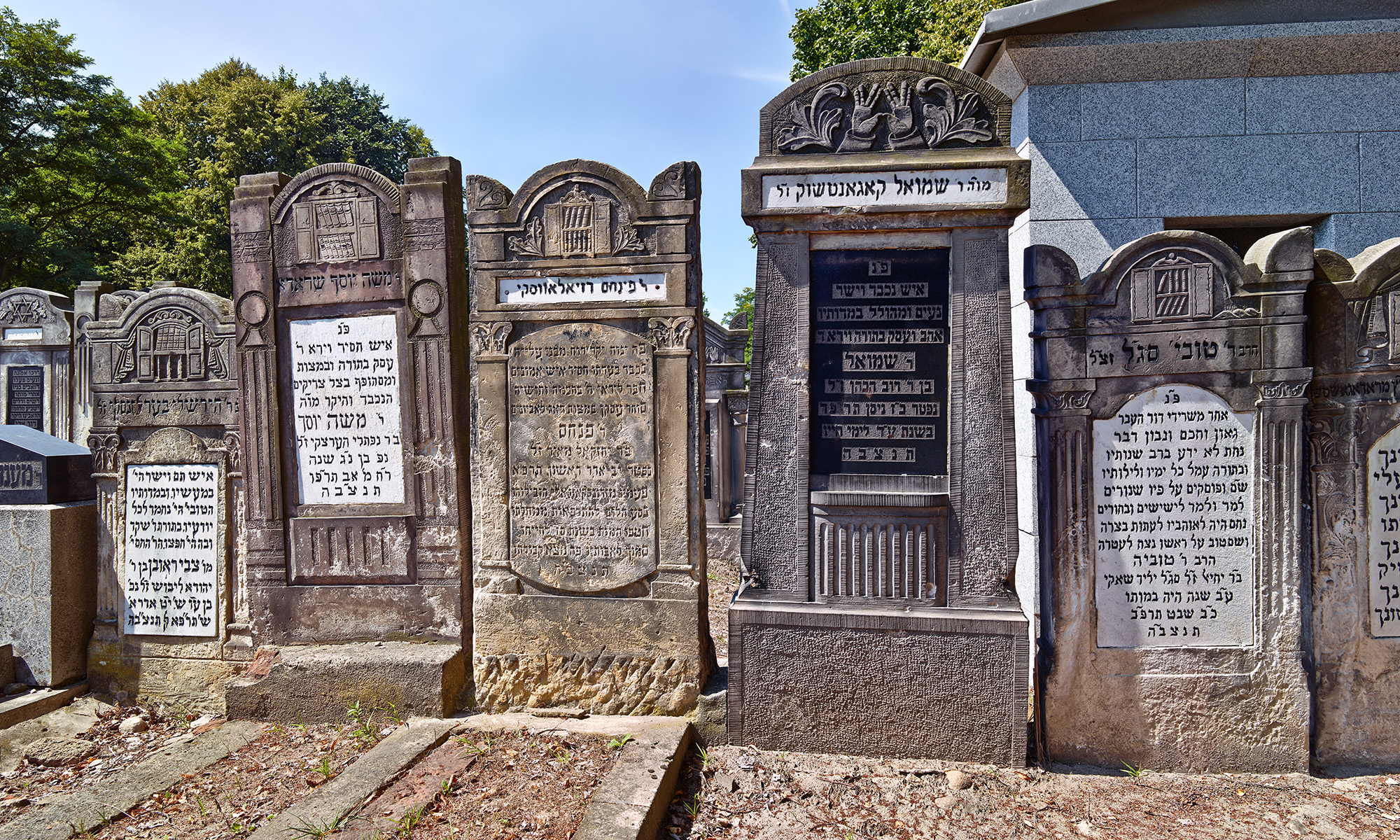
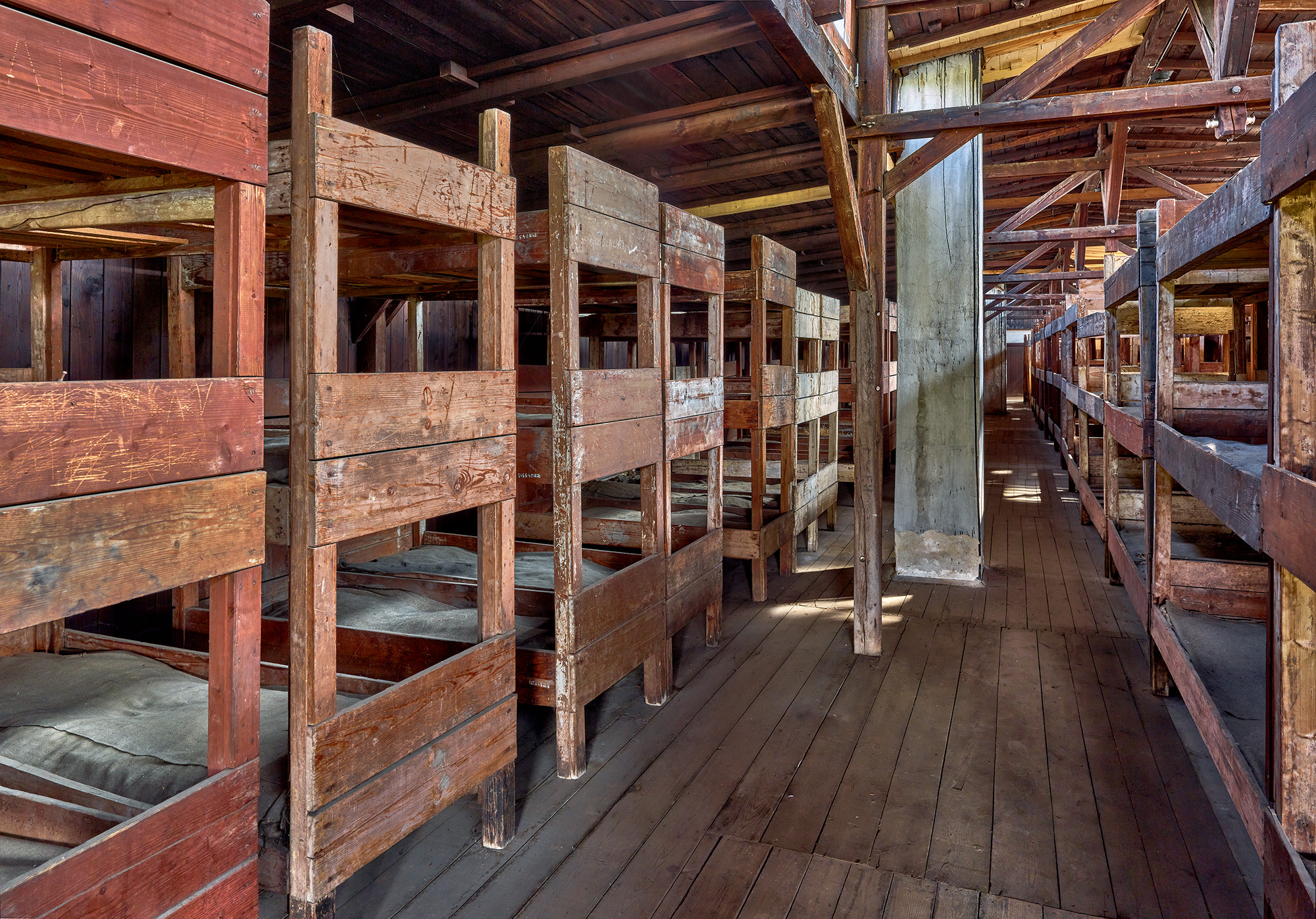
I have on my desk today a book called The Posthumous Landscape: Remnants of Jewish Life in Eastern Europe by David Kaufman, and it is, at first blush, a book of architectural photography, mostly, but it is also much deeper and much more than that. Here is the work of a wonderful photographer working as a visual historian. Here is work that gives yesterday’s context to what we see today.
In an introductory essay by commentator and professor Bernard Avishai, called “Photographic Eulogies,” he begins by saying—
David Kaufman calls himself an architectural photographer, but this can be misleading. His subject, always, is tribute. For David, every building, whether of a synagogue in Drohobych or a storefront in Toronto, begins in an intention, but then it ripens into something vaguely tragic—much like the person who built it, but with more staying power.
In his own introduction called “Photographing the Posthumous Landscape,” Kaufman writes about the project’s genesis—
A decade later, I returned to Poland to make films about the Warsaw ghetto uprising and the Łódź ghetto. I saw the Jewish cemeteries in Warsaw and Łódź for the first time, and they made an enormous impression on me. I was surprised and deeply moved by the quality of Jewish material culture—the remnants of Jewish life—that I found just in these cities and decided I would like to explore the subject matter photographically….But on my first photographic trips, I discovered that Jewish material culture in Poland also encompasses extensive architectural remains, such as synagogues and the environs of formal ghettos, which appealed to me greatly as an architectural photographer, so I eventually expanded the purview of my project.
Joanna Podolska, former Director of the Marek Edelman Dialogue Center in Łódź, contributes an essay called “In the Polish Landscape,” in which she writes—
I am not surprised that David Kaufman, a photographer and documentary filmmaker, brought his cameras with him when he came to Poland. He wanted to remember and document the remnants of Jewish life in a country that once was home to the world’s largest Jewish community and where, as a Jewish poet once said, even the rivers spoke Yiddish. Surely David Kaufman also heard this loud silence that tells stories, or maybe he heard the echo of the streams still murmuring in Yiddish…
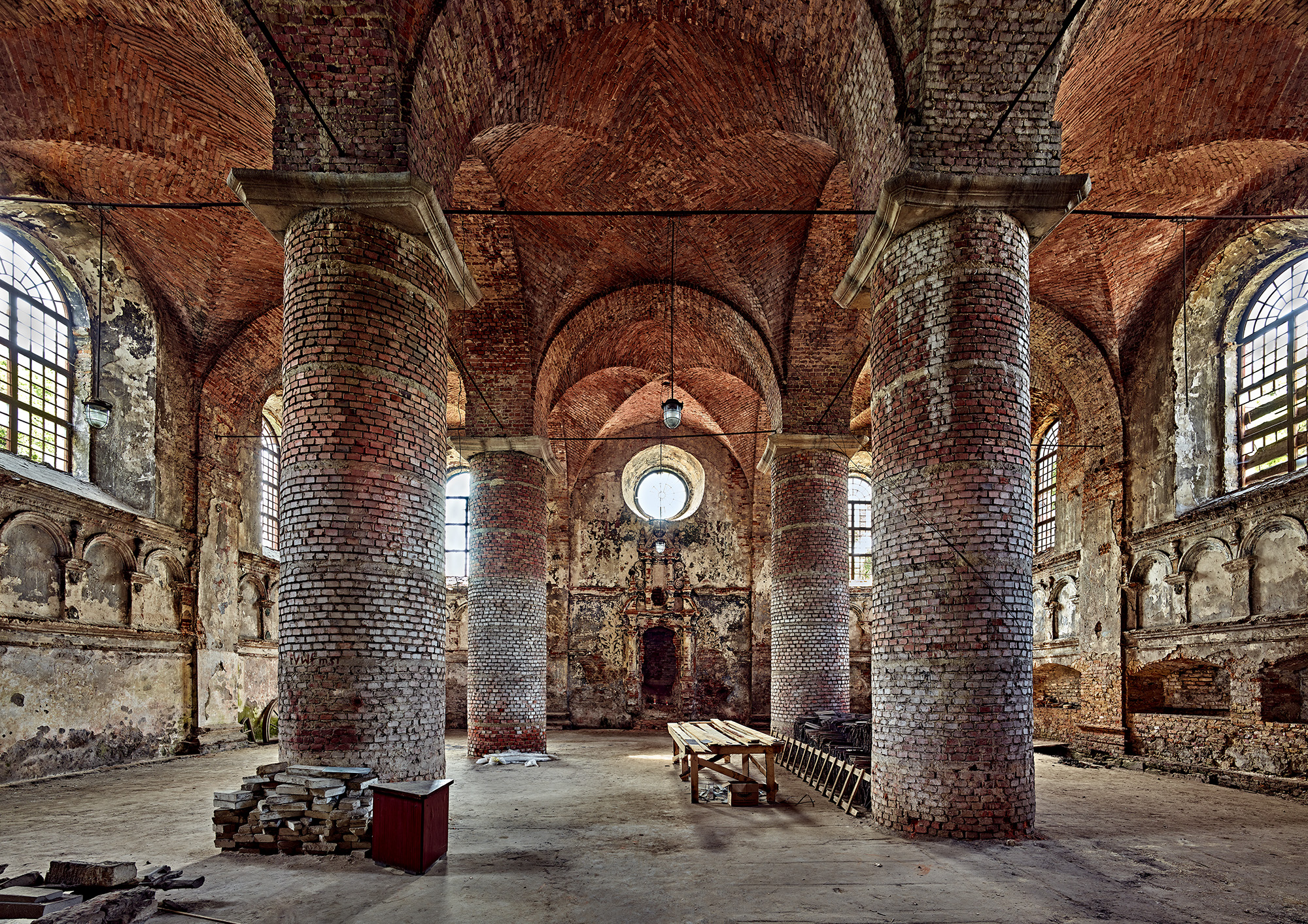
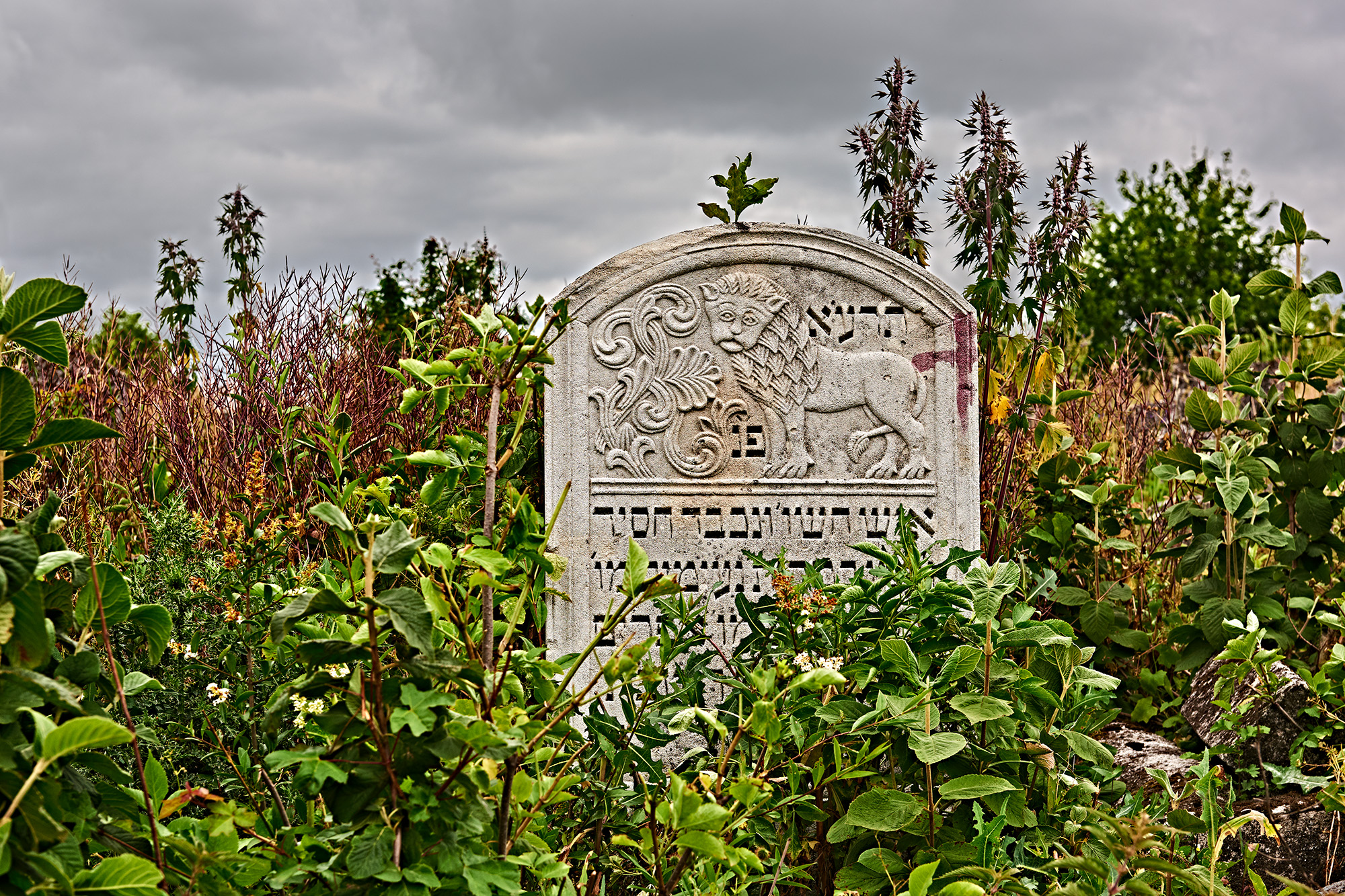
The Posthumous Landscape is an ambitious, wide-ranging, and deeply compelling book. Yes, there are a great many building facades, a great many cemeteries—some of them vine-covered, some of them vandalized, some nearly forgotten, some set in a forest—and one could argue that one set of vine-covered headstones looks very much like another set of vine-covered headstones, but that would be missing one of the points of this book entirely. While the individual building facades and other sites each hold their own visual interest, Kaufman’s research here, offered in the accompanying text, makes the sheer number of buildings, cemeteries, and sites fill with gravitas.
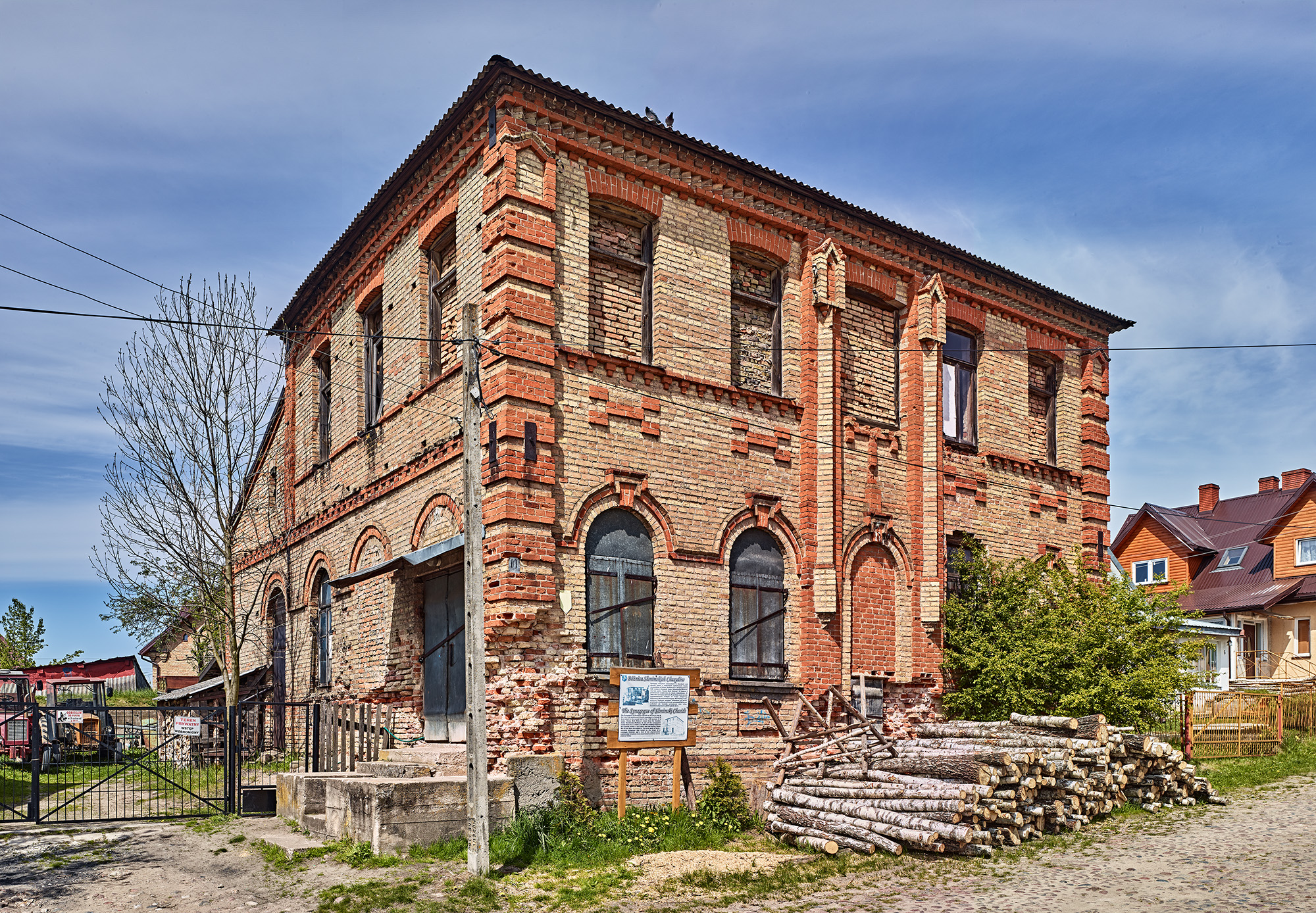
With nearly every image, there is a caption that gives the location and a bit of context. But also, throughout the book, there are explanations, often several paragraphs long, that give the historical setting of the sites, to let us know where and how they fit in Eastern European Jewish history. Sometimes the texts explicate architectural intent, such as pillars on the sides of tombstones. Other times, the texts explain the geographic and social importance of a small town and how it functioned in Jewish social history.
The book is organized geographically into three sections: Poland, western Ukraine, and then Lithuania and Latvia. Within each section, the book is organized by town or village, and then even more specifically by cemetery or ghetto, and so on. I found myself going through the book, absorbed not only in the wonderful evocations of architectural detail but also in the deep contextualization and history. Every brick-faced building—and there are lots of them—became particular and individual. Every synagogue, tenement building, factory, and cemetery was both particular and part of a larger story.
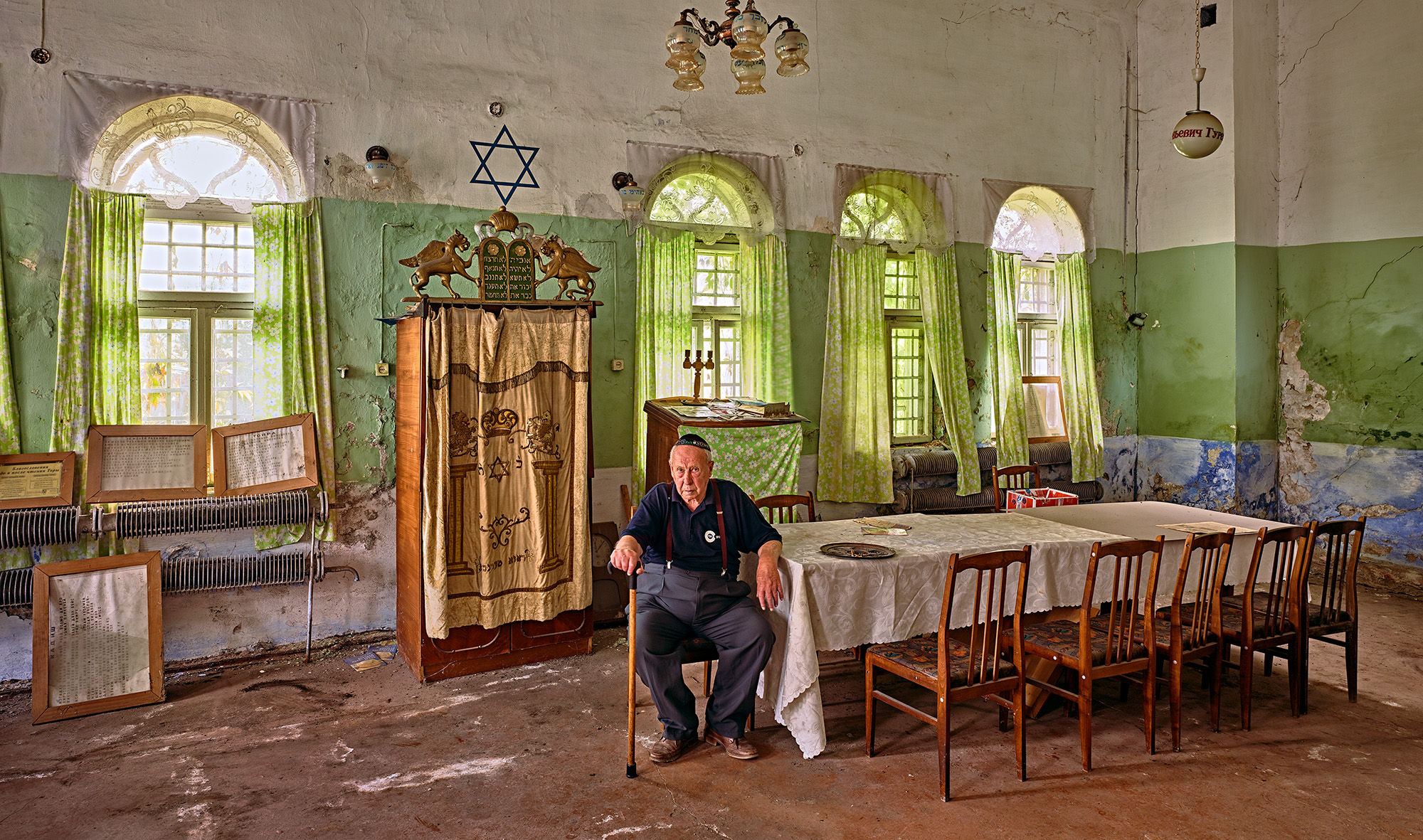
The book also has a successful double presence. The images, of course, are images of what these sites look like today. But the reason they look like what they look like today often has to do with World War Two. This book does not dwell upon the Holocaust as a primary subject, yet that history is on every page. As Podolska says—
No one who comes to Poland in search of Jewish life of the past can ignore the traces left by the Holocaust. Thus, many photographs in this book show places marked by the history of the destruction of European Jews.
Ruins and restorations alike, the book gives presence to structures and their context, which creates an emotionally and aesthetically powerful narrative.
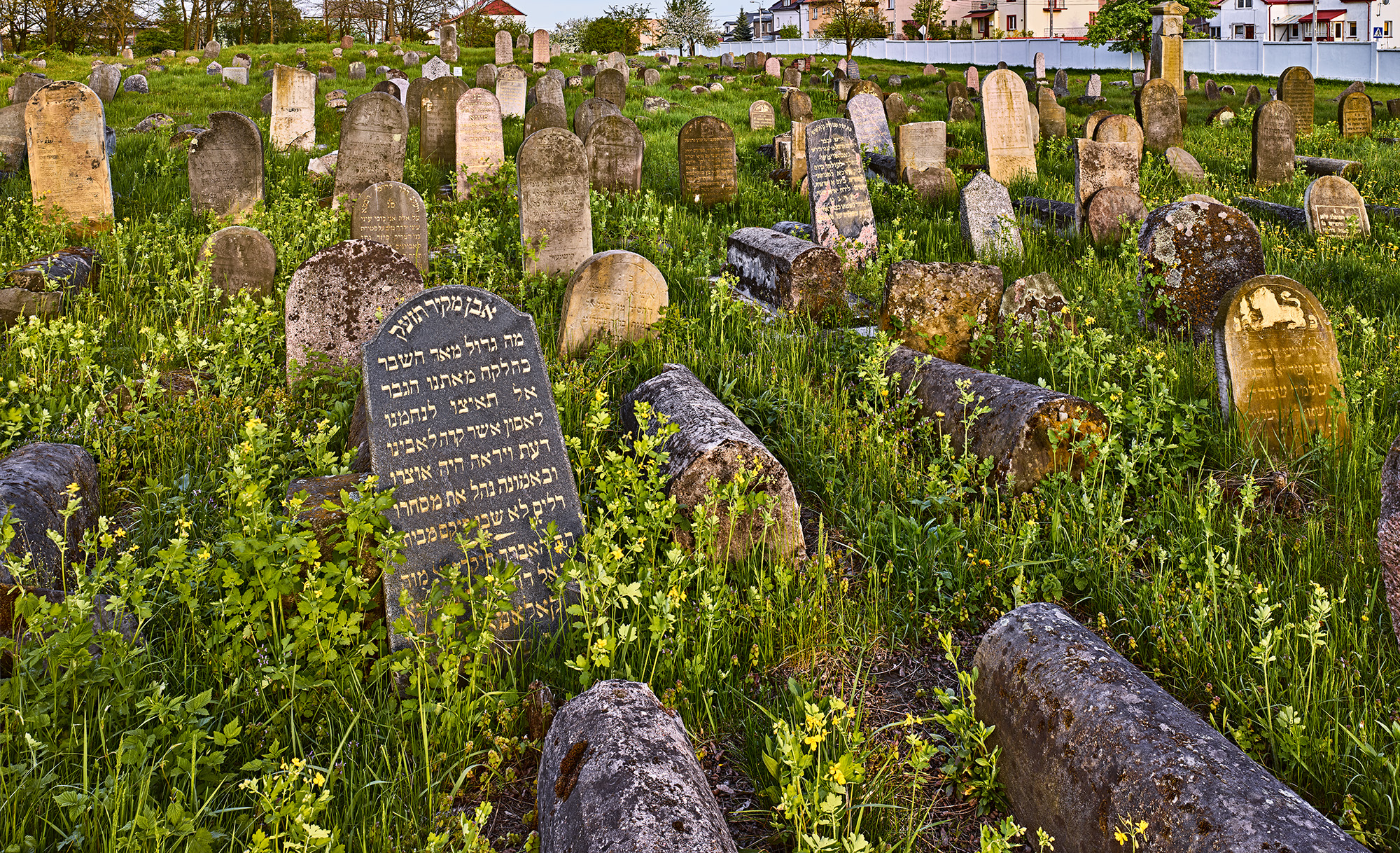
The Posthumous Landscape is a sad book. The title alone reveals the subject has passed. There is mourning here and deep loss. This book is both past and present simultaneously, and there is a particular and successful weight that comes from the numerous examples. When every one of them individually is poignant, the overall effect is profound.
A note from FRAMES: Please let us know if you have an upcoming or recently published photography book.

FRAMES is a unique international photography community that combines the best of all worlds, bringing you print and digital publications, a global membership platform, access to live events, and a dedicated mobile application.
EXPAND YOUR PHOTOGRAPHIC VISION
JOIN FRAMES TODAY