
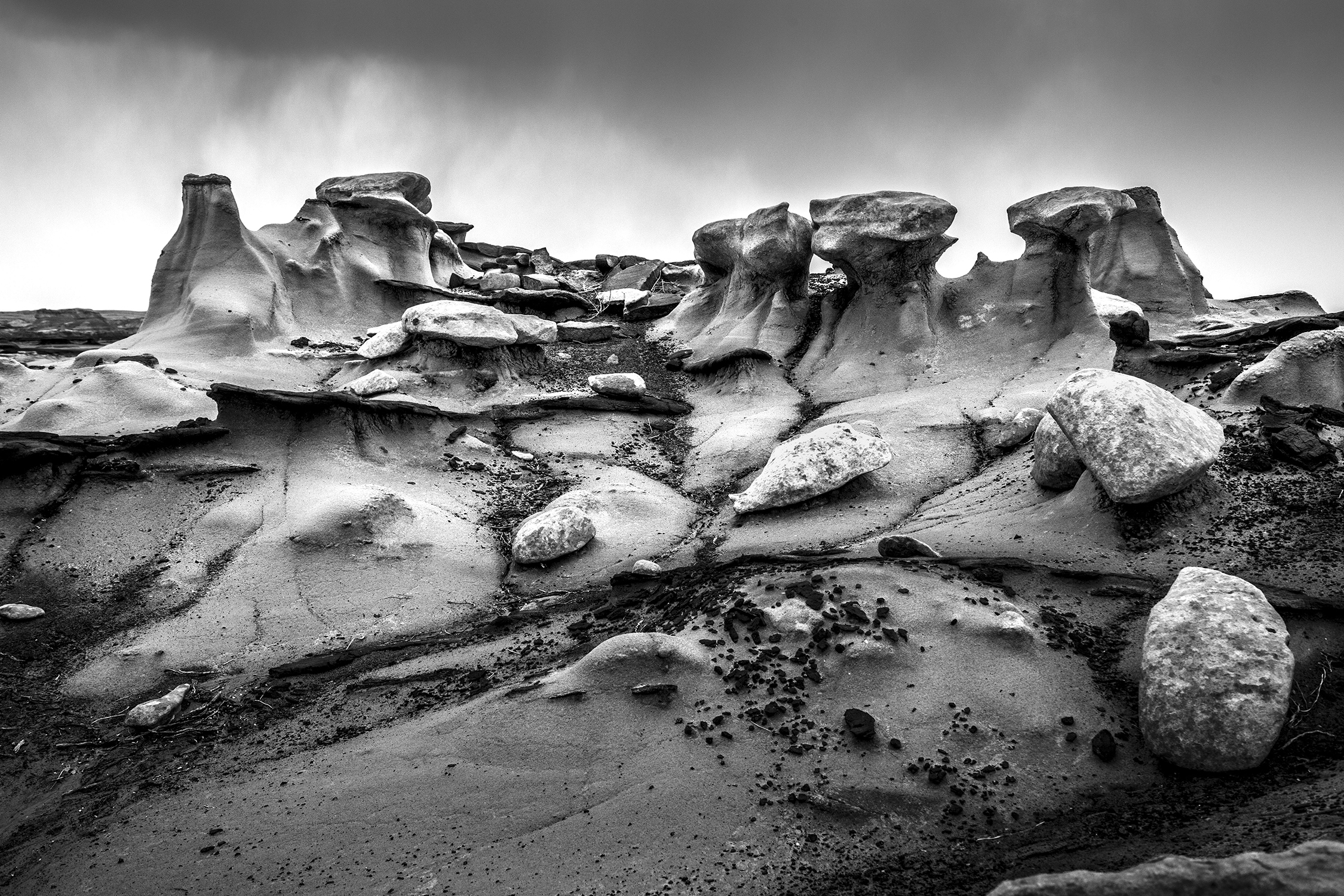
I believe every single one of us who has ever taken a landscape photograph, stood in front of one, or lingered over an image on a screen, has wondered why a rock or a tree or a cloud appeals to us. There’s something deeper than the simple geometry of the natural world we find compelling. Something in the landscape, no matter what form it may be, has the ability to reach deep into our head and heart and evoke a response we certainly acknowledge, but seldom spend any real time trying to examine.
Joel Simpson – “Faces in the Rocks: Beyond Landscapes to Psycho-Geological Photography” (Second Edition)
Published by JSS Books in 2026
Review by W. Scott Olsen
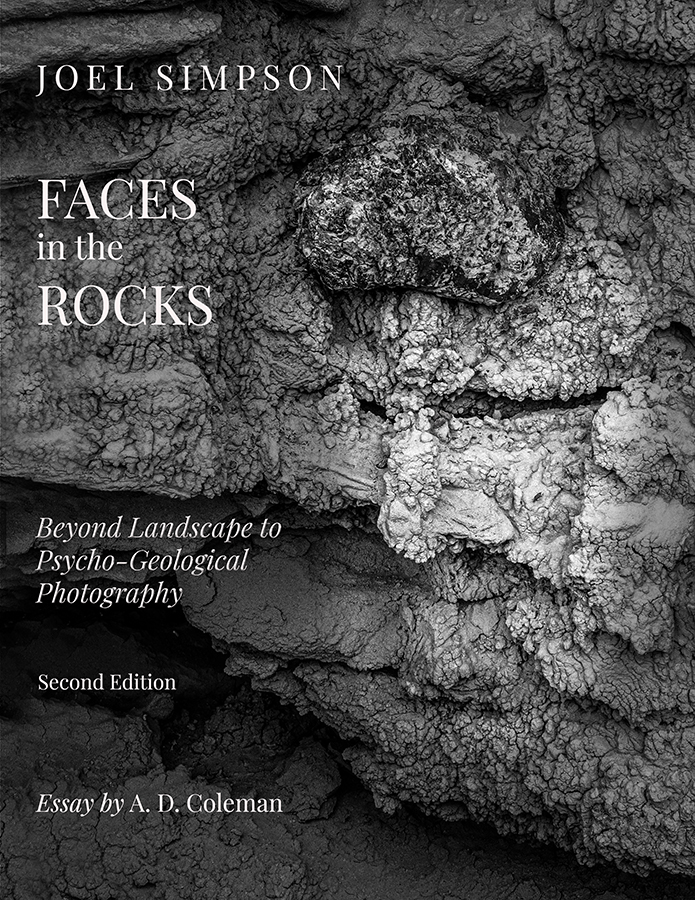
Landscape photography is essential because of what it evokes in our emotions. It reveals something about ourselves to ourselves regarding our understanding and relationship with the physical world. In other words, landscape photography can be nearly as much about psychology as geology, and a new book (actually a revised second edition) by Joel Simpson, called Faces in the Rocks: Beyond Landscape to Psycho-Geological Photography, is an attempt to reimagine landscape photography in a way that acknowledges and often foregrounds the psychological attributes of the artist.
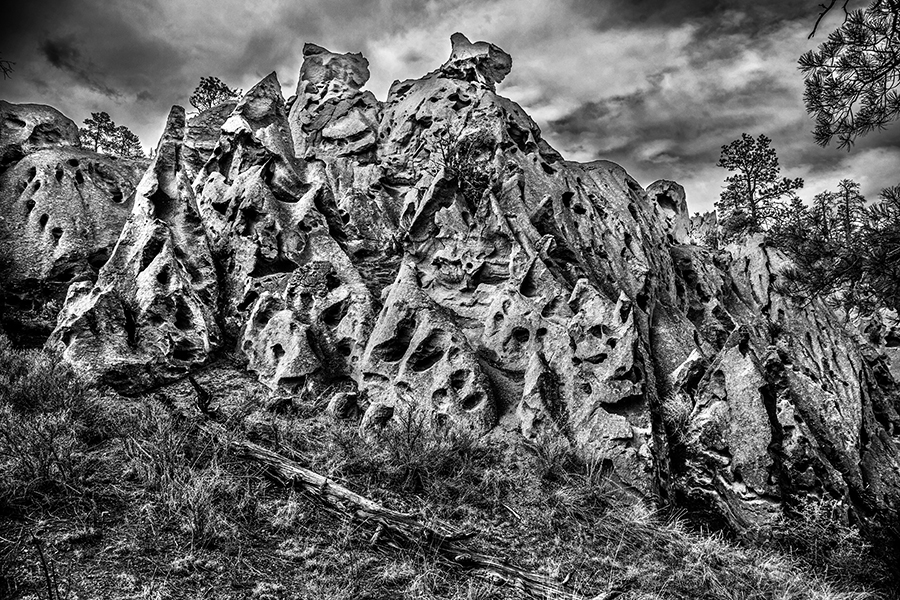
Let me say here at the start, though, that if you somehow neglect to read a single word in this book (which would be a mistake), you would nonetheless be rewarded with a fascinating collection of landscape images. Simpson’s approach to this collection is a celebration of detail and pattern. Every image creates a type of call to be examined and considered. Still, this is an idea book. And the images are all eloquent support for an interesting thesis.
In a reviewer’s guide to the book, Simpson writes—
This book amounts to a photographic “manifesto”, the presentation of a new [sub-] genre of nature photography that shifts the focus away from place and mood of the standard landscape, to the interaction between our mind (or unconscious) and the rock and ice details we find up close in the wilderness we explore.
In his introduction, “What is Psycho-Geological Photography?” we have this paragraph—
The photographic capture, followed by intensive editing understood as curation, functions as a process of selective revelation. What is revealed is not the artist’s subjective fantasy imposed upon nature, but a co-produced image—one that comes into being through an involuntary collaboration between geological time and psychic depth. The resulting works occupy a liminal zone between discovery and invention, mediating between external material reality and the stratified interior of perception and memory. In this sense, the images do not depict nature; they enact a mode of seeing in which natural setting becomes a site of psychic encounter.
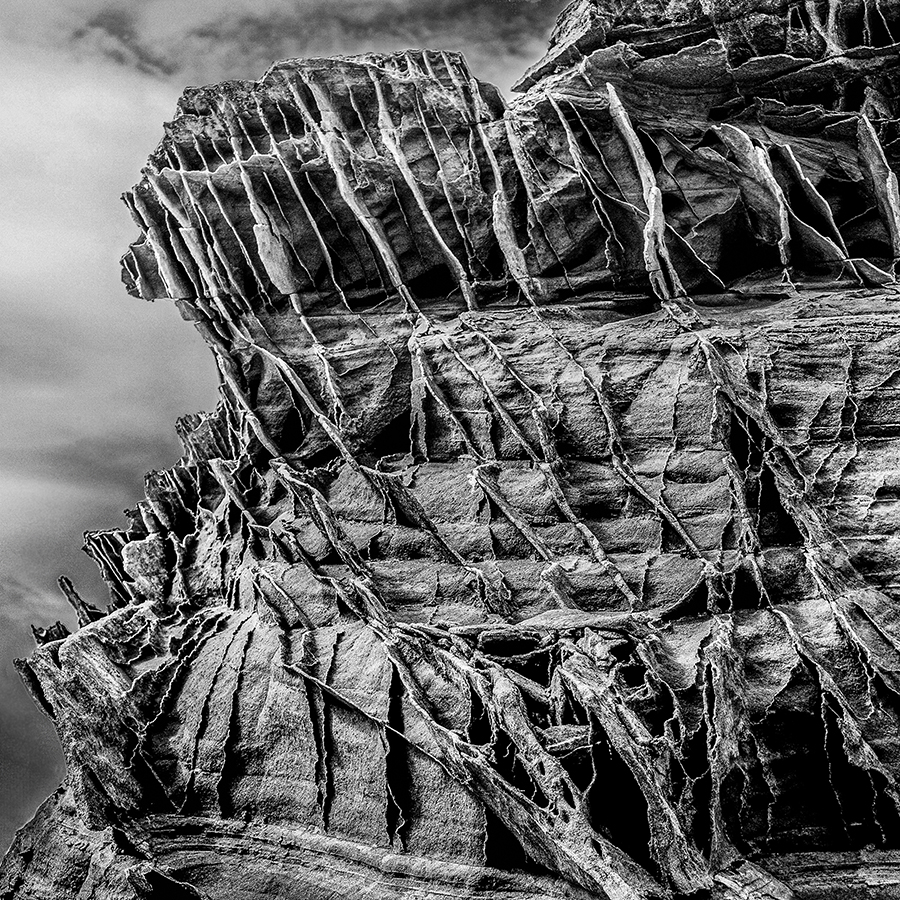
This is heady stuff. Faces in the Rocks is part psychology, part aesthetics, and part how-to, and a lot of the writing is an unpacking of our relationship to images of the natural world. For example, again in the introduction, in the section called Chaos, we read—
The experience of chaos—of disorder that overwhelms our powers of visual organization—is often a welcome element of nature: the skeletal branching of winter trees, bubbles roiling in surf, the infinite contortions of clouds. Such everyday encounters with chaos offer relief from the repetitive order of the built and manufactured world. They refresh perception, clear the mind, and draw us toward wilderness. In conventional landscapes, these valued chaotic elements remain anchored within a familiar spatial syntax of depth and orientation—sky above, earth below—that stabilizes their effects.
…Photography’s inherent “facticity”—its capacity to transcribe the precise surface of the real—renders this surface perplexity with particular clarity and sensuality, guaranteeing the authenticity of the geo-frames: that these forms are discovered in nature that composed by a human (or artificial) intelligence.
At the same time, chaotic roughness operates as an active graphic element. At the level of texture, it intensifies the surreality of figurative images and forges an affinity with outsider art.
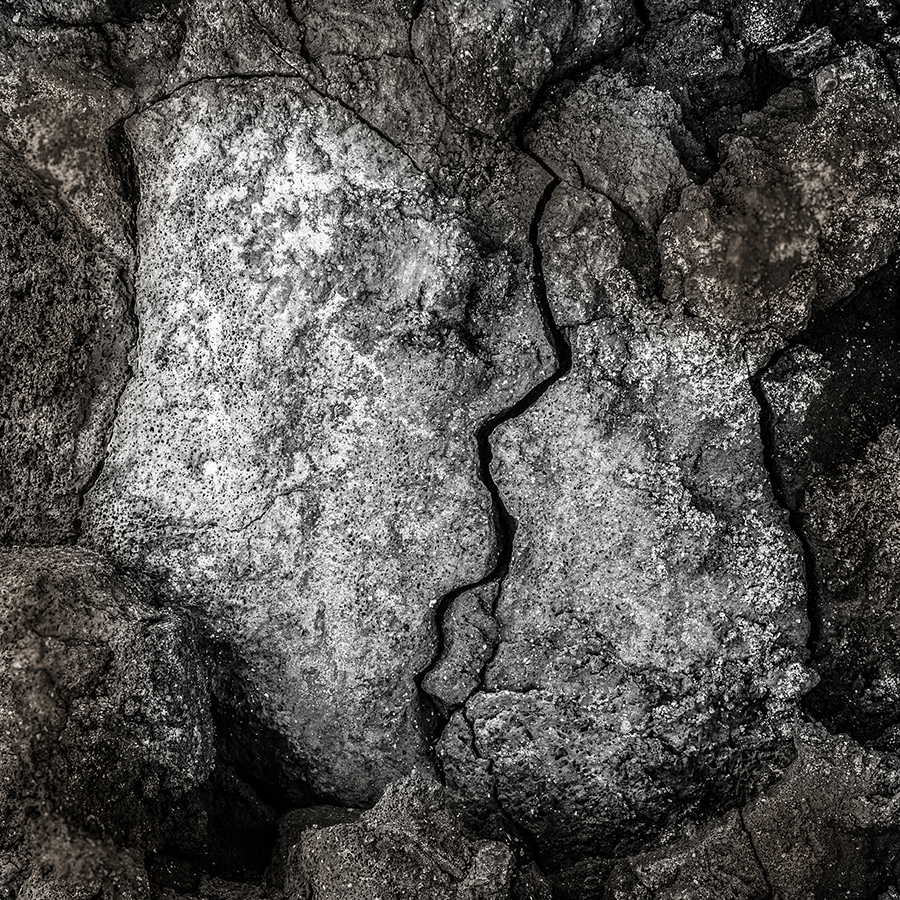
A little bit later, in another section, he writes—
Certain landscapes move beyond the familiar designations of the “extraordinary” or the “breathtaking” to transcend the material and visible limits of the real world. Rather than anchoring us more firmly in a literal location, they carry us elsewhere. These are “metaphorical” landscapes.
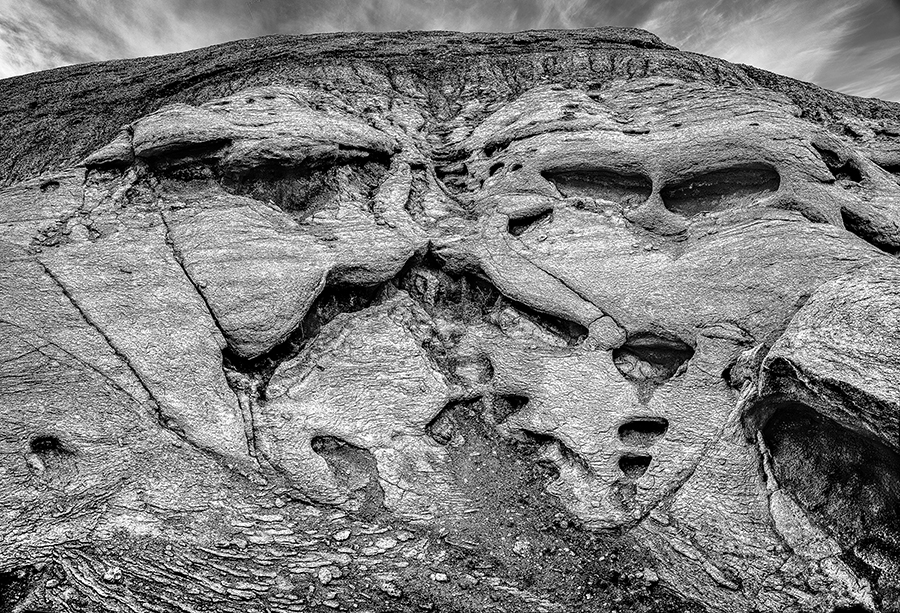
Faces in the Rocks presents a proposition, moving from landscapes into metaphorical landscapes, examining such places as caves both of rock or ice, encompassing techniques such what he calls geo-framing, a particular way of composing an image to call special attention to patterns, to the use of drones to focus on abstractions, and the book moves back and forth between specific landscape elements, such as Tafoni (holes in the rocks), repeating patterns, etc., to more complicated ideas, such as abstraction, expressionist turbulence, liminal figuration, and more. The book argues for not so much a different technique but a different understanding of our intent and responses, both as artist and as viewer.
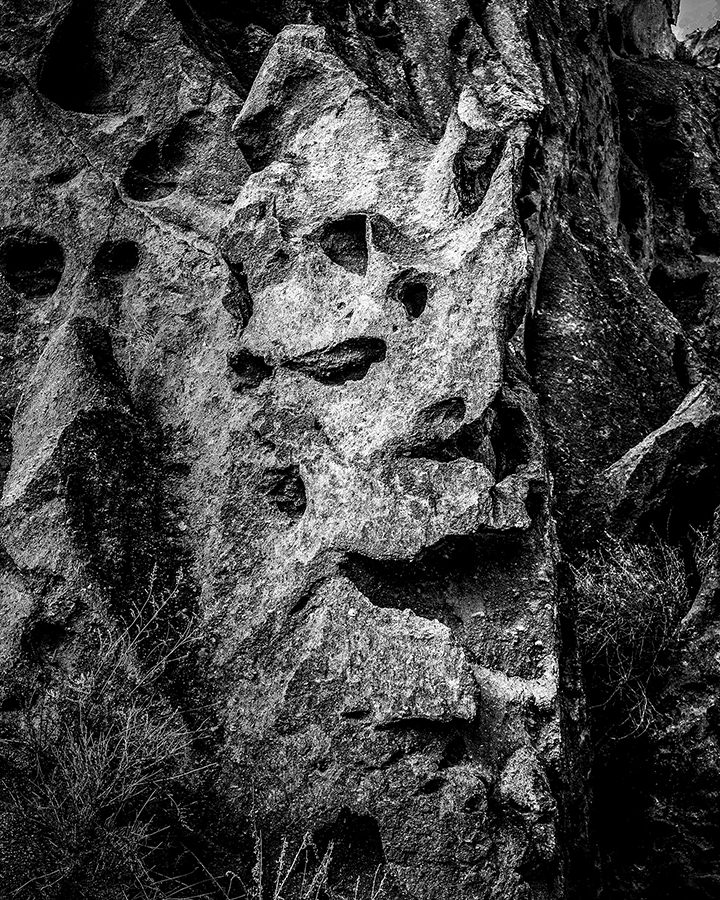
Faces in the Rocks also presents an interesting distinction. When Simpson is talking about literally seeing faces in the rocks, he does not ignore the obvious objection.
This brings us to a central question that psycho-geological photography as a practice—and geo-framing as a technique—must confront: why should its figures not be dismissed as “mere pareidolia”?
…To find an eagle or any other animal or face in a natural formation—popular pareidolia—is trivial. Once the figure is identified, the work of seeing is effectively finished. Other visual elements—texture, reflectivity, crystalline structure, even ambiguity, are all subordinated to recognition. However, “fine-art pareidolia” refuses this closure by drawing attention to the materiality of the rock or ice, subtly enhanced in the editing process, it invites the viewer to embrace the incongruity of seeing a natural subject as both mute, unmotivated matter and as expressive form.
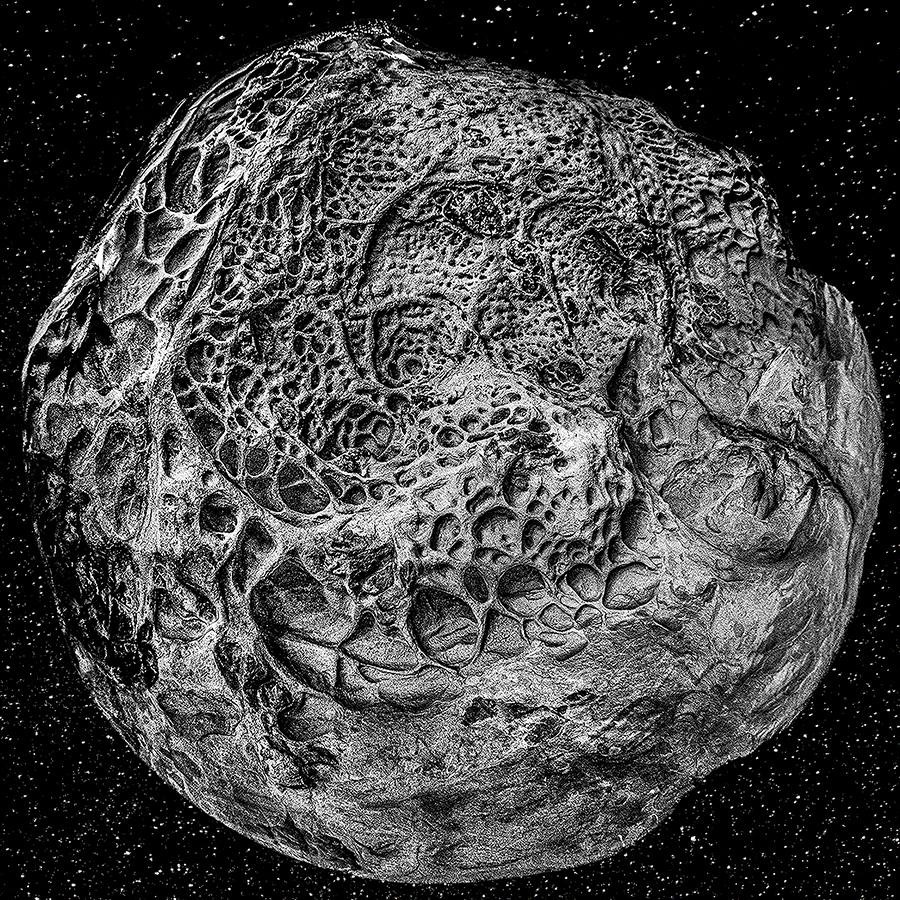
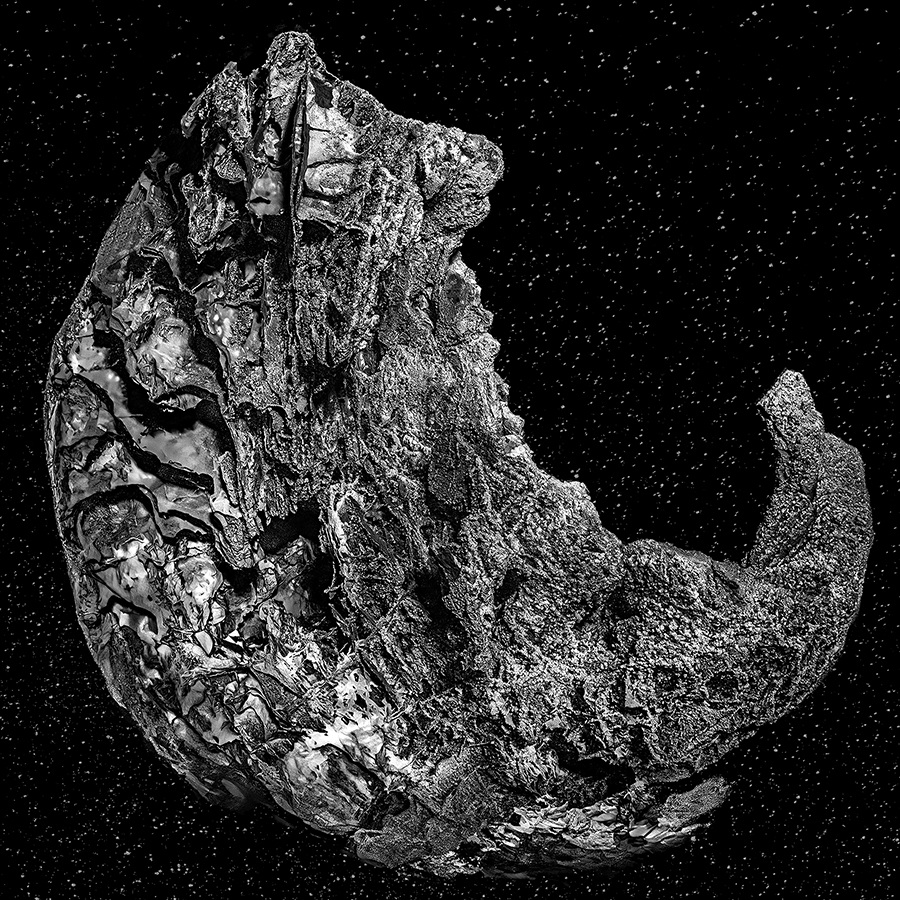
Faces in the Rocks does not work against more documentary landscape photography; instead, it suggests an additional path. It embraces both the physical world and the art with which it can be represented. Using a fisheye lens, for example, with a replaced background, Simpson celebrates the images and also calls them fictions. They are mood and mind pieces. To be clear, Faces in the Rocks is not pop-psychology, it simply asks the question: how can we take our psychological attraction to the details of the landscapes we see and use that question as an approach to setting up the tripod and pressing the shutter release. Whether or not you find Simpson’s ideas useful to your own practice, either as artist or as viewer, or both, the book raises a number of interesting questions and approaches. New ideas always spark new possibilities.
And, as I said up front, the images are all wonderful.
A note from FRAMES: Please let us know if you have an upcoming or recently published photography book.

FRAMES is a unique international photography community that combines the best of all worlds, bringing you print and digital publications, a global membership platform, access to live events, and a dedicated mobile application.
EXPAND YOUR PHOTOGRAPHIC VISION
JOIN FRAMES TODAY

Joel Simpson
August 8, 2026 at 14:59
Thank you, Scott, for this beautiful review, which you constructed as a dialogue between us. It is very gratifying to have these ideas taken seriously and as an invitation to an expansion rather than as a challenge to the landscape sensibility, to which I owe so much.
Joel Simpson
August 8, 2026 at 18:13
Since “Faces in the Rocks” is a print-on-demand book, not available in bookstores, it’s important to note that it’s easily available at http://books.by/joel-simpson, where shipping is minimal.