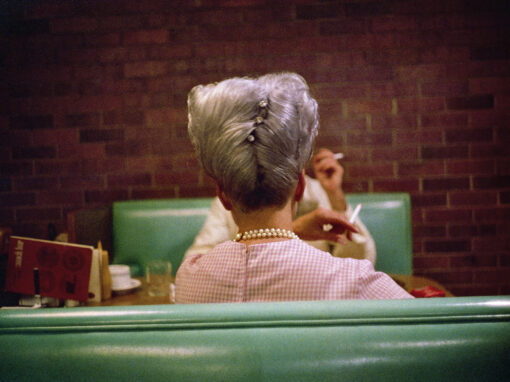
I should admit, right here at the very beginning, that I have a particular affection for documentary photo work. There is something about the documentary image which, for me, is always illuminating and revealing and compelling. It really does not matter whether I have any experience with the subject beforehand. Documentary work about space aliens on Planet X would be as interesting to me as documentary work about my own neighborhood. The documentarian’s way of understanding the power of an image always seems to strike beyond the surface into something core about a way of seeing the universe I have yet to know or imagine.
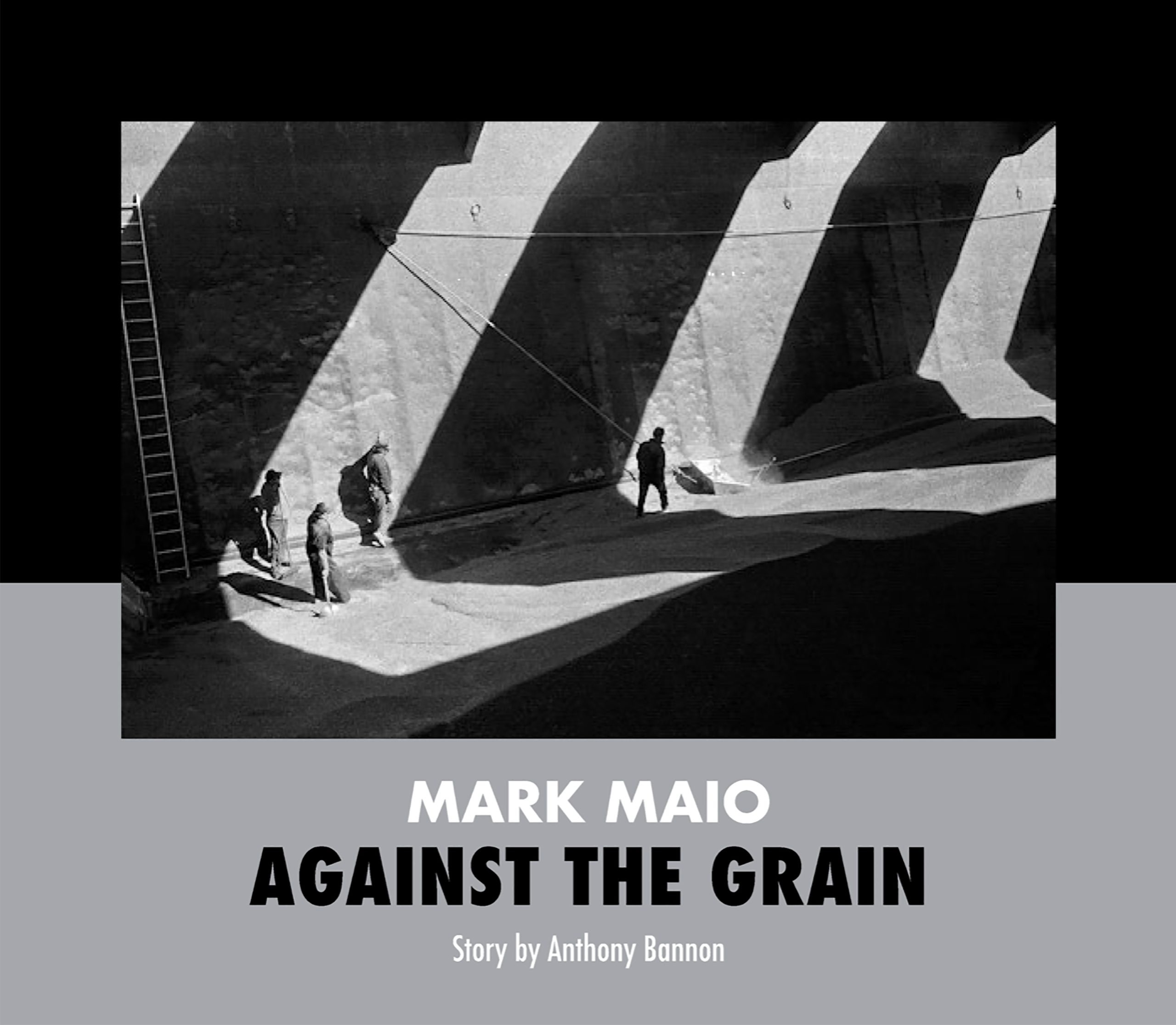
Mark Maio – “Against the Grain”, with story by Anthony Bannon
Published by Fall Line Press in 2025 >>>
Review by W. Scott Olsen
And I should admit, right here at the very beginning, that I love history. I love the storytelling that takes history beyond simple chronology into the motivations, the desires, the anguishes, the loves. If chronology is what happened, then history is why. History’s attempt to explain, paired with a documentarian’s desire to preserve, is an unavoidably attractive combination.
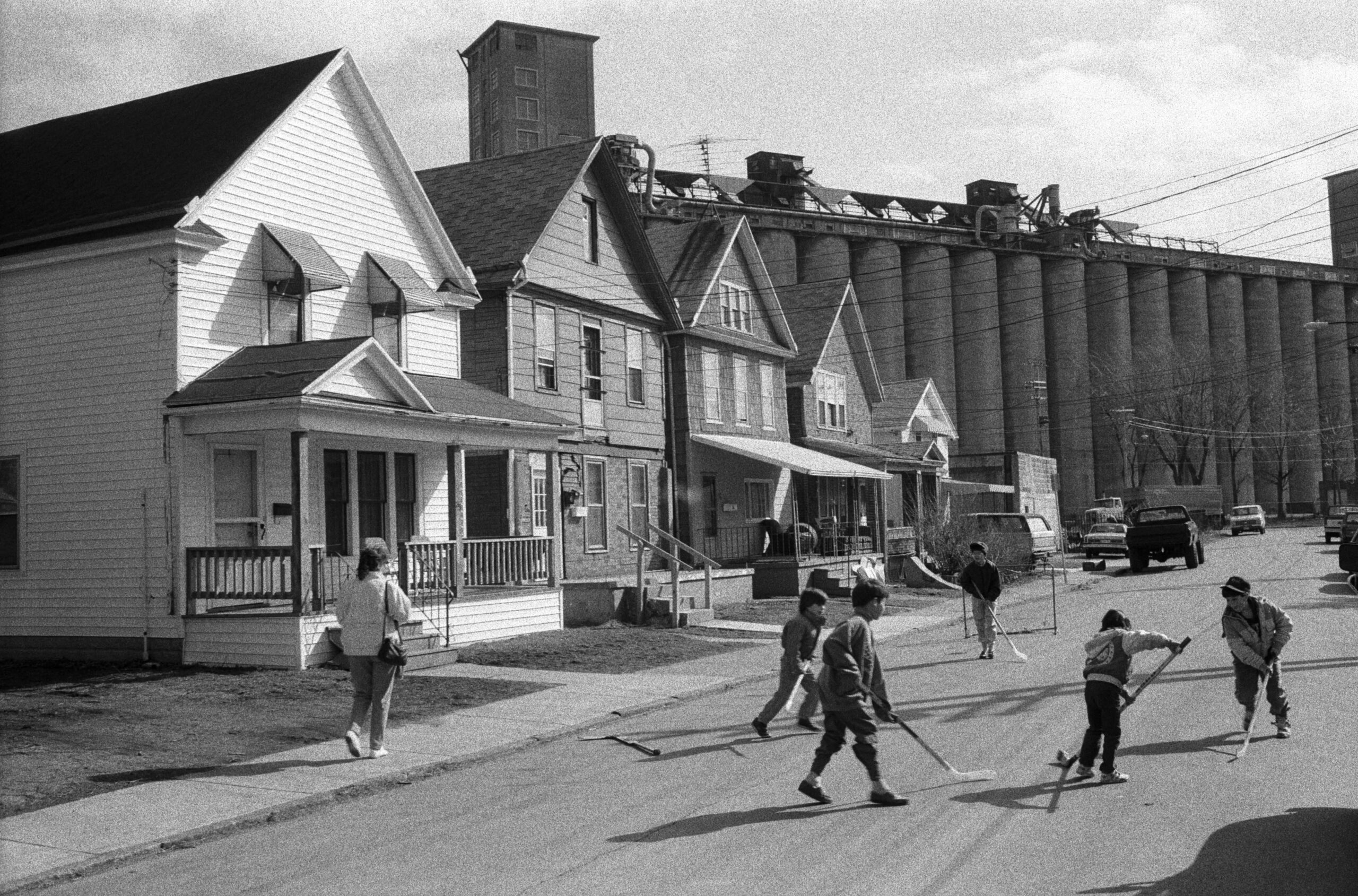
And, for this particular review, I should also admit, right here at the very beginning, that I live in the American Midwest. Agriculture is omnipresent here. Corn, wheat, soybeans, sunflowers, and more fill every horizon. Where I live on this part of the prairie, the grain elevators are so ubiquitous they are hardly noticed. And that is a shame because each one is a monument to a gargantuan process.
So perhaps I am biased. But I don’t think so. Let’s just say experienced.
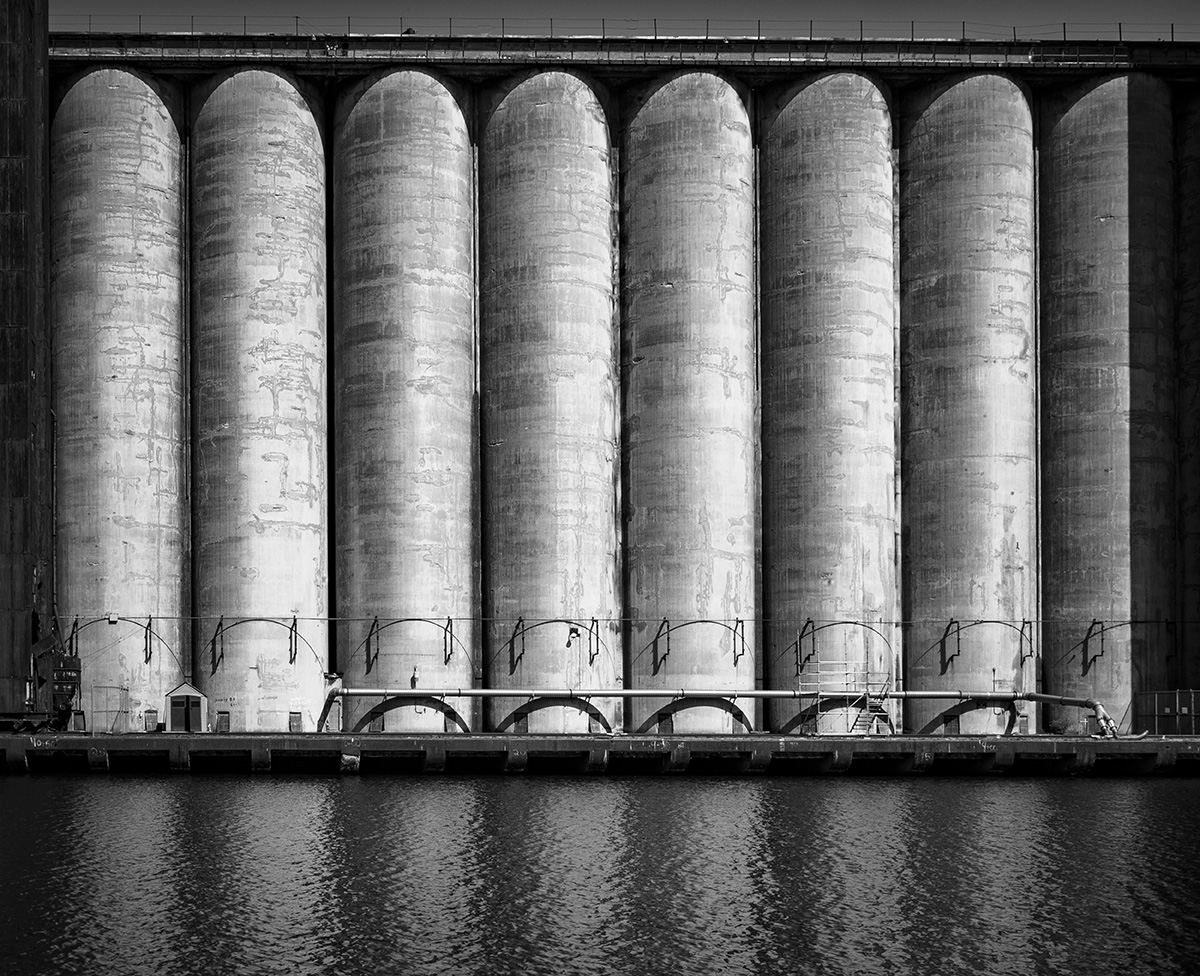
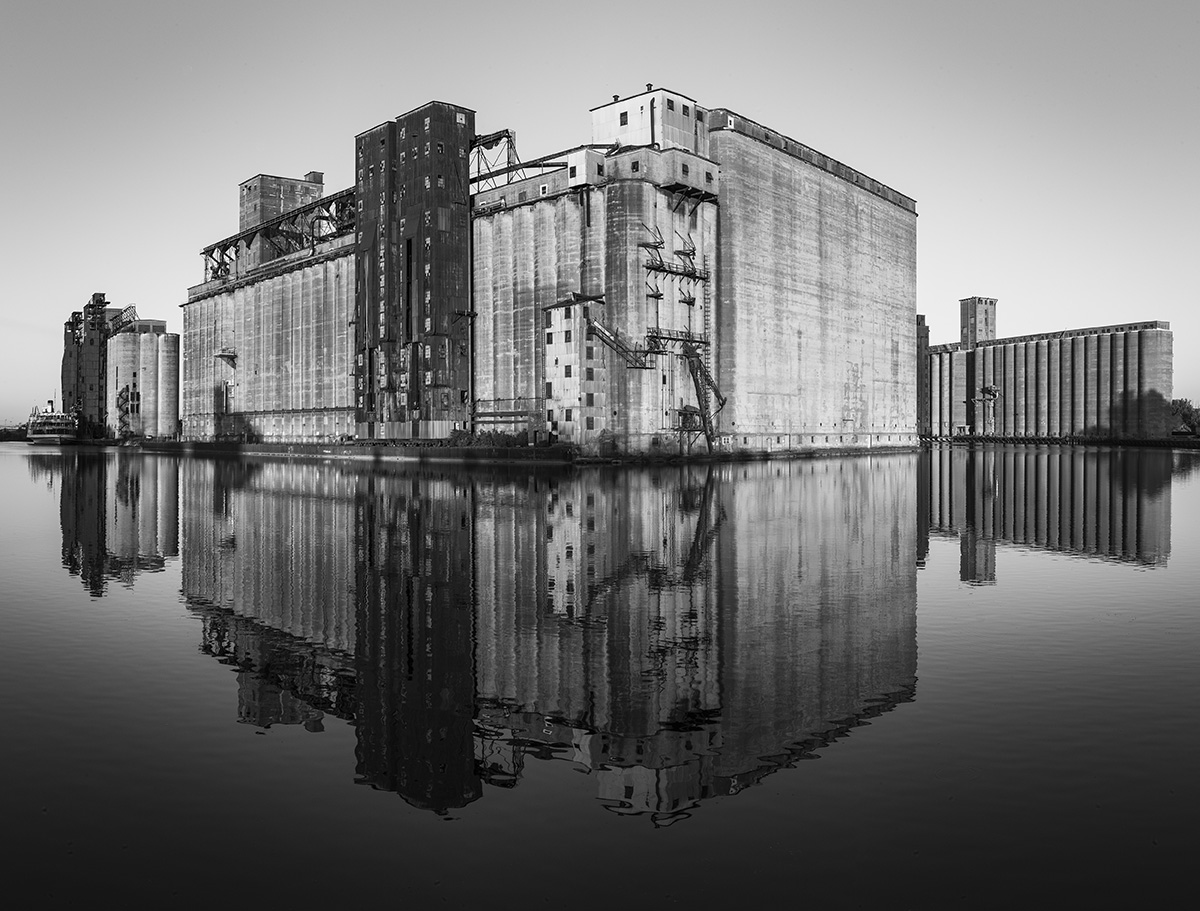
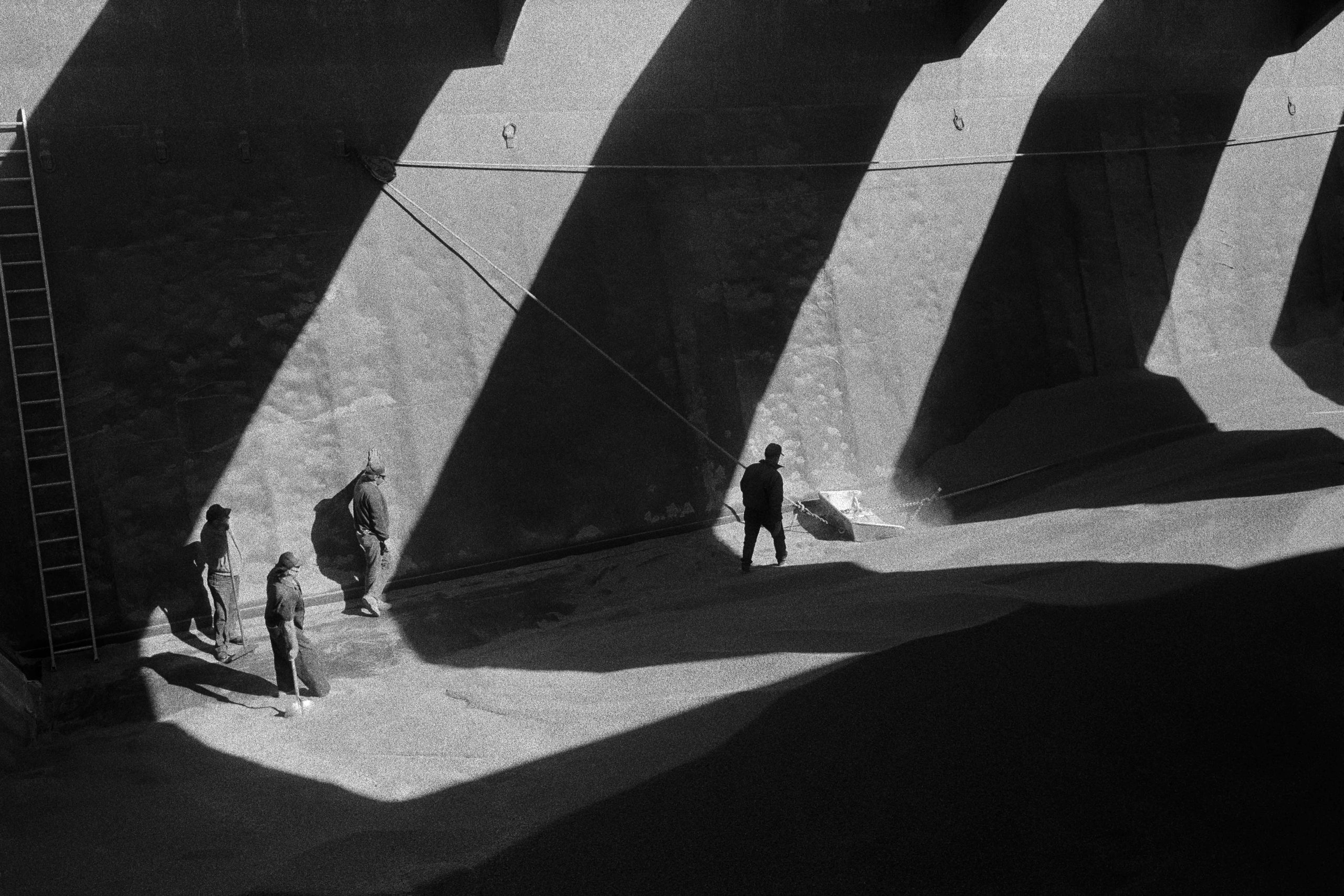
I bring this up because I have on my desk today a wonderful and deeply fascinating book called Against the Grain by Mark Maio. This is a book about a profession that no longer exists—the men who would scoop grain in cargo ships on the Great Lakes. But it is also about much more. This collection is about the process of moving grain through the country. It is about the lives and ambitions of these men. And it is about the integrity and the beauty of their work. Against the Grain is black-and-white documentary photography with a fine art sensibility, without the drama of graffiti-filled urban streets or the exoticness of Planet X, that celebrates the line, light, and shadow, the beauty of the work these men used to do.
In a foreword by Brooks Jensen, editor of LensWork, he writes—
I remember years ago reading Kodak’s definition of a good photograph as one that makes the viewer so aware of the subject that they are unaware of the print. Each of Maio’s images pulls us into a visual intimacy that makes it possible for us to wait just a moment for his subject to reanimate and allow us to enter their world. When a photographer produces a body of work like this, they don’t hope that we will complement them on the printing quality of the book (which is wonderful) nor the expertise of their photographic skills (which are also wonderful) but rather on the content and clarity of the world that is presented before us. The best photography has the ability to go beyond visual excellence by invoking our other senses. Maio’s images are visually compelling as well as seducing us into an aural imagination. These are images to linger over.
Later, in an introduction, Maio writes—
“Against the Grain” began quite simply as a documentary project. But it quickly became something more. The process of photographing pulled me deeper, stirring questions that the images alone couldn’t answer. My camera became a kind of visual notebook, documenting a way of thinking, observing, and seeking. I found myself tracing a path that writer Anthony Bannon christened “The Great Grain Route” – a phrase that perfectly captures the arc of this work. I understood this was about capturing what was in front of me. I followed the thread of the story wherever it may lead, confident in the belief that the journey is the reward…
What I did recognize from the start was that this physical, dangerous, and human-centered process would soon be replaced by automation. Deep down, I felt destined to tell the story before it vanished.
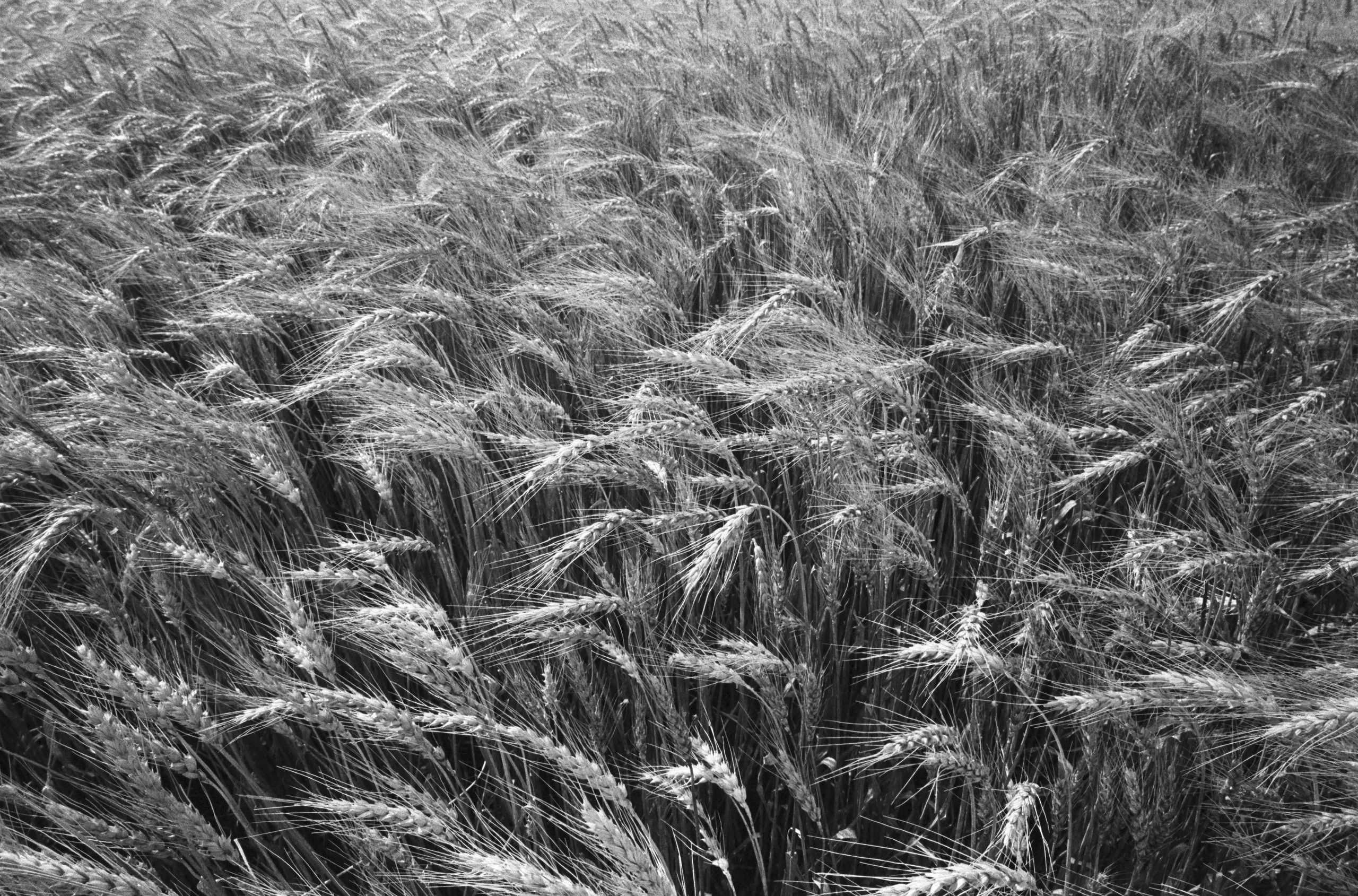
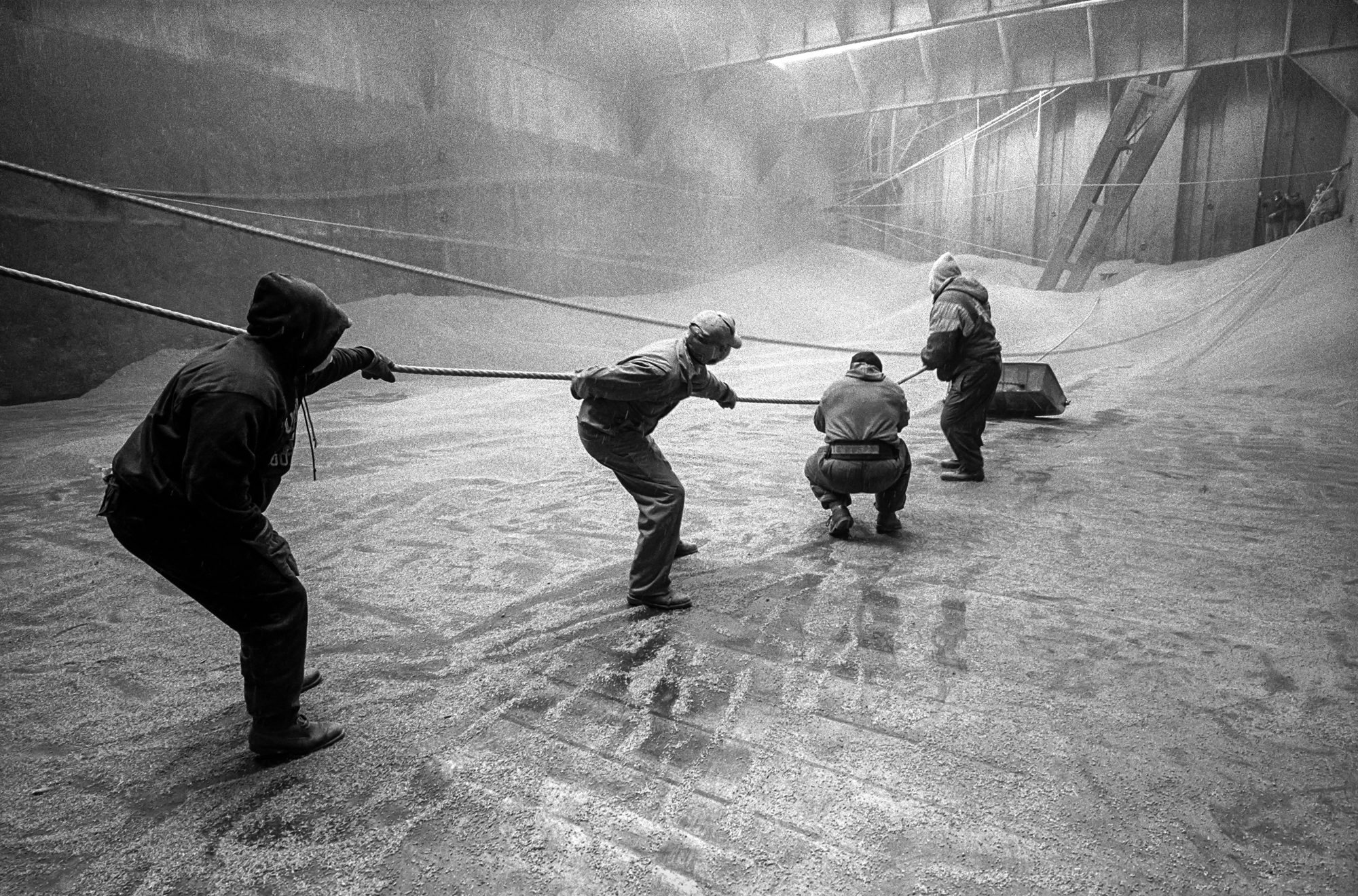
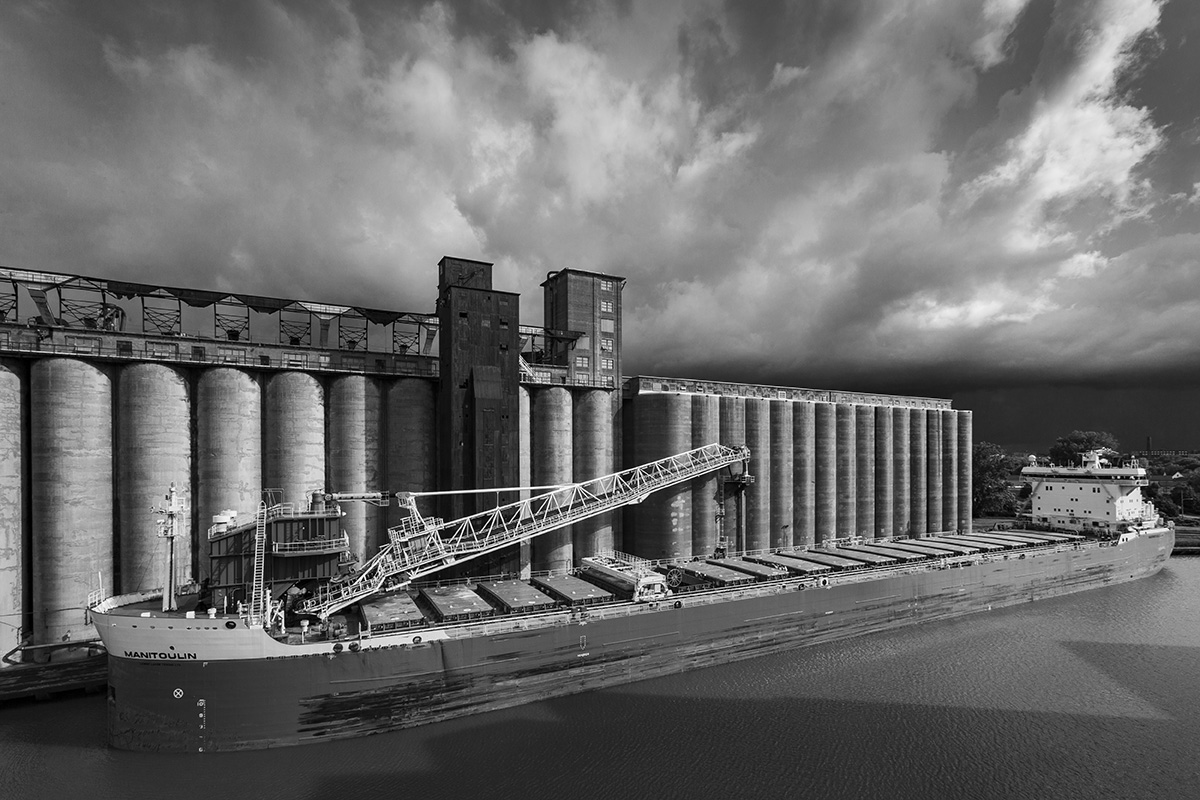
The images in Against the Grain are all monochrome, gently toned renderings. There are panoramas, landscape, portrait, and square orientations. The images, even when there are no people in the frame, have a portraitist’s love of shape and light. Whether they are taken from the deck of a ship, inside its hold, dockside somewhere in the Great Lakes, or on the fields of Kansas, there is a respect in these images I admire. This comes partly through choice of subject and partly through technique. Maio has an extraordinary eye for the type of composition that creates not only a still life presence but a narrative as well. There is a story implied in every photograph.
Against the Grain is not only a collection of talented and oftentimes poignant photography. It is also a history with a great deal of text for a photobook. Most of the text was written by teacher, filmmaker, scholar and writer Anthony Bannon, who was also the longest serving former executive director of the Eastman House. Bannon gives the arc of the scoopers’ work and culture in clear and illustrative prose. His research is wide-ranging and connects such disparate forces as New England transcendentalism, the Erie Canal, the conversion of ships from hauling ore to hauling grain, and French architect Le Corbusier, to the work of the scoopers. Every page is intelligent and creates a fine narrative.
Bannon also has a deep understanding of photography. For example, he writes—
Sometimes a still life is a cluster of flowers: sometimes a skull, a book, or a fruit added. It could consist of dead animals hanging from a hook, fresh from the kill, or a simple piece of crumpled paper, revealing light and shadow. A still life’s objective is to work out a problem, take up the challenge of a new idea—perhaps about color or form; perhaps the new formula for paint or strategy for using a new lens. Photographers can create a telling arrangement of objects, such as a line-up of piano keys, or the scoopers’ shovels, or a light study of the block and tackle, each an element to illustrate or challenge an aesthetic or inform an affection.
The content here focuses upon a union group of men called scoopers, who unloaded the grain ships in Buffalo Harbor. The context is history, for the scoopers made it and now occupy history’s time. Their union is dissolved. The profession is finished. At this point the role of history is to interpret their work and culture and make use of their presence and the consequences of it all.
Against the Grain is one of those photo books you will pick up, admire the pictures, begin to read the text, get involved with the story, return to the pictures, linger a little bit longer over each, then look up and realize several hours have gone by. You will know more about the scooper’s profession, and you will also know something much more important about the very many ways work, and identity and community can take shape. Against the Grain is an important story now preserved. It’s worth every moment.
A note from FRAMES: Please let us know if you have an upcoming or recently published photography book.

FRAMES is a unique international photography community that combines the best of all worlds, bringing you print and digital publications, a global membership platform, access to live events, and a dedicated mobile application.
EXPAND YOUR PHOTOGRAPHIC VISION
JOIN FRAMES TODAY