A journey through Japanese photography, where minimalism, urban chaos, and the poetry of impermanence reveal the art of seeing beyond the visible.
Paris has fallen in love with Japan, and not just recently. Walking through the neighborhood around Galeries Lafayette, it is difficult to make your way along the streets, crowded with konbini, Japanese pastry shops, and endless queues for sweets that look more like jewels than desserts. But it would be a mistake to dismiss this as a passing trend. The French have been looking towards the East for more than a century and a half, ever since ukiyo-e prints transformed the painting of Monet and Van Gogh. Today, this fascination can be found in museums, books, and contemporary art spaces, including the Palais de Tokyo, which, although it owes its name to Japan, shares its curiosity for all things new and experimental.
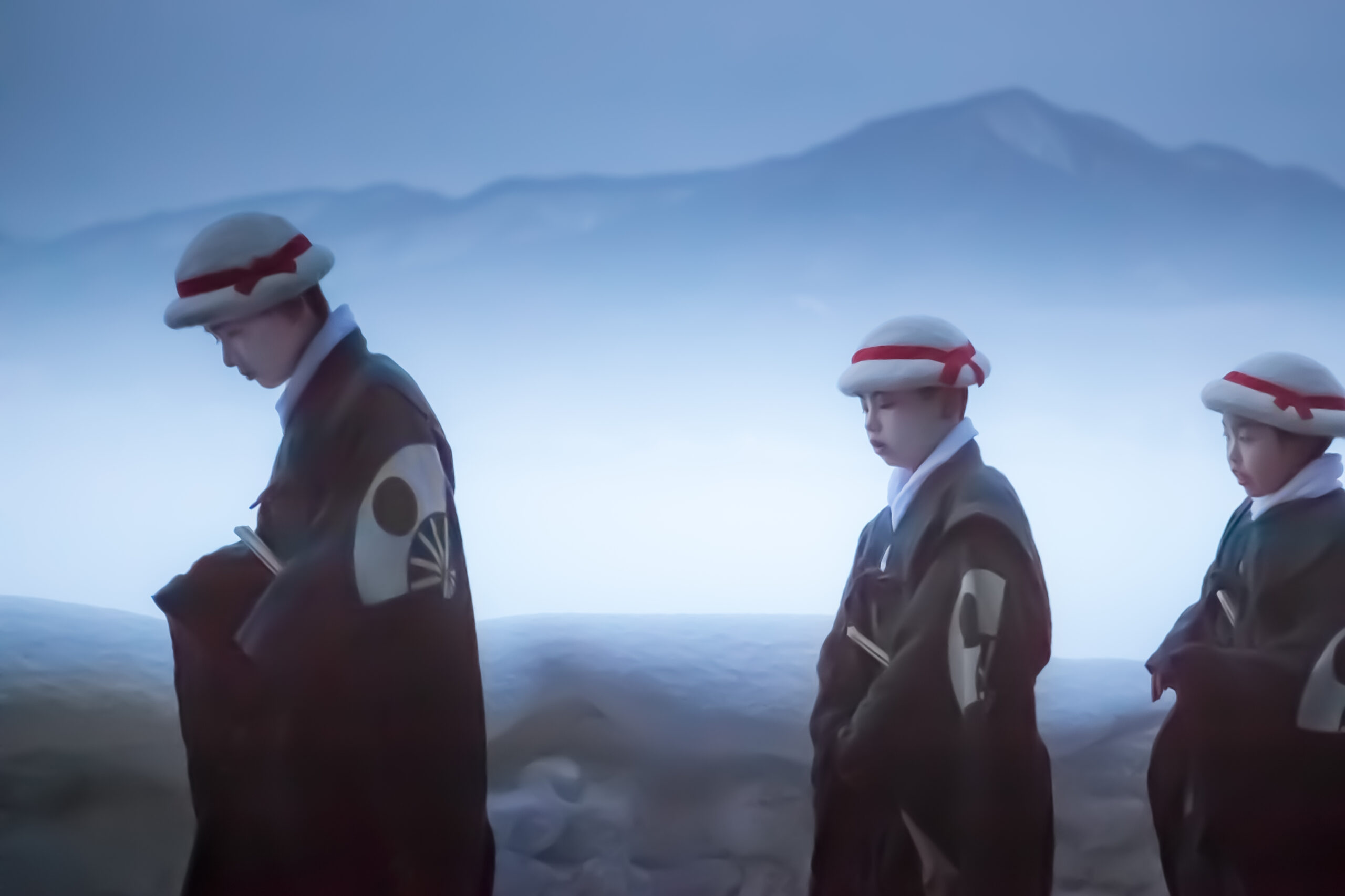
Against this cultural backdrop, the Bibliothèque nationale de France, at its François-Mitterrand site, is hosting an exhibition to mark the Bicentenary of the birth of photography. Running until 31 January 2027, it brings together around one hundred artists and three hundred works, spanning almost eighty years of Japanese photography, much of it in black and white.
For anyone who works with photography, the most compelling lesson lies in the way so many different perspectives eventually come to speak the same language. It begins with a cherry blossom. In Japanese culture, sakura is not simply a beautiful subject: it symbolizes the transience of life and the poignancy of things that do not last. This is precisely the sensibility known as mono no aware. When a photographer such as Eri Makita captures a blossom, rendering it light and almost suspended in space, she is not documenting a plant but conveying a breath. To achieve this, she removes visual noise from the image. Makita strips away the superfluous, bringing out a few scattered petals, a handful of branches, while allowing the surrounding air to take possession of the frame. The flower becomes increasingly stylized until it is reduced to a sign, like a brushstroke on a sheet of white paper.
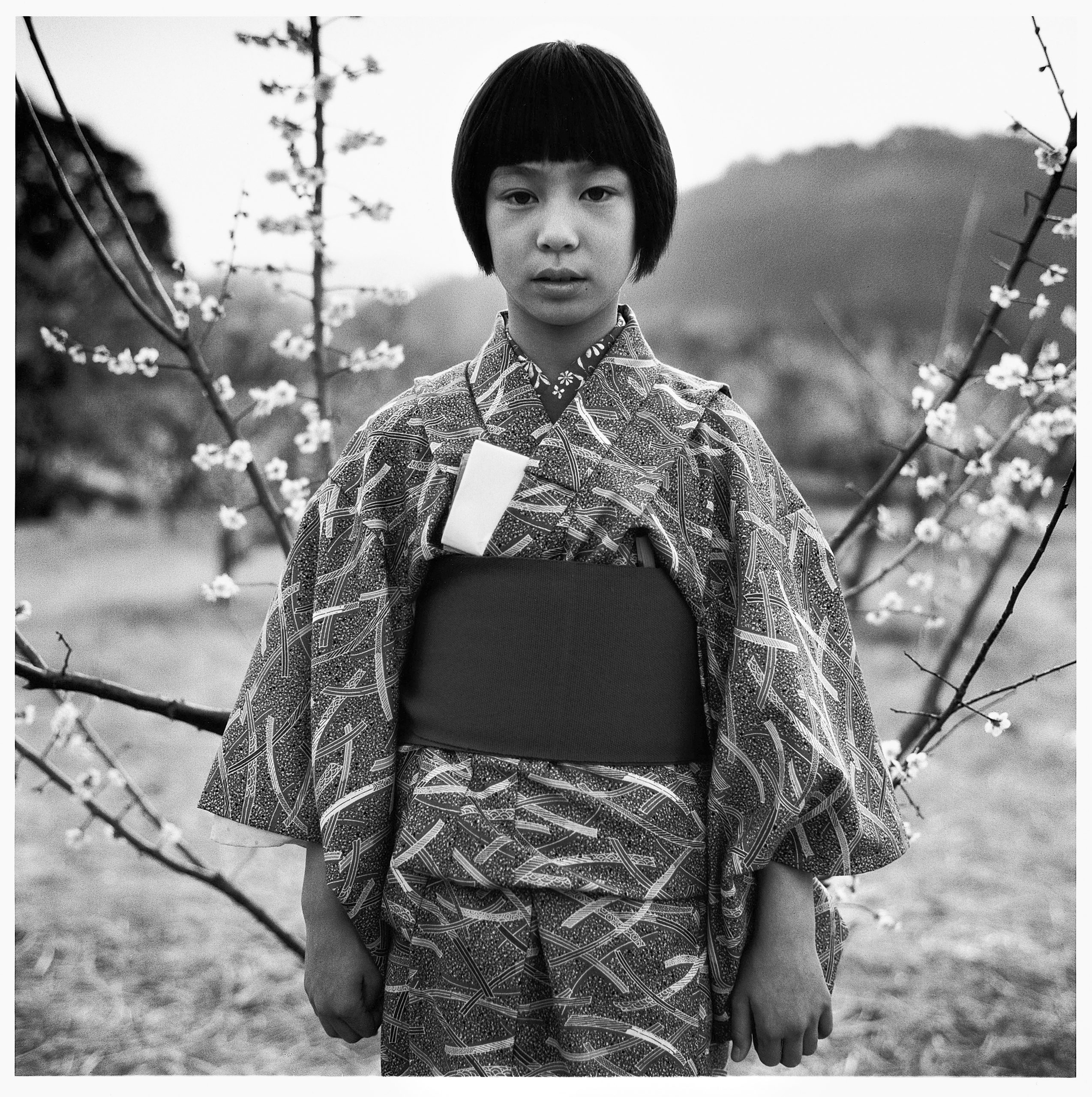
© Issei Suda, image courtesy of Akio Nagasawa Gallery
This is where minimalism takes shape, an approach deeply rooted in Japanese art, where empty space is not an absence but a presence in its own right. The same principle governs Sayuri Ichida’s images of a distant female figure in a kimono: the woman is tiny, almost like a delicate calligraphic mark, and the emptiness surrounding her allows the figure to breathe. The smaller the subject becomes, the more concentrated our gaze. It is a rule every photographer knows in theory, but one that Japanese artists have applied almost instinctively for centuries.
From here, the transition to architecture feels almost inevitable. Toshio Shibata photographs dams, embankments and engineering structures with a precision that might initially seem purely technical. Yet his purpose is the same as Makita’s: to isolate a form, strip it back and allow its lines to speak. Concrete cascading down a hillside like a stroke of ink possesses the same economy of expression as a cherry blossom branch. It is significant that the exhibition places his work alongside Ichida’s in the section devoted to the calligraphic language of the world. The constructed landscape becomes writing, and architectural photography ceases to be an inventory of volumes, turning instead into an exercise in visual reduction.
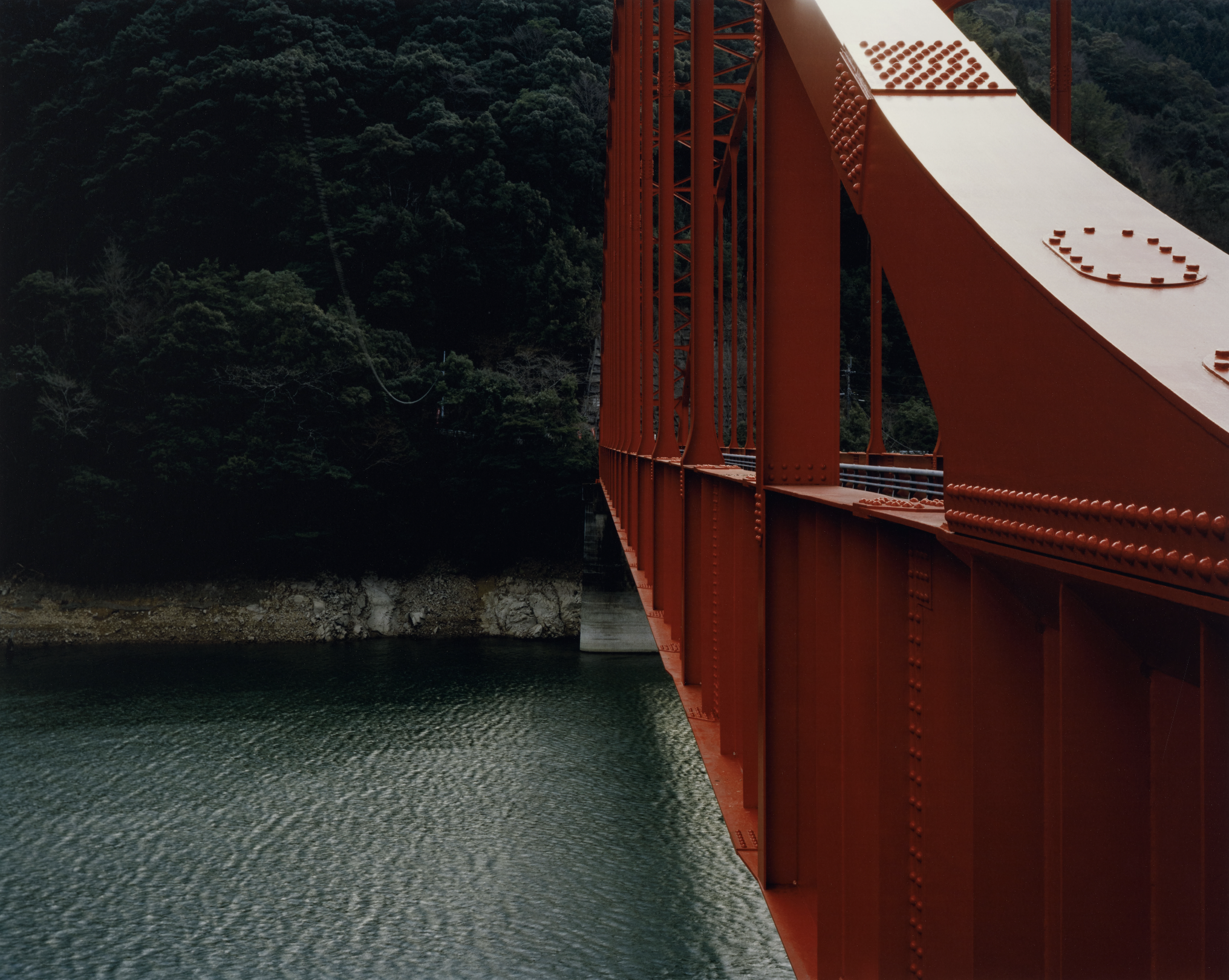
© Toshio Shibata / Cliché BnF
Opposing this quietness, while at the same time complementing it, is the darker, more tactile world of Kazuo Amemiya, whose use of chiaroscuro and grain gives his photographs the density of paintings. If Makita seems to remove light, Amemiya draws it out of the darkness. Yet the underlying principle is identical: not to describe, but to evoke a presence. Here, another concept central to Japanese aesthetics comes into play: wabi-sabi, the beauty of imperfection, of things worn down and marked by time. The grey clouds, stirred by the wind, in Tadasu Yamamoto’s photographs belong to the same aesthetic territory. The sky becomes an atmosphere to move through, and photography approaches ink painting, where a single brushstroke can be enough to make us feel the wind.
Then there is the opposite gaze: the street photography embodied by Daido Moriyama, with its grainy, restless black and white. At first glance, it seems to stand in complete opposition to everything described so far. And yet Moriyama, too, reduces the image to its essentials, only through a different kind of violence, in which grain takes the place of emptiness. The power of Moriyama’s photographs is unmistakable. The melancholy, weathered dog in Stray Dog, Misawa, Aomori (1971), and the Shibuya, Tokyo series (1964–1968), portraying geishas and a Japanese world undergoing profound transformation, were among the highlights of the now-closed exhibition at the Fondation Henri Cartier-Bresson. These works also enter into dialogue with the few pieces by Moriyama included in the BnF exhibition. Yet Moriyama’s entire body of work portrays a Japan in constant turmoil, much like the novels of Ryū Murakami, which expose the contradictions of a world that appears perfectly balanced on the surface, while concealing something far more explosive beneath. It is an ordered chaos, one that brings to mind the Shibuya Crossing.
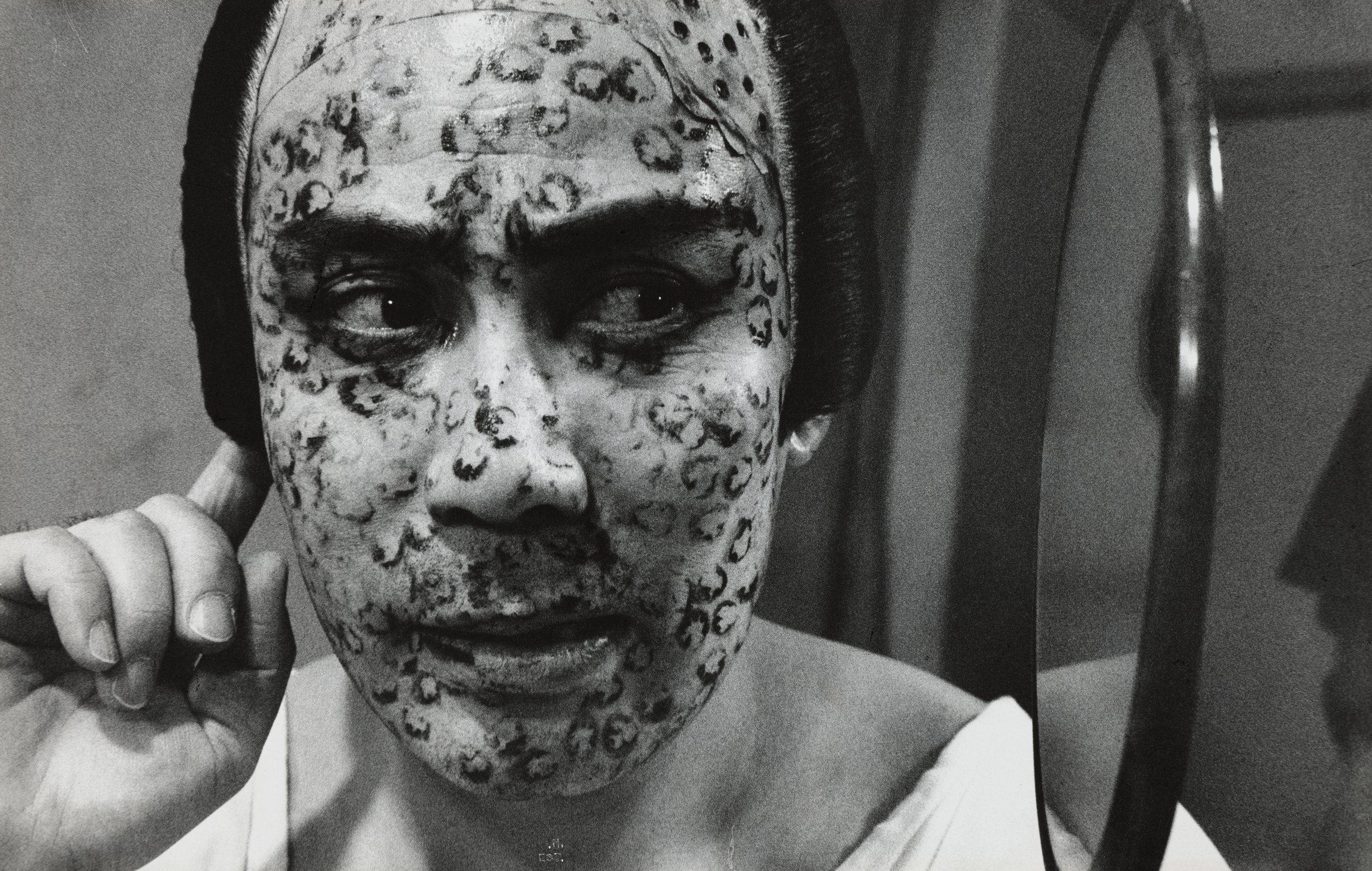
© Ken Domon Museum of Photography
As the photographs unfold, it becomes increasingly fascinating to see how, in Paris, alongside the formal rigor of dams and the delicacy of cherry blossoms, there is also room for a contemporary, playful detail: the brightly painted fingernails in the photographs of Hiroaki Tsukamoto. They embody a Japan that is at once pop, intimate and deeply contemporary, reminding us that the same attention to detail can be devoted to a petal or to an elegantly portrayed hand.
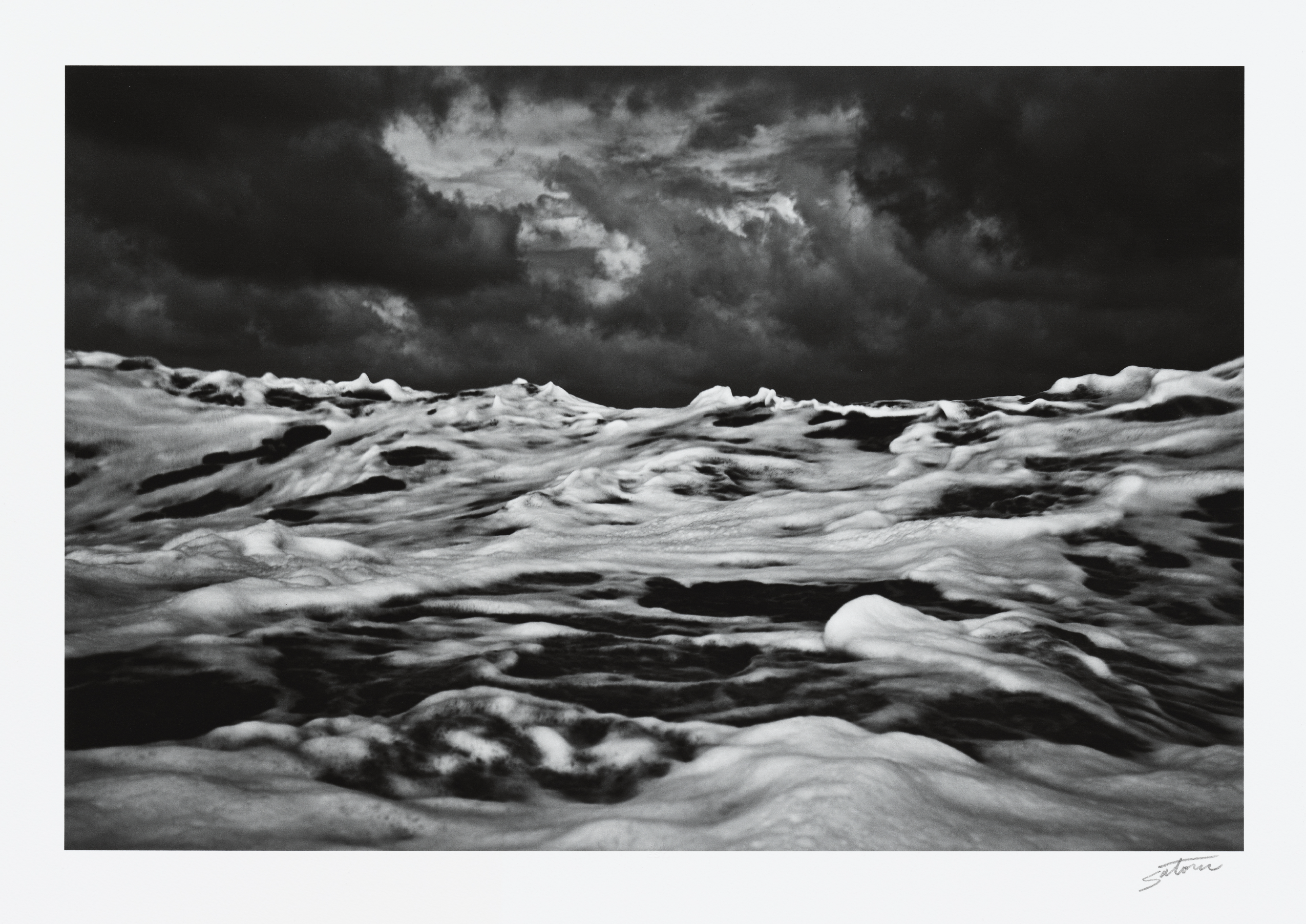
© Satoru Kondō
Taken together, these artists articulate a single idea through a thousand different variations. They point towards the essence of Japanese art, where looking is an act of subtraction. From sakura to minimalism, from emptiness to the clean line of a dam, Japanese photography teaches us that a powerful image is not one that reveals everything, but one that leaves room for the viewer. For anyone who takes photographs, this is a practical invitation: to leave the exhibition, go back out into the world and try again. It would be wonderful if, among the thousands of images that now overwhelm us every day, so many of them devoid of any real aesthetic intention, we could find fewer subjects and more breathing space; more sketched-out forms, and the courage to stop just before the image becomes too much.
PHOTOGRAPHIES JAPONAISES
Bibliothéque Nationale de France
until January 31, 2027
ABOUT THE AUTHOR
Silvia Ionna is an independent Art Director. She writes about photography, art, and books for various online magazines.

FRAMES is a unique international photography community that combines the best of all worlds, bringing you print and digital publications, a global membership platform, access to live events, and a dedicated mobile application.
EXPAND YOUR PHOTOGRAPHIC VISION
JOIN FRAMES TODAY