I am only stating the obvious when I say photobooks have emotional impact. Something about seeing is a direct line to heart and soul. Especially when dealing with morally difficult situations, the photograph has the ability to include subject and context and milieu and periphery details in one frame, which complicates our considerations. Looking at an image may be pleasing, but it is seldom easy.
We are, to put it in an unusual way, vulnerable in the presence of images.
Sara Bennett – “Looking Inside”
Published by Kehrer Verlag in 2026 >>>
Review by W. Scott Olsen
Photobooks about prisons have a special niche of impact. Some of them are documentarian style, to show conditions. Some of them of abandoned prisons show the decay as a kind of metaphor for a society that has gone on to something else. But nearly all photobooks about prisons are also advocacy books. Something about the system needs to change, they argue, and most of the time what they are arguing is for a more humane understanding and action of incarceration. Prisoners are taken out of society, put away, and generally fall out of public attention until something goes catastrophically wrong. Photobooks about prisons are almost always arguments for change.
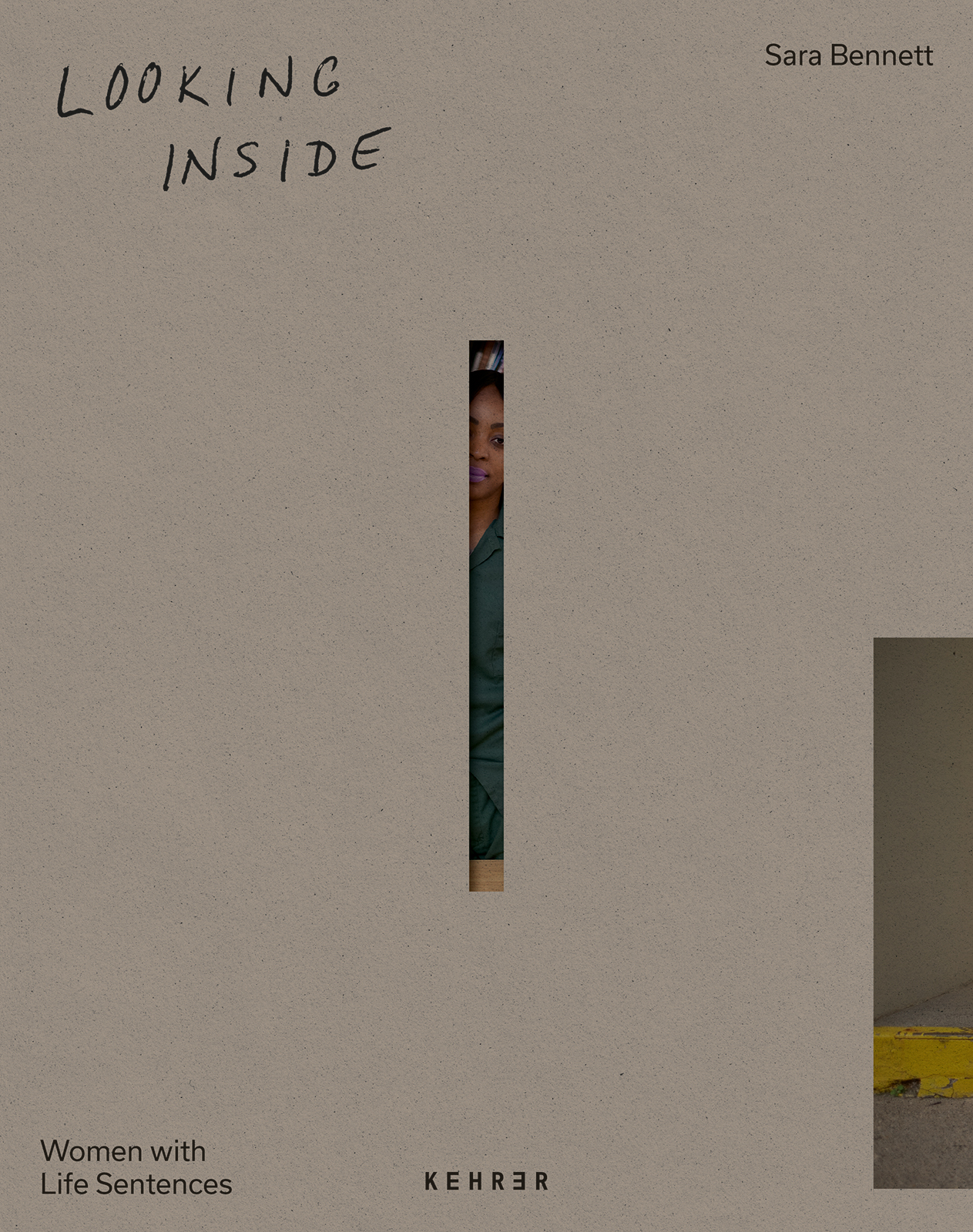
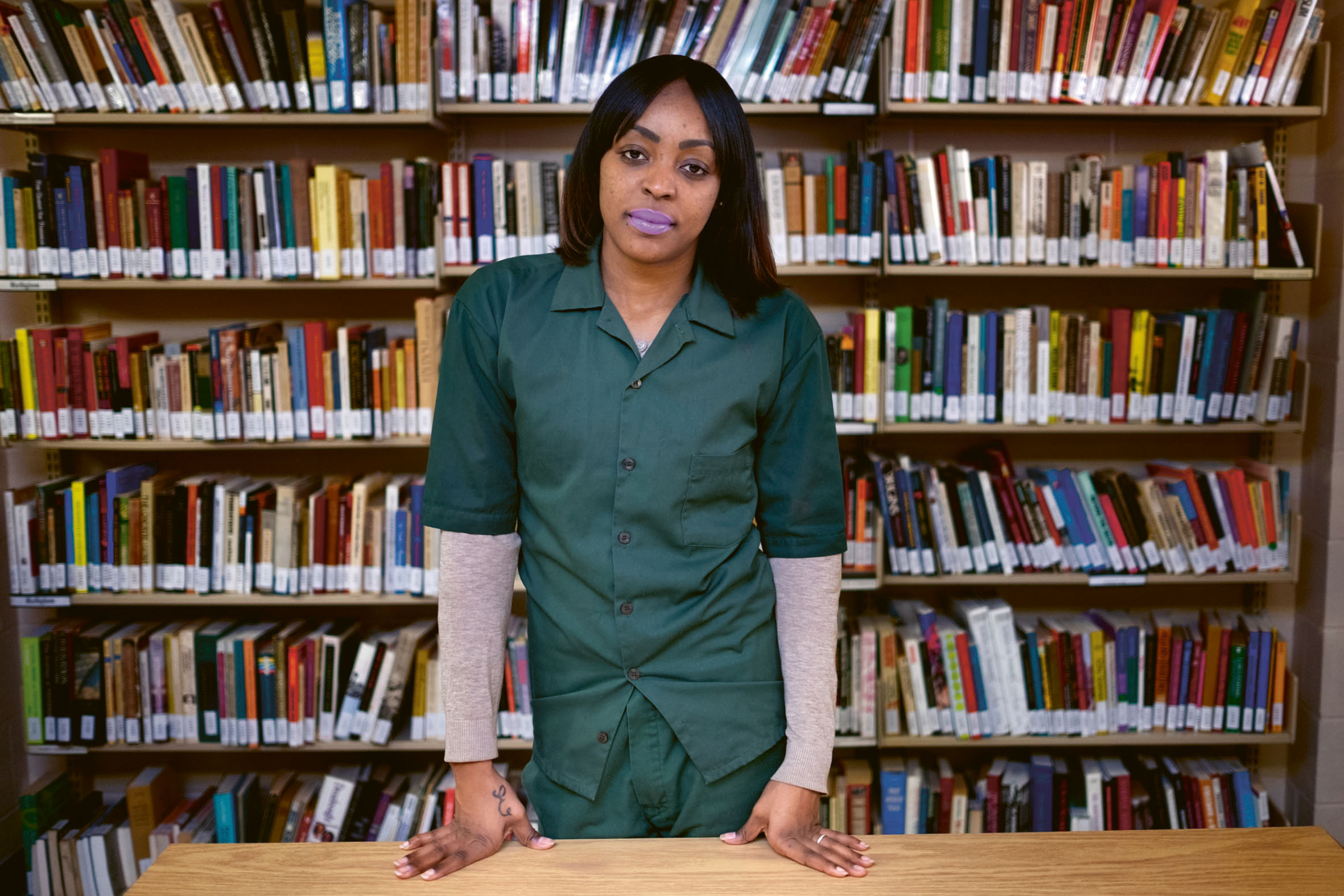
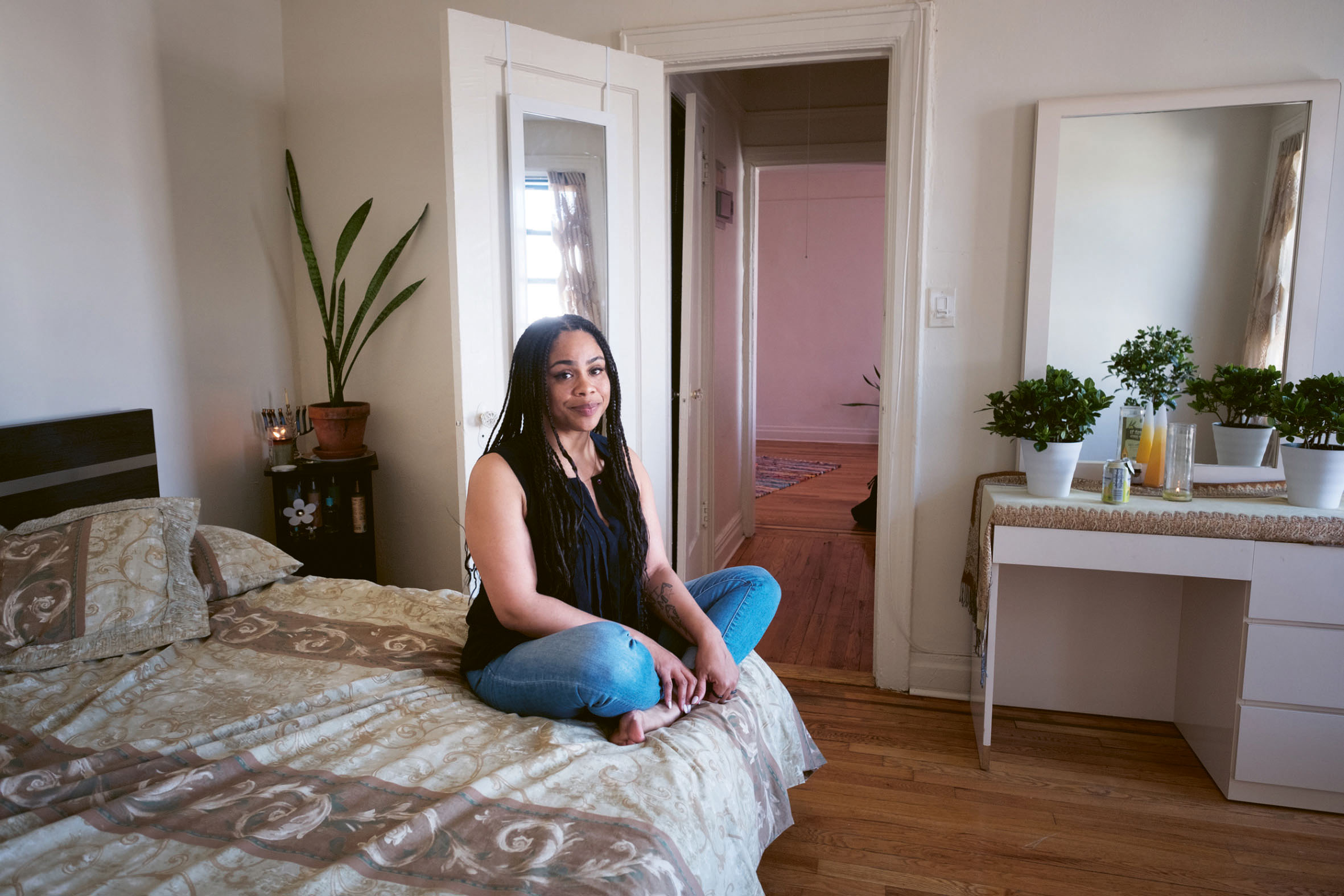
I have on my desk today a book called Looking Inside by Sara Bennett. The subtitle is “Women with Life Sentences.” In photography first impressions do count, and just in terms of book arts, this book begins with a profound and moving design. The cover, plain brown heavy paper stock, has a vertical rectangle cut into it, a bar, clearly a prison bar. Behind that. printed on the interior page but seen only through the slit of the bar. is a young woman in prison garb. Open the dust jacket, though, and we see a young woman standing in front of a wall of books, each with a catalog sticker, a library. Her look is neither joyful nor angry. It’s resigned, but not hopeless. So the argument here is that behind the bar there is a real person, not a statistic, not a stereotype, a real person. If the library metaphor can be extended, here is a woman trying to do something more, something larger, something better with her life. Behind bars we can see real women with real lives and real hopes.
In an afterword, Bennett explains how this book came to be. She writes—
After an 18-year career as a public defender, I left the practice of law in the mid-2000s to pursue other interests. In 2009 some of the formerly incarcerated women I knew beseeched me to take on the case of Judith Clark, a woman who had been imprisoned for 28 years and would die there unless I can persuade the governor to grant her clemency. I became her pro bono attorney and I tried everything I could think of to show that she was an extraordinary person worthy of the governor’s mercy. I even created an audio recording of well-known actors reading from letters of support to try to capture the interest of the governor at the time, who was blind.
When the next governor came into power, I tried something new. Although I hadn’t picked up a camera in decades, I thought I could humanize Judy by taking portraits of women who had been incarcerated with her and have them write about her influence on their lives…
Everyone was curious about the women in the photos and their life stories and surprised how ordinary these seemed…. I wanted to show something that I took for granted: that people with life sentences are “ordinary” human beings, in the best sense of the word, who should be treated with compassion and respect.
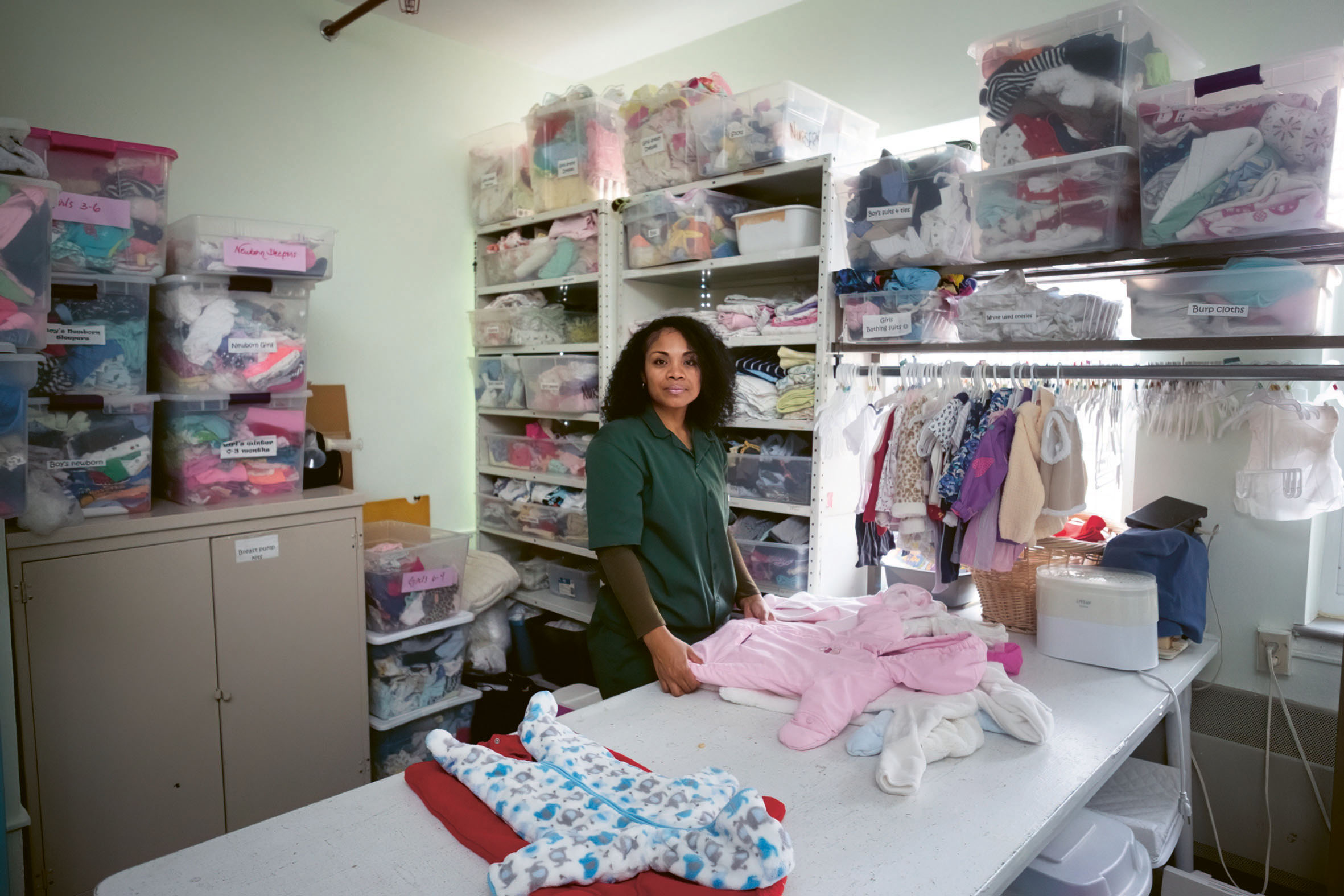
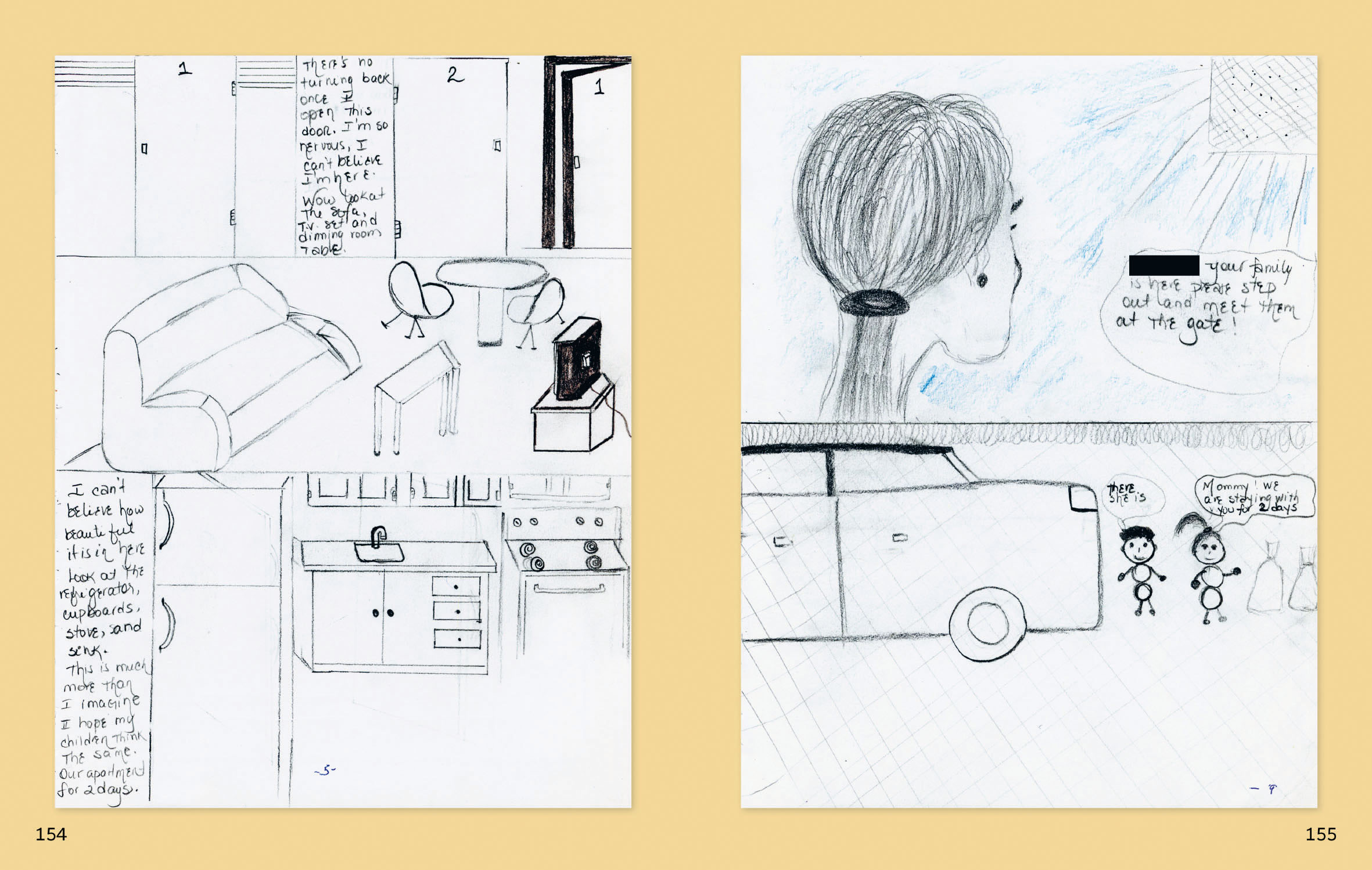
After the strong opening cover, Looking Inside begins with translucent vellum paper portraying a series of stuffed animals, one per page, and this soft opening creates the tone for the entire book. Nearly every right-hand page is a portrait of an inmate, some still incarcerated, some recently released. Under each image there is a caption that gives a first name and a setting, such as “Leah in the draft room at Taconic Correctional Facility, Bedford Hills NY, 2019.” In this photograph, the room is clean and well organized, and Leah looks almost comfortable. This could be an image from any middle school in the country, except the yellow wall behind her has guidelines for fingerprints.
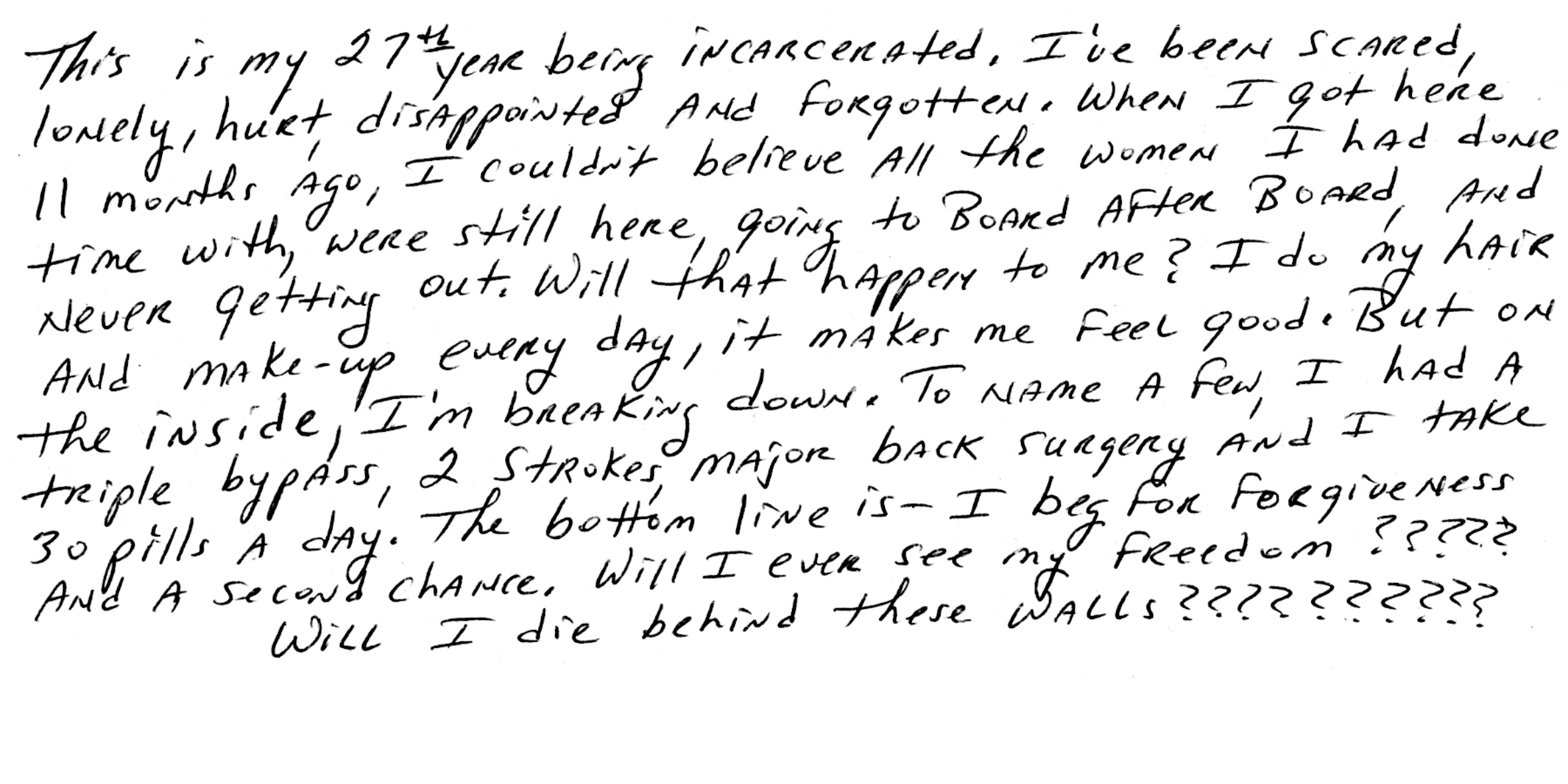
Nearly every left-hand page has a bit of writing from an inmate, in their handwriting. The texts are self-expressions of their emotional state, their situation, their thoughts about being a prisoner. For example, Leah writes—
As much as I desire to, I will never be able to change my past, but I have allowed my past to change me. Today, I realize that it will never be about me, but in my endeavors to do better and be better, I know that it starts with me. Today, I make better choices and I have better ways to cope in any situation without ever resorting to violence. Today I’ve become a respectable, responsible, selfless, compassionate, humbled, and mature woman, who is always conscious of the people I have hurt and the damage I have done.
At the bottom of the page we learn a little bit more: “Leah, age 44, incarcerated at the age of 23 in 1997. Sentence: 21 years to life.”
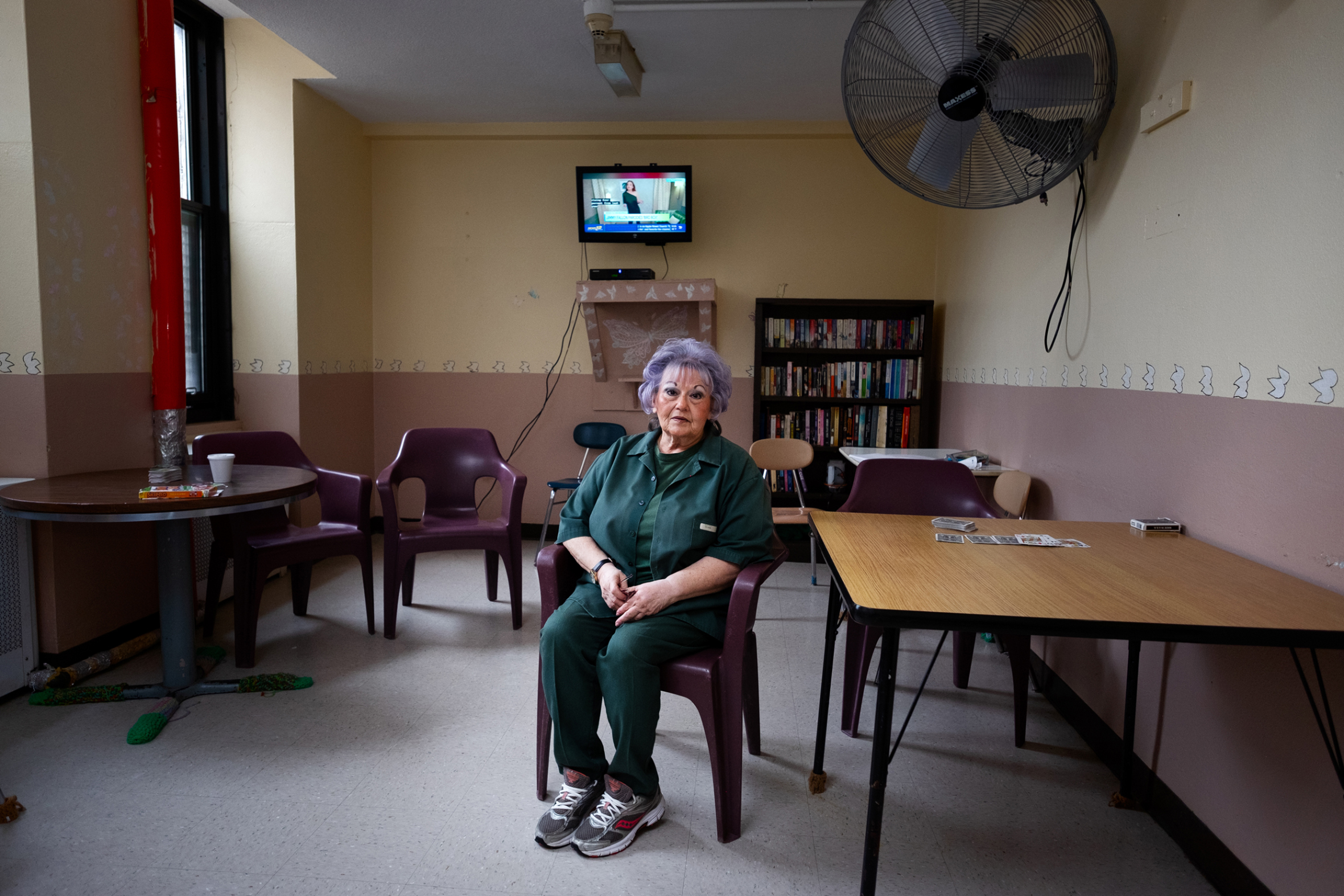
Every portrait in Looking Inside is sympathetic. These are posed images in bedrooms and workrooms, in kitchens and offices. These are portraits which give light to the ordinariness of these women. There are also polaroids, sketches, images of degrees. Some of the women are smiling in their portraits, some laughing, but most seem in a kind of middle ground between a hard past and a difficult, uncertain future, nonetheless filled with hope.
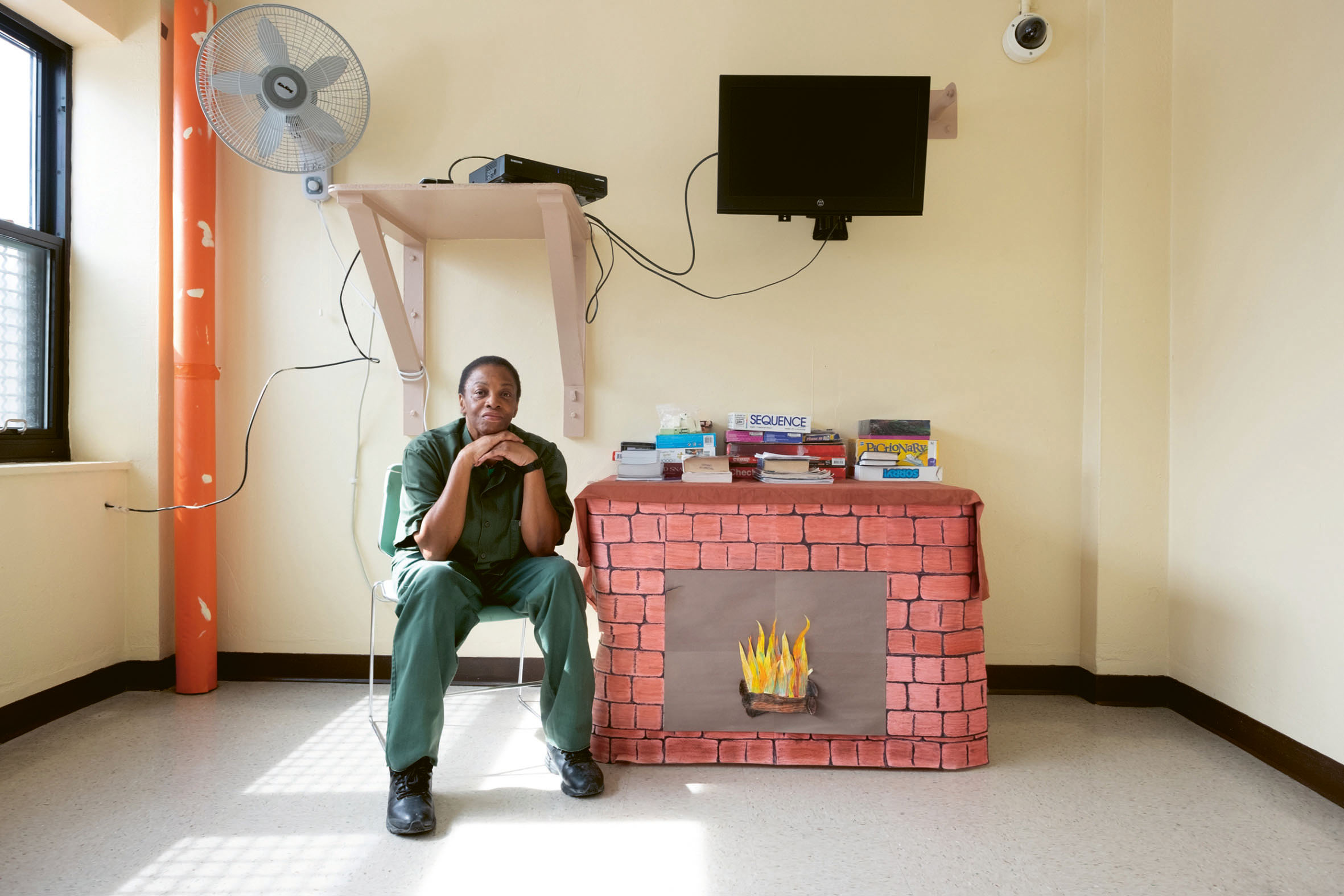
Most of the portraits are taken a short distance away from their subjects, across the room more often than not, so they do not fill the frame. This is part of Bennett’s argument. The women do not look criminal (whatever that may be). They do not feel threatening. They look unassuming. These images, along with the heartfelt emotional declarations, make this anthology an emotional powerhouse.
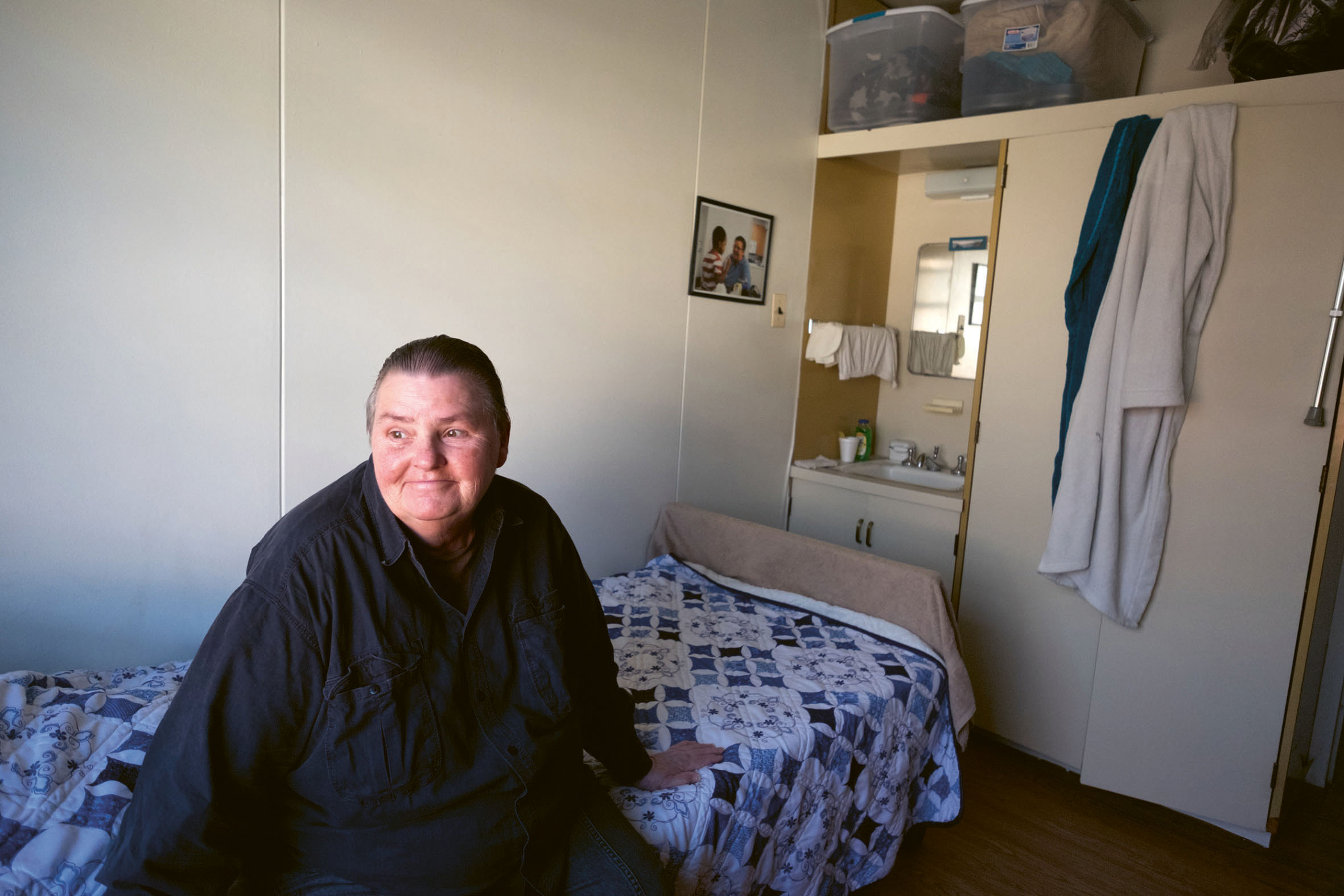
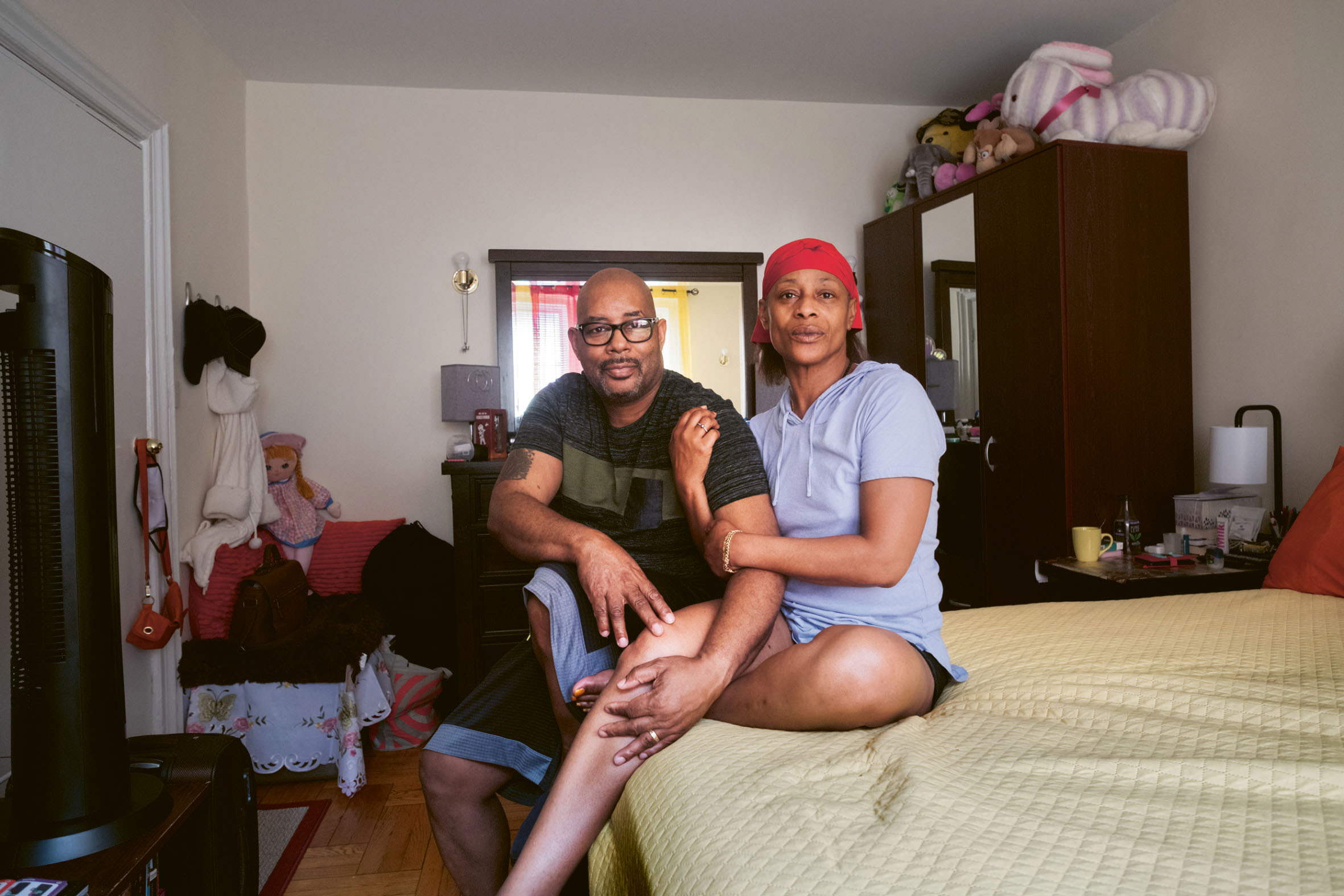
While Looking Inside does a wonderful job of humanizing these women, making them real instead of statistics, and convincing the people who pick up this book that these ordinary women deserve some kind of larger life, a second chance or at least an opportunity, one of our social truths is that our crimes define us, and this is something the book acknowledges by omission. Nowhere in this book does it say what crimes these women committed, what offenses gave them life sentences. I suspect this is intentional. The book does not allow me to look at a picture of someone and define them as murderer or thief. This is a book which seeks to define them in other, more future-focused terms. While the omission is sometimes distracting because the question won’t go away, the argument that that’s the wrong question is powerful. Sara Bennett’s refusal to answer it is its own answer.
A note from FRAMES: Please let us know if you have an upcoming or recently published photography book.

FRAMES is a unique international photography community that combines the best of all worlds, bringing you print and digital publications, a global membership platform, access to live events, and a dedicated mobile application.
EXPAND YOUR PHOTOGRAPHIC VISION
JOIN FRAMES TODAY