Imagine the mourning and the joy—
John Baer was born in 1020 and died in 1994. He was a soldier in WWII, was part of the Normandy invasion, and afterwards worked in public relations in New York. He married Louise Fuoss, whom he met at Penn State, got divorced, then married her again. They had two children.
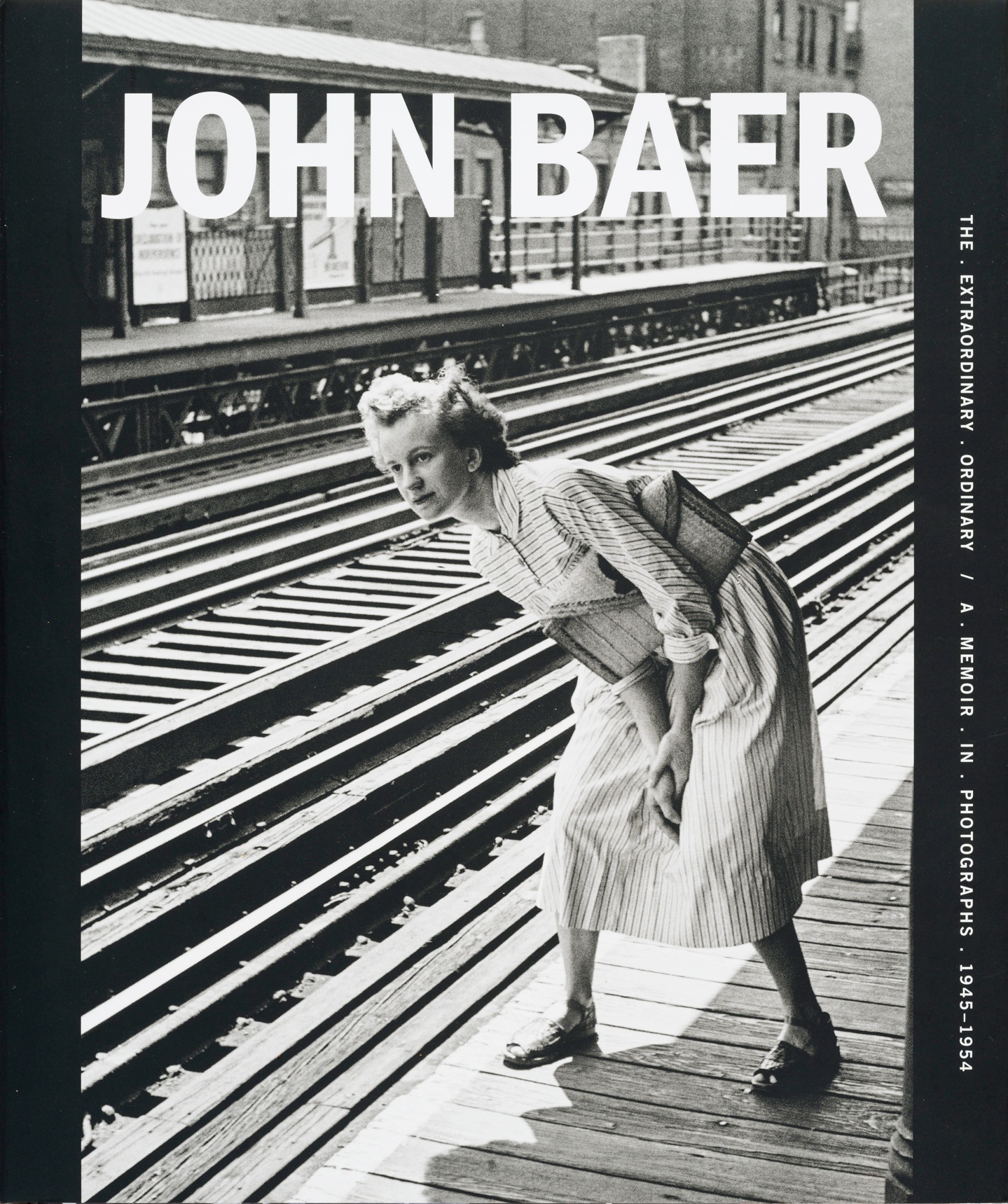
“John Baer – The Extraordinary Ordinary: A Memoir in Photographs, 1945-1954”, edited by Andrew Baer and Megan Moynihan
Published by Paper Cinema Editions in 2025
Review by W. Scott Olsen
Twenty-seven years after his death, in 2021, in the middle of the Covid pandemic, his son, Andrew, and Andrew’s wife, Megan, decided to unpack three plastic boxes of his father’s photographs. As Andrew writes—
I cleared a place on the floor and began to sort the photographs by category: New York, silhouettes of ice skaters at Rockefeller Center, Stuyvesant Town, France, Occupied Germany, Barcelona, water abstracts, and Louise [John’s wife]. I was overwhelmed.
I knew that John had gotten his Leica camera from a German prisoner of war, and I remembered him taking family pictures and working with him in a makeshift darkroom he had set up in our bathroom. But these boxes held photographs I’d never seen, all of them taken between 1945 and 1954.
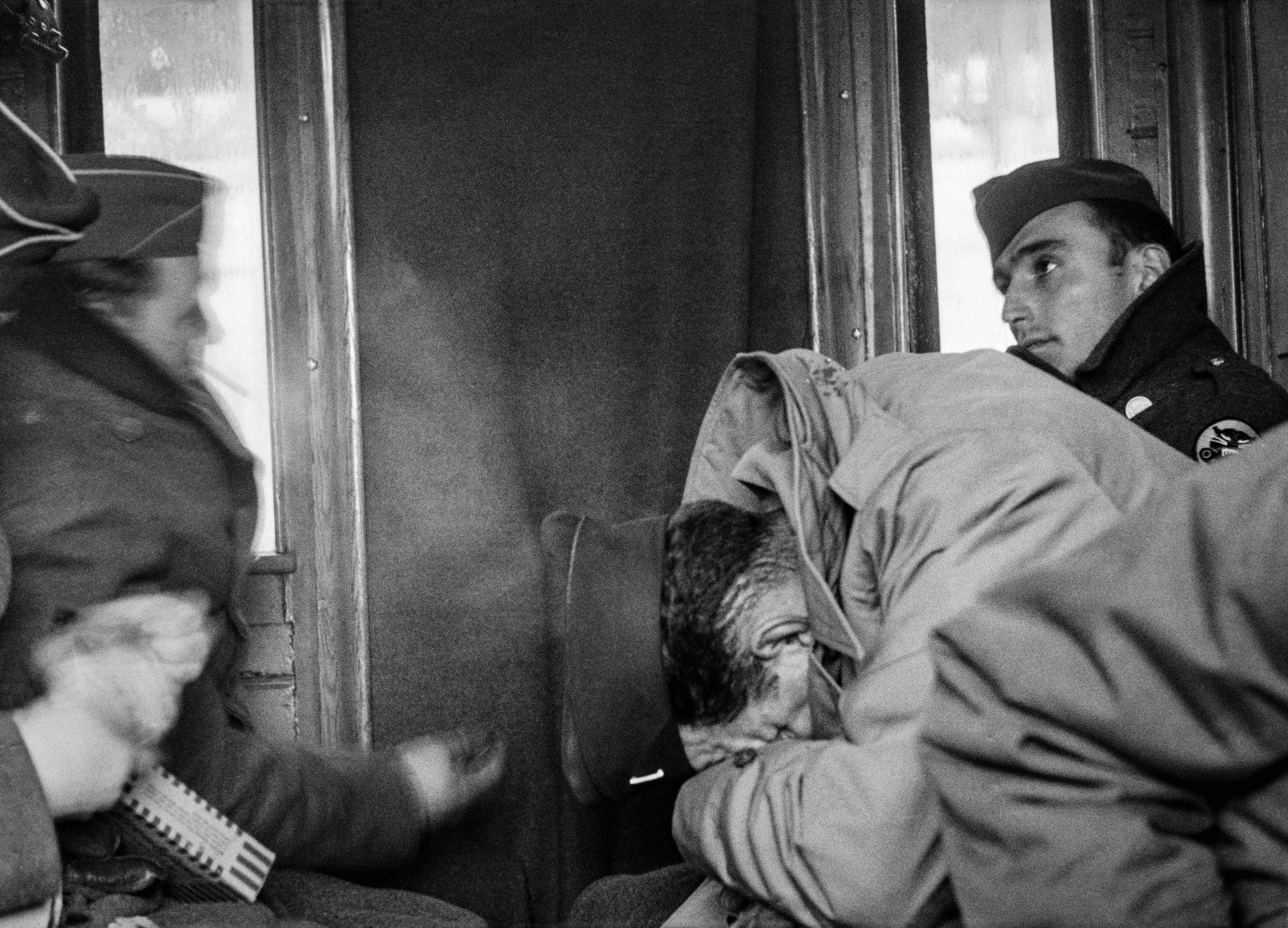
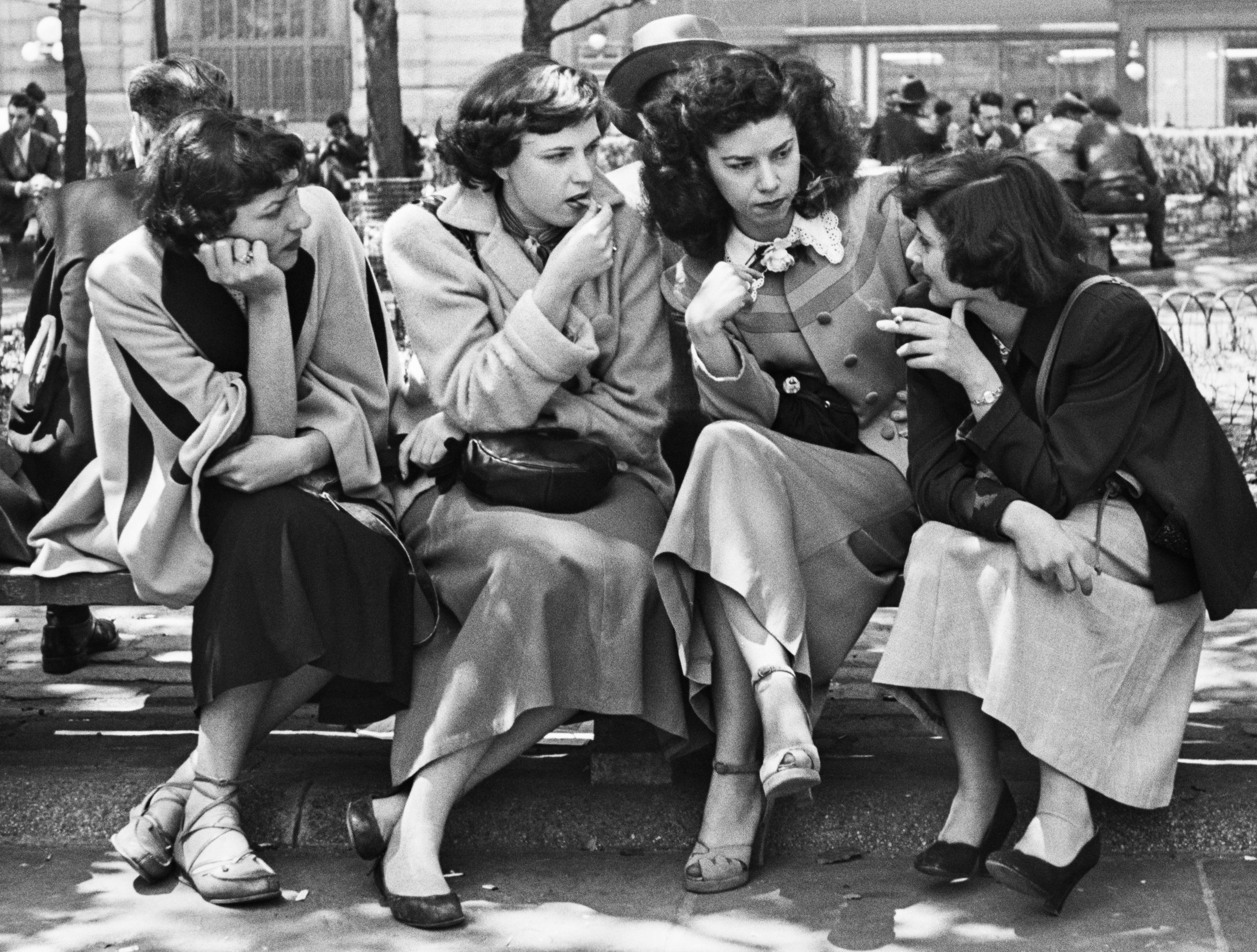
Andrew already knew his father was a talented observer and photographer. Some of John’s prints were on Andrew’s wall. There had been one small exhibition when John was still young, photography was part of his job, and he shared photographs with a circle of friends that included an artists’ cooperative in Greenwich Village. But what emerged from the boxes was not just a bunch of interesting images prompting family nostalgia. What emerged was a story, a memoir of John’s life as well as a history of post-WWII New York and Europe, told in extraordinary black and white images—street photography and portraits with a dedication to the quotidian.
Very much like Antony Penrose discovering his mother’s, Lee Miller’s, photography, or John Maloof discovering Vivian Maier’s work, what Andrew and Megan realized was the depth and insight of John’s work. John Baer’s photography was a special voice dedicated to revealing the wonder of everyday life.
John Baer – The Extraordinary Ordinary: A Memoir in Photographs, 1945-1954 is organized chronologically. There is a very brief prologue, which gives some background to John’s life from 1940 to 1944, when he met his wife, Louise, went to college, and was drafted to fight in WWII. And then the book is divided into chapters, beginning with “Occupied Germany, May – October 1945.” This is followed by “Return to America, 1946 – 50.” But the chapters are not restricted by chronology. Chapter three is “Water Through Sand, Sand Through Water, 1948 – 54,” and chapter four is “A different Europe, 1950 to 51.”
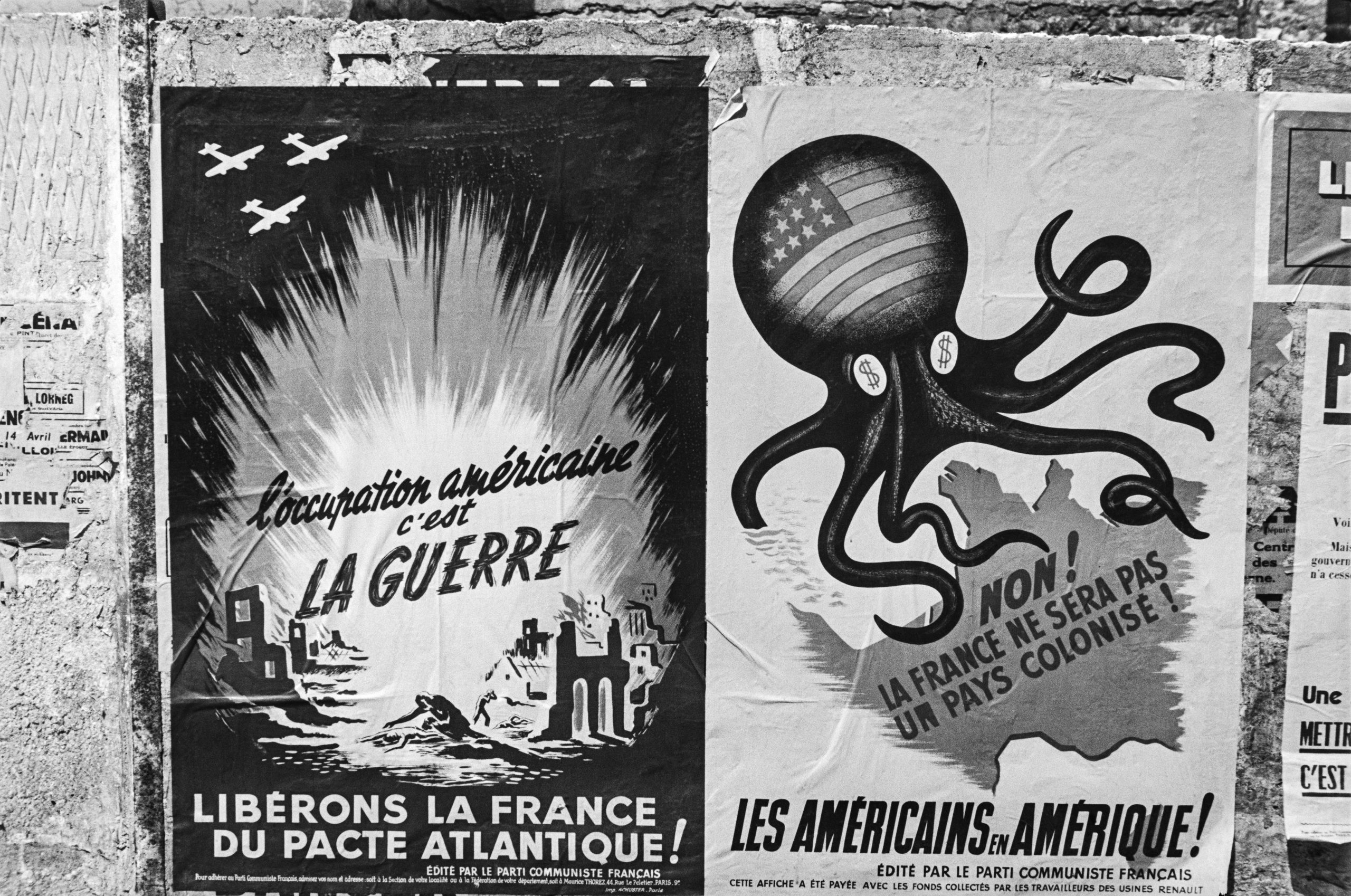
The book does have a narrative arc which braids several themes together. So what we get is a collection of images that speak to each other as they reveal the character of the artist.
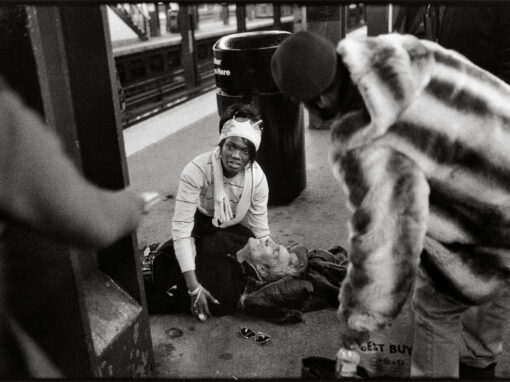
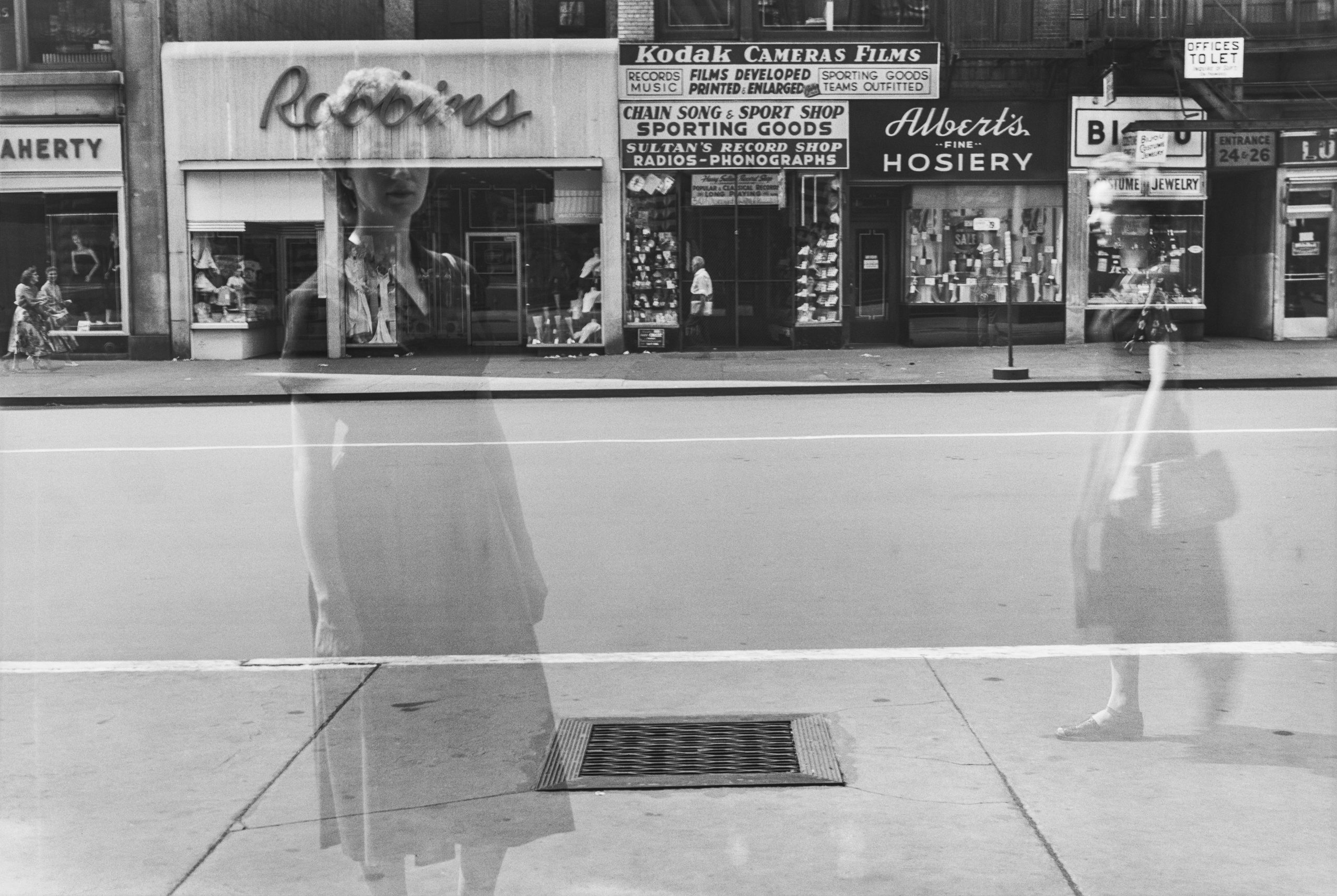
Although John Baer was in the army and landed at Normandy as part of a tank battalion, his images are not Robert Capa style battle images. Instead, Baer focused his lens on small towns and people. Once back in New York, he found street scenes holding quiet moments of beauty—the sort of beauty which is unplanned and graceful.
Most but not all of his images are at some small distance from their subjects. The images are not portraits of an individual (usually—he does have a number of individual images of his artists’ group as well as Louise) as much as portraits of people in a place. The idea of milieu is essential here.
All of the images have captions which give location or time, and many of them go on to offer a brief narrative explication of the importance of a scene. Something as small as an extended caption goes a long way towards involving us in the story of each image.
It’s important to note that Andrew is also a character in this book. Every now and then he appears as a type of narrator. For example, there is this bit of text—
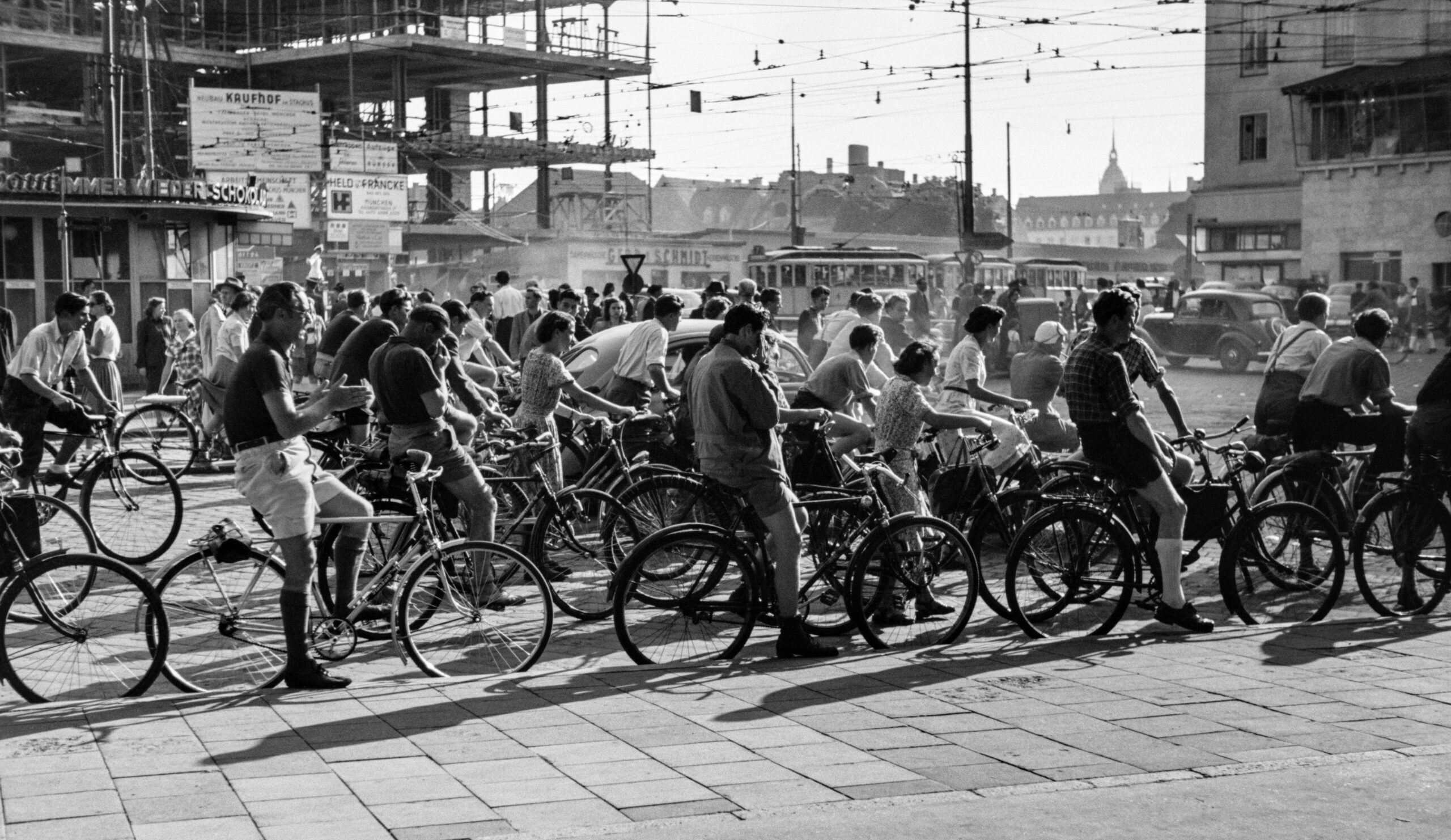
In 1950 John and Louise sublet their New York apartment and set off for a still-turbulent Europe, establishing a home base in Montpelier, France, where Louise studied at the university. From there, they traveled throughout Europe, visiting Paris, Florence, Barcelona, Munich, and numerous small towns. I had many questions. What prompted John and Louise to go to Europe? How did Louise come to study at the University of Montpelier? And most of all, how could they afford to travel for almost a year?
The appearances of the son in a collection of the father’s photographs is a nice rhetorical touch. His questions become our questions; his search for answers becomes ours.
A bit later, Andrew writes about John’s photographs—
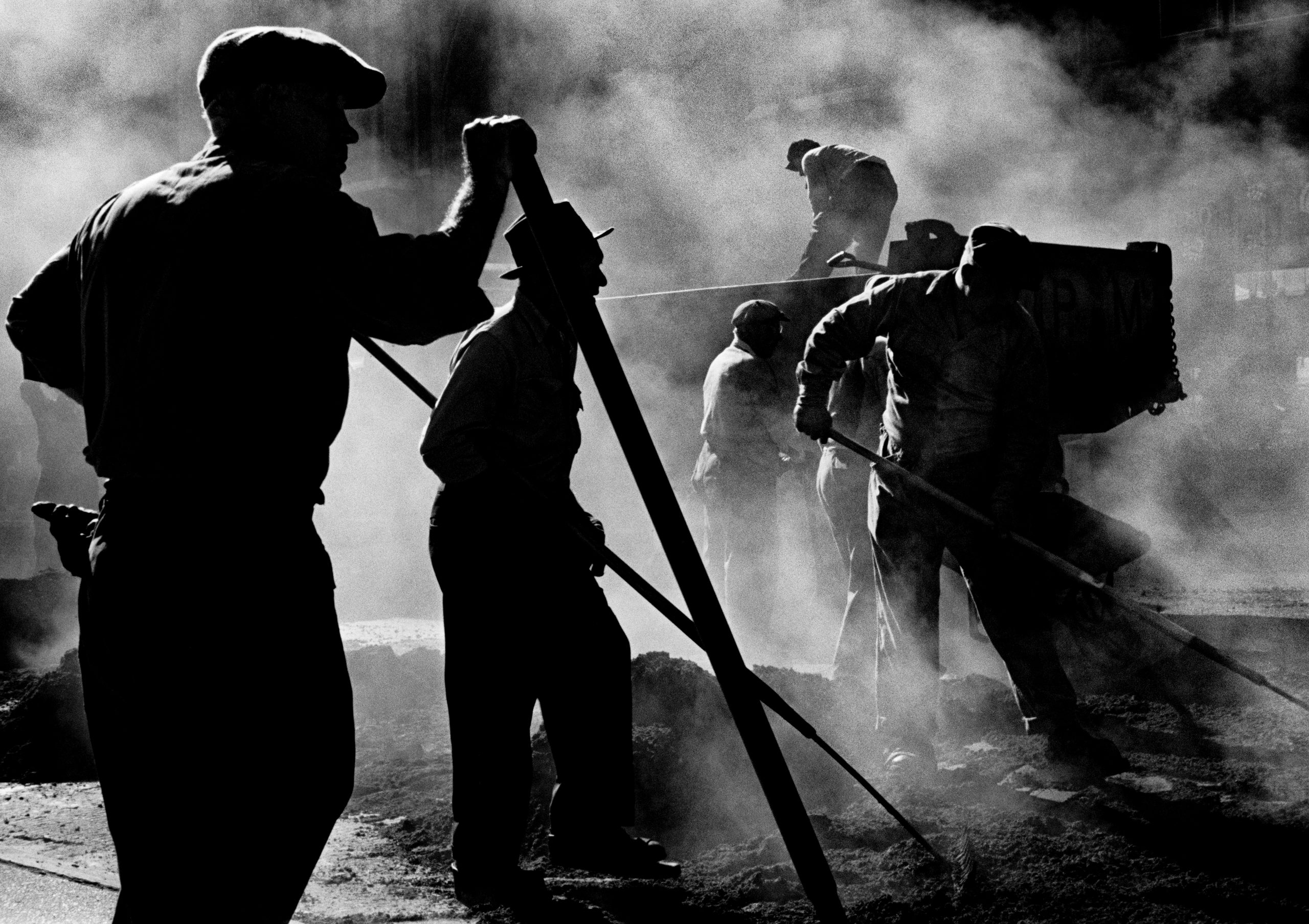
John was captivated by the roles ordinary people played in making the city run. He made a series of prints of men paving Fifth Avenue that portrayed the workers as silhouettes–dark figures enveloped in rising clouds of asphalt steam—the city and sky bright behind them.
When we scanned the negatives, the exposures were perfect, and we were able to see the expression on each man’s face—a quizzical glance, a strained smile, a shared laugh. In printing the photographs, John chose to make the workers anonymous players in a larger choreography of men and machines. I remember a friend seeing the photographs on my wall and asking me if my father was a communist.
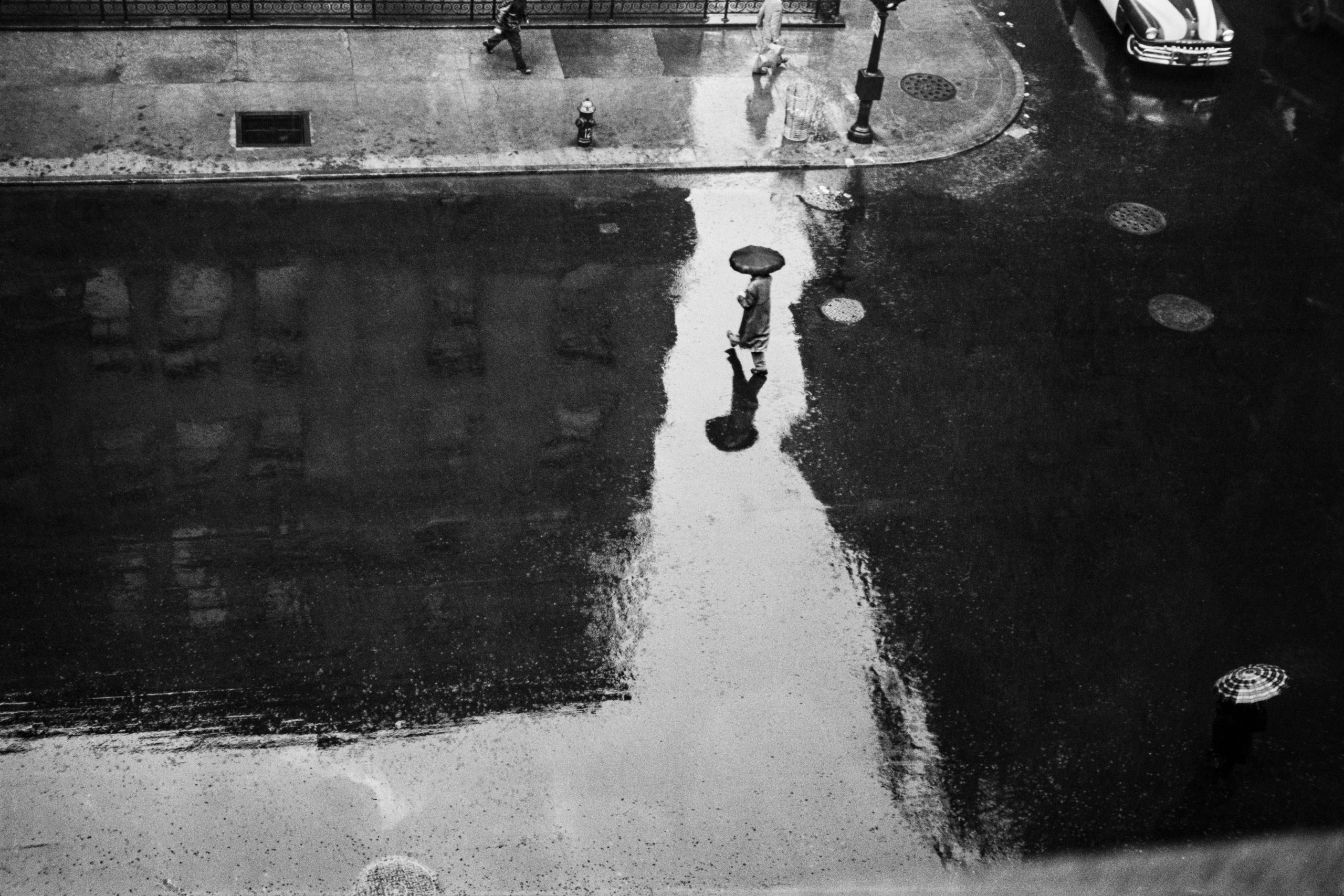
There is a technical brilliance to John Baer’s work, too. In an afterword called, “finding the shape in the form,” Alexa Dilworth writes—
From his earliest photographs in Wetzlar, one gets a growing sense of Baer’s preoccupations—form, pattern, and repetition are always present, as is his emphasis on high contrast, the dramatic interplay of light and dark. He made many photographs of the constantly shifting patterns in waves in the shadows of buildings on other buildings. As I was thinking about Baer and shadows and shape, I discovered there’s a branch of perceptive called sciography, which is concerned with the “science of shadows.”
John Baer – The Extraordinary Ordinary: A Memoir in Photographs, 1945-1954 is exactly that—a memoir. It is not a biography or autobiography. The difference is important. In general, a memoir is a more focused work. An autobiography may cover a life, while a memoir may cover a theme or an event. This particular photo-memoir reads from beginning to end like a poignant explication of a respect for the small moment which speaks to the integrity of humanity.
A note from FRAMES: Please let us know if you have an upcoming or recently published photography book.

FRAMES is a unique international photography community that combines the best of all worlds, bringing you print and digital publications, a global membership platform, access to live events, and a dedicated mobile application.
EXPAND YOUR PHOTOGRAPHIC VISION
JOIN FRAMES TODAY