I duck into the dollar store for a mask before venturing into the haze of wildfire smoke, which hangs over the city. Just off the corner of an orange-tinged Tompkins Square Park, Studio 9BC is tucked into a quiet block between a parish and a community garden. Against the foreboding weather, the small, railroad-style oasis overflows with conversation, the crowd eager to indulge the exhibition’s request to Consider Dwelling Here Too Long.
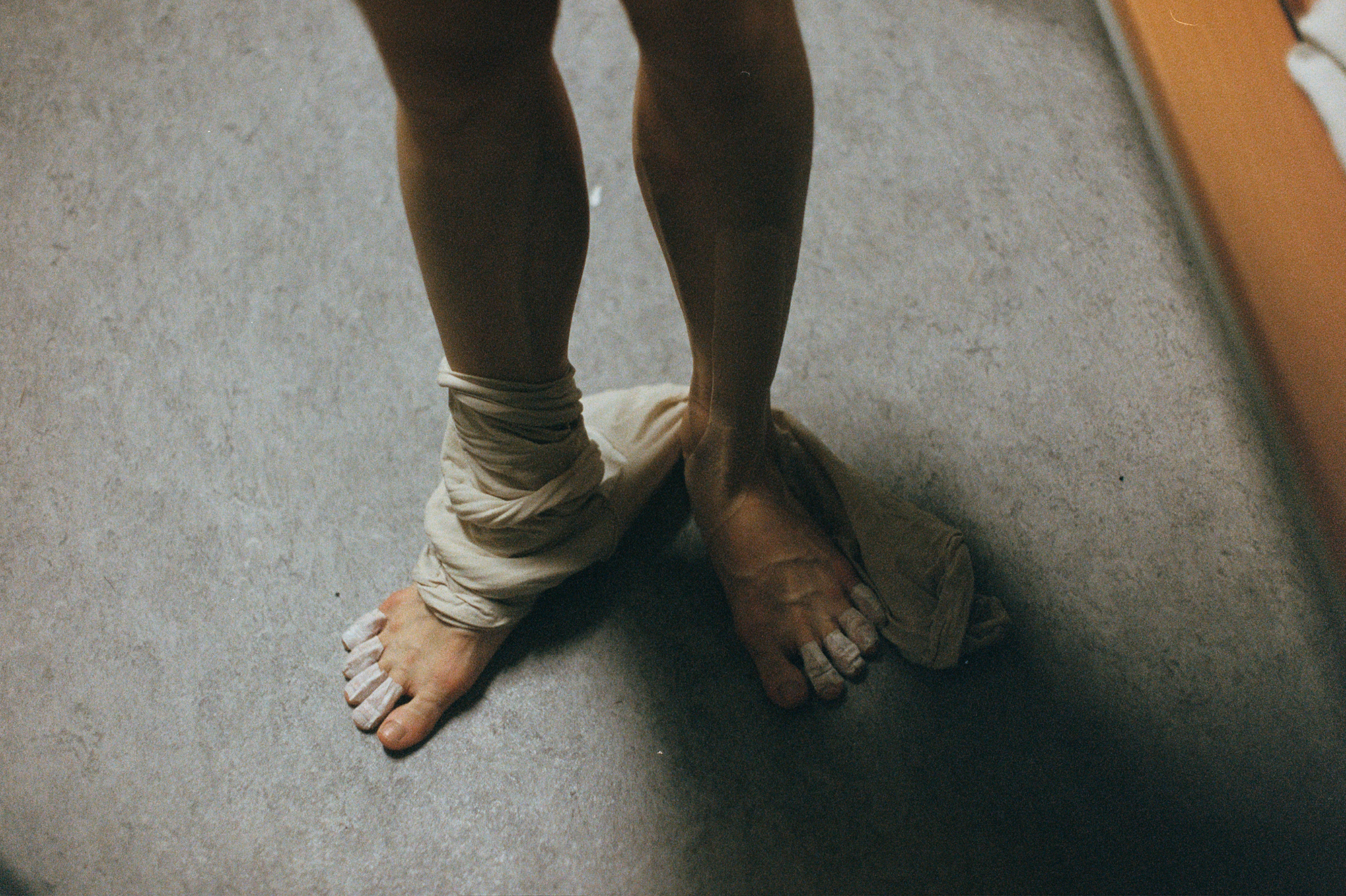
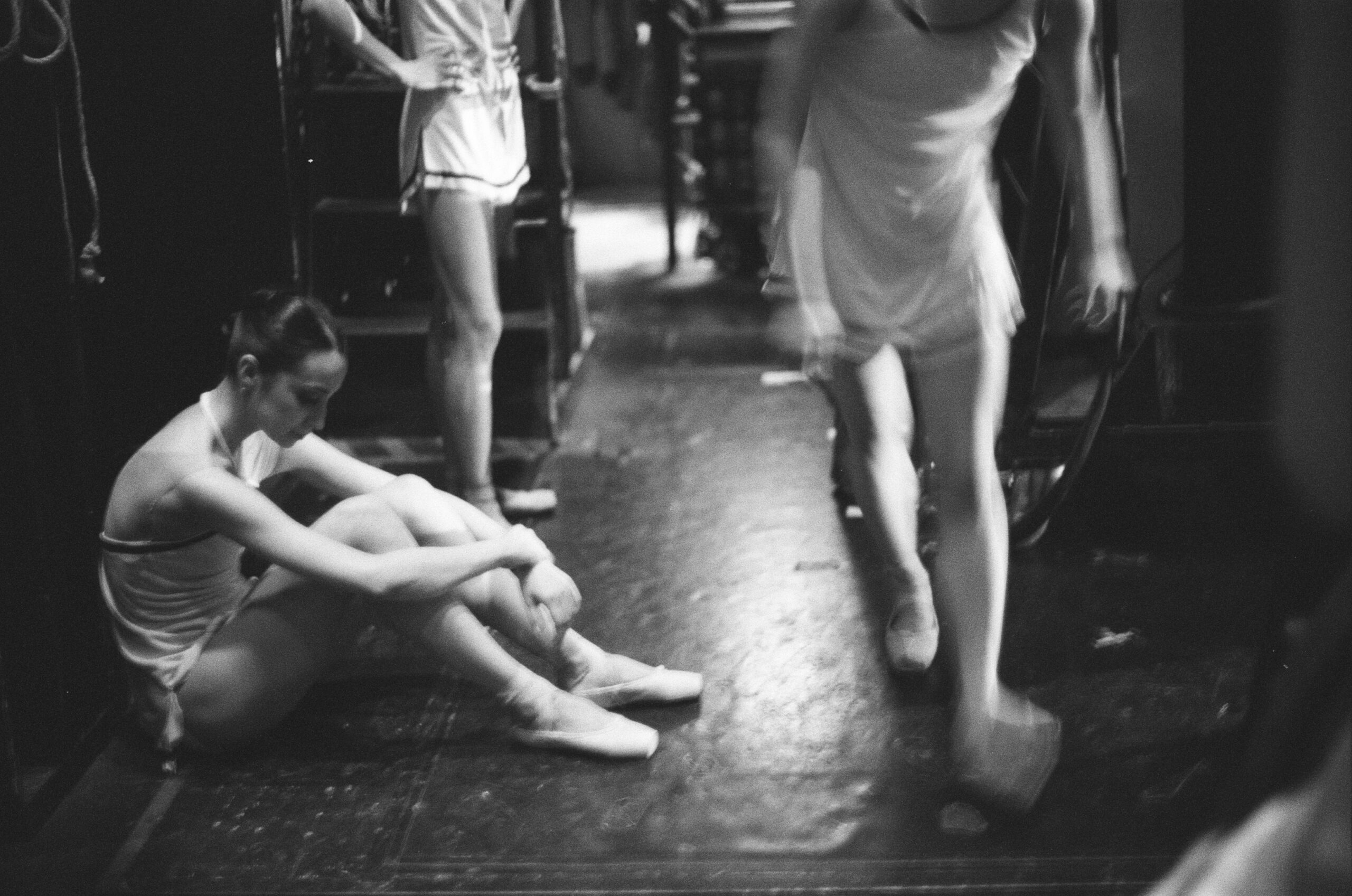
Through the haze I encounter the dreamlike photographs of Cassandra Trenary, a celebrated ballet dancer whose career is marked by prestigious fellowships and leading roles as a principal dancer, formerly with the American Ballet Theatre, and now with the Vienna State Ballet. While her movements are built on exacting technique, here it’s not an issue if the focus is blurred, or the frame a bit off-kilter. These movements, made visible, only make the collection’s moments of clarity more striking.
I linger at the gallery entrance to read an essay by Sarah Hoover, written to accompany the show. Her contributions are as personal as they are analytic, reflecting on the speed and precarity with which dancers are shuffled into and out of the narratives they perform. “Who are we after the role ends?” Hoover asks. Trenary’s photographs aim to answer this question, as she captures her life and those of fellow dancers as they move on and off the stage, transiting the glamorous and mundane.
When dancers are photographed, it’s typically to document and preserve the energetic imprint of their performance. Barbara Morgan, for example, carefully engineered flash times and multiple exposures to mechanically translate Martha Graham’s psychodrama into still images. Mikhail Baryshnikov’s photographs of other dancers employ long exposure times which mimic the forms of an abstract painting. But what becomes of the dancer when she steps off the stage? Enough about what she looks like– what does she see? And who is she, really?
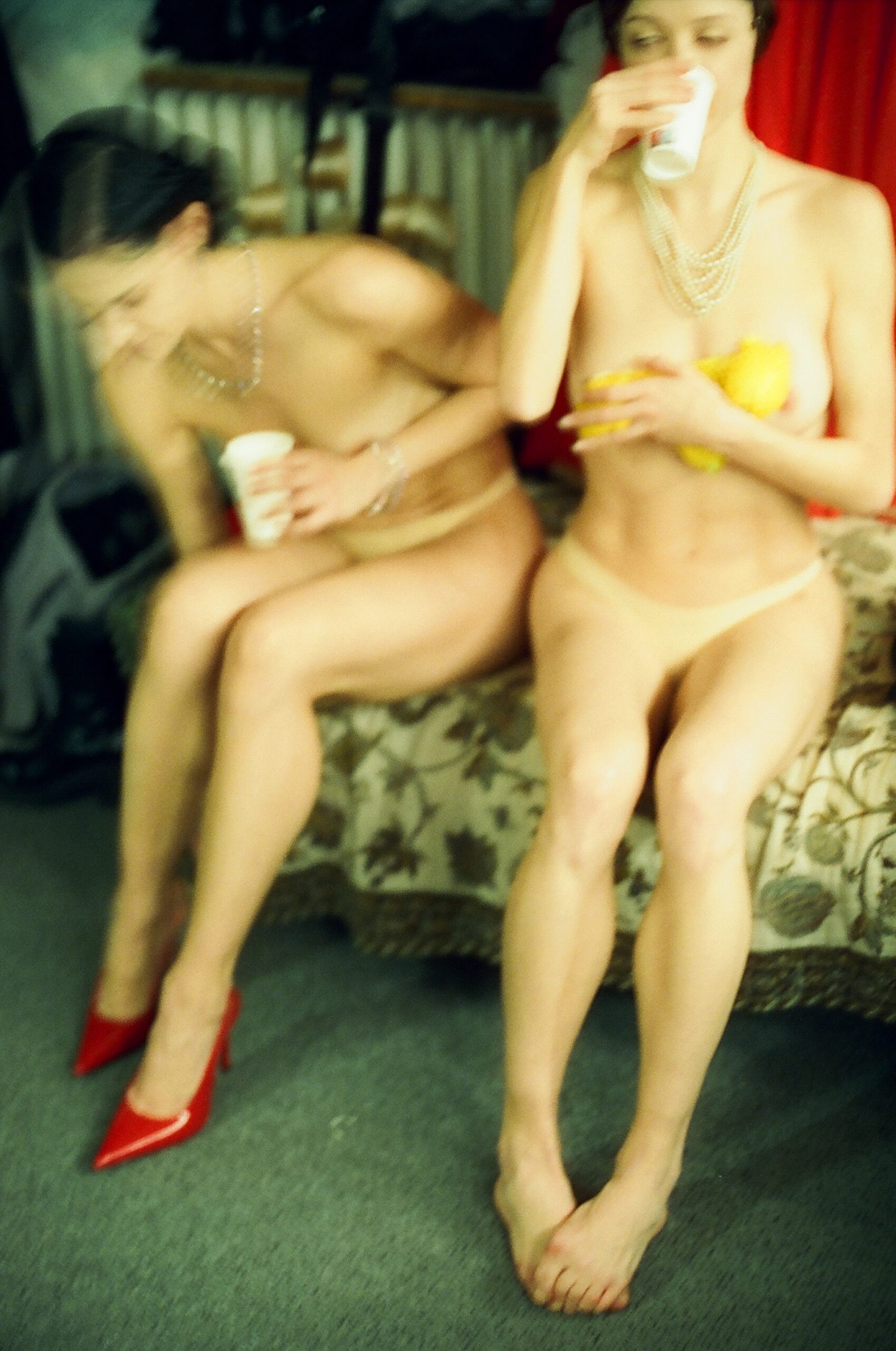
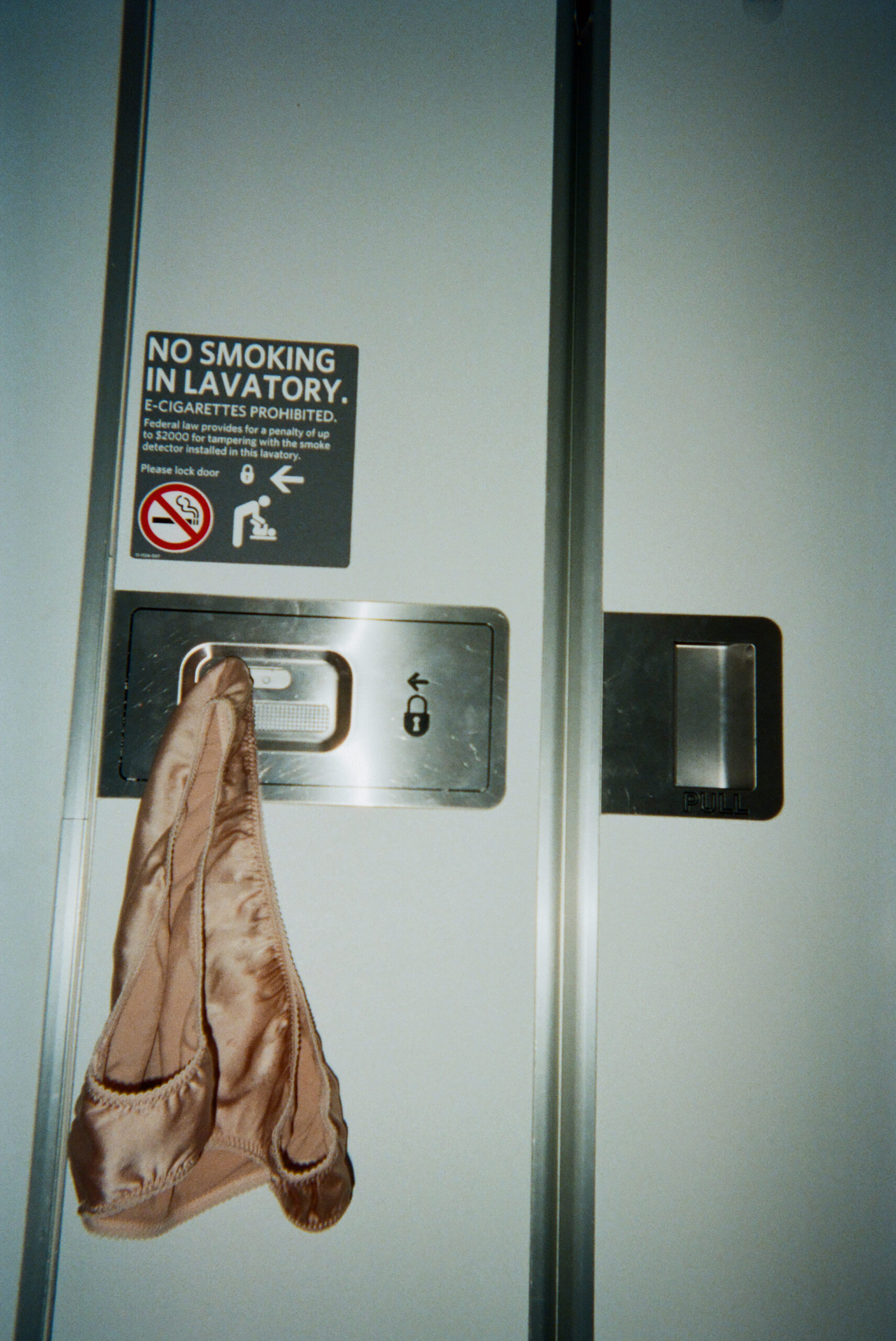
Trenary captures candid moments which hint at the answers to these questions. Her works offer a glimpse into the private world beyond the polish, much like the backstage renderings of dancers by Parisian painters in the late 19th century. Unlike Degas’ pieces, however, these images are authored by a working dancer. Their presentation bridges the personal and performative in a manner both significant and rare to the underestimated, now expanded realm of dance photography.
Yes, the artist’s striking portrait of Rosa and Madison reads like a reimagining of Toulouse-Lautrec’s backstage portraits of Parisian cabaret dancers. Their world, too, glows in shades of teal and pale yellow, their skin discolored by the light. Perhaps unexpectedly, many of Trenary’s portraits find their subjects at rest.
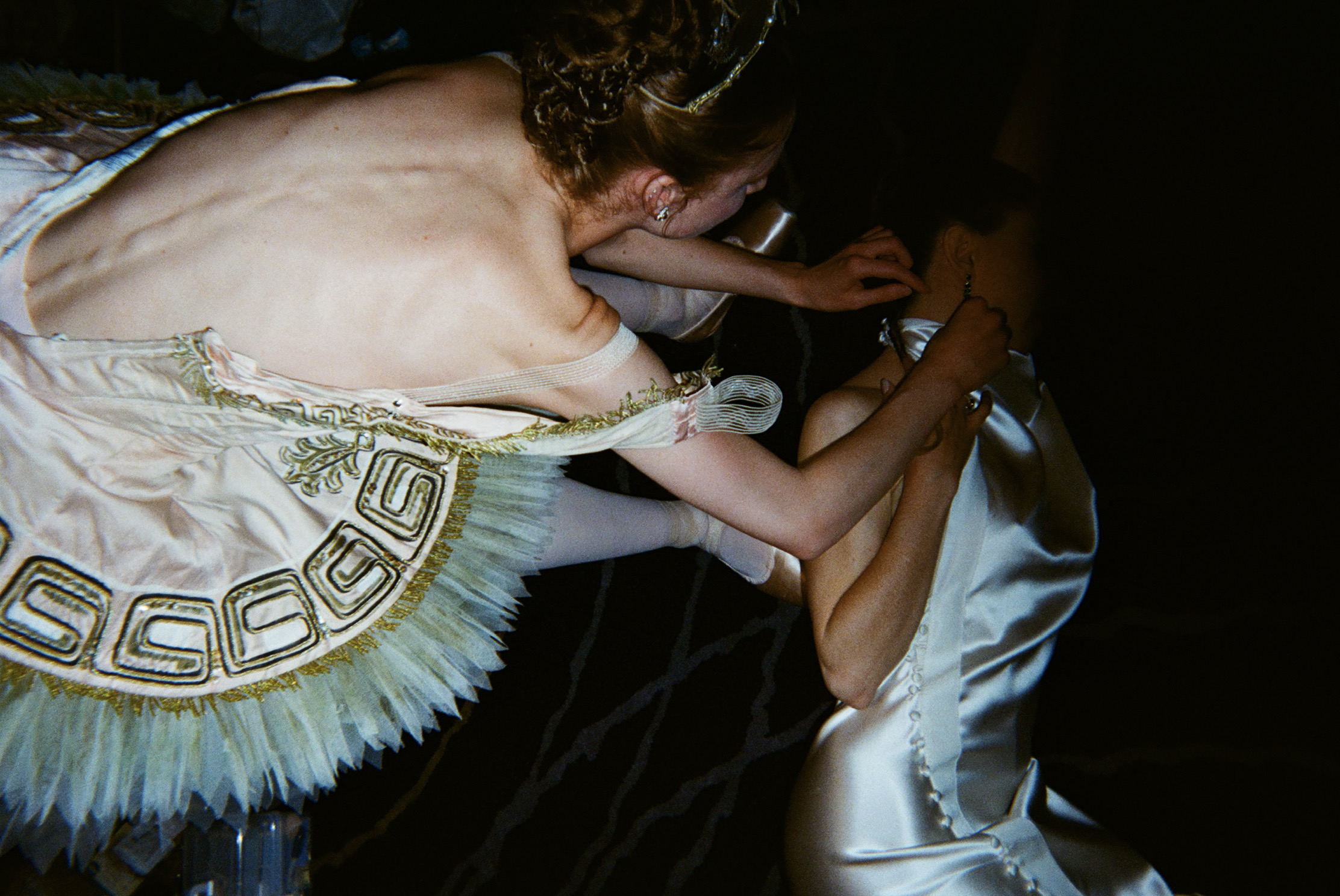
Here, the dancers’ seated position at the edge of the bed is reminiscent of Nan Goldin’s Trixie on the Cot. Taking inspiration from Goldin, Trenary’s works are led by their instinct towards intimacy. She turns her gaze onto fellow dancers as they adjust their costumes, brush their teeth, and care for themselves and one another, sometimes staring at the floor or gazing into space.
While the photos emanate a grace on their own, it’s the exhibition’s methodical curation that arranges these varied moments into a story layered with meaning. Guiding their collaboration through a shared visual language, curator Merica May– a mystic artist, architect, and gallery director with a background in ballet– reveals the philosophies accessible only through Trenary’s unique perspective and vernacular style.
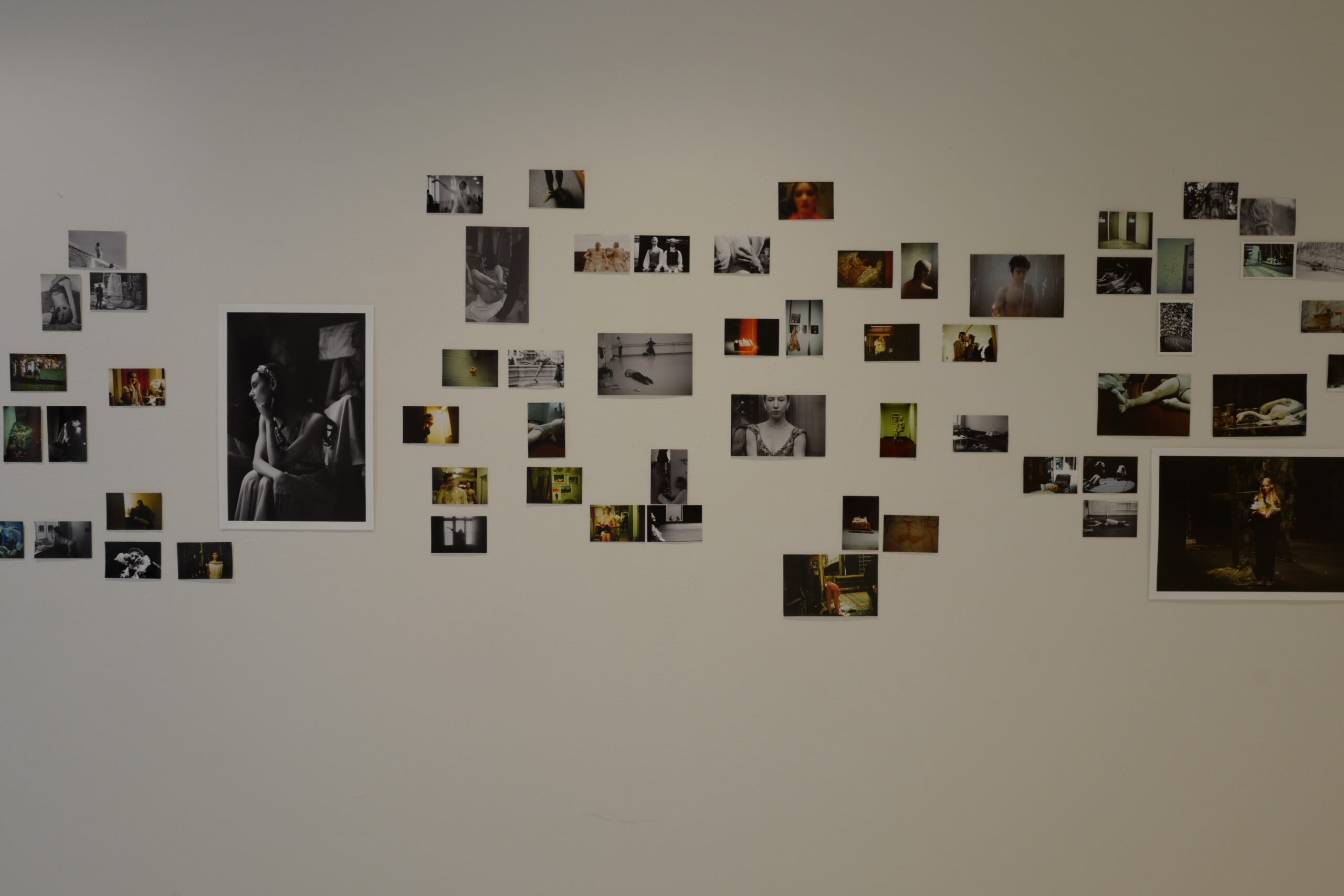
A few days before the opening, I visit the studio to find the pair had taped a massive assemblage of tiny photographs to the wall. Images are grouped by loose visual associations, like a map of clues strung together by detectives at work.
Stone Men sit next to Benji and Godwin, posed in costume. To their right, Godwin and Rinaldo kiss next to James with Stone, whereinthe subject’s hands grip a rear end carved of marble. In each image, two figures share presence in movement and stillness, their corner of the world creating a homage to the duet. On opening night, I notice the artists had chosen to preserve this union, though James with Stone had wandered farther from its group.
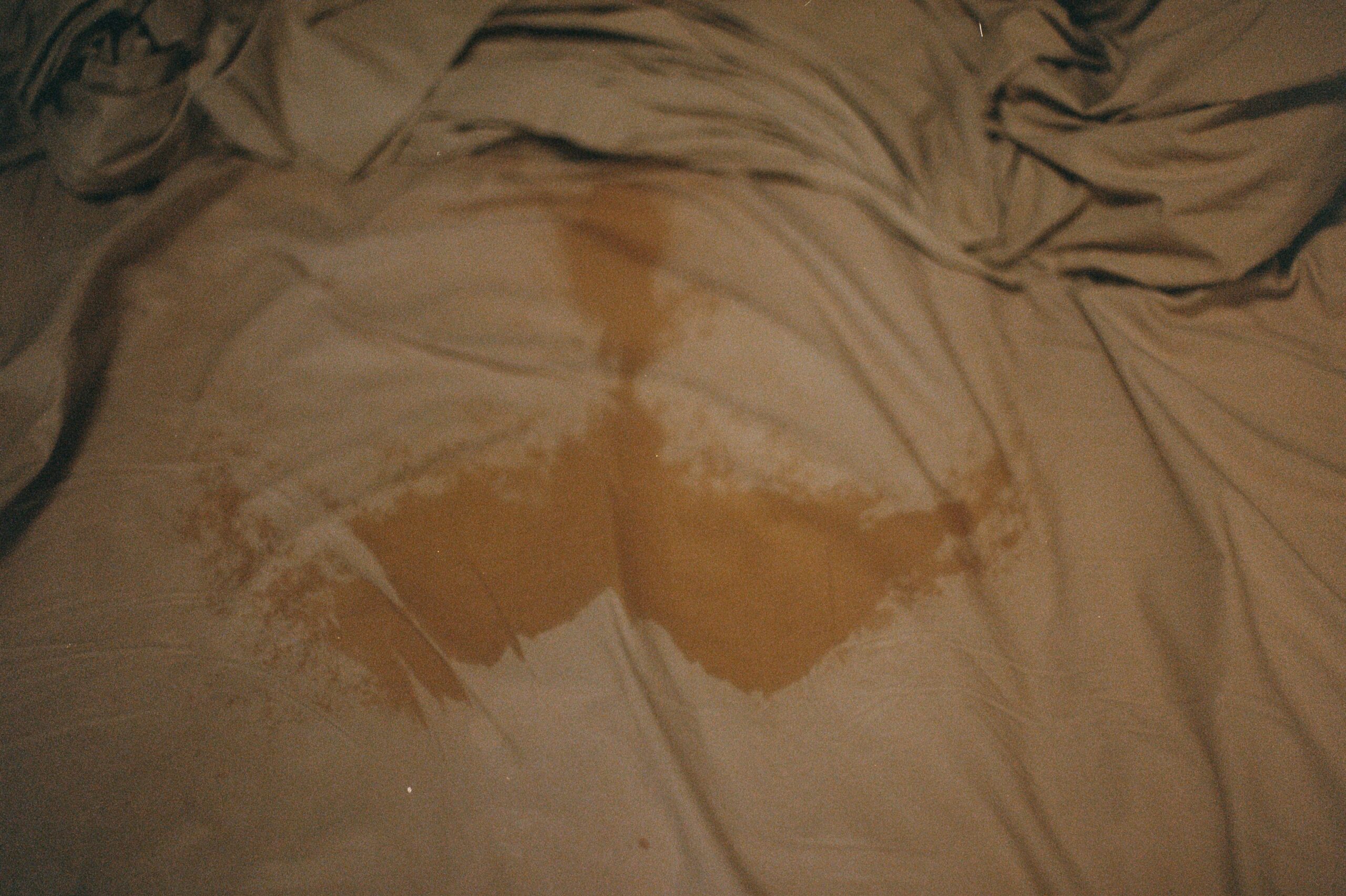
The show’s arrangements are notably driven by these recurring visual forms, zooming in on mirror-moments when the world around the dancers reflects and collides with the forms of their dance. In Sinthia Recovering and Woman at Rest, both the ballerina and the sunbather recline in the same corner of the frame. The shape of a sweat stain on the bed in Carroll Gardens sits pretty next to the dancers Isabella and Herman sweating into their bed onstage.
Before the opening, May and Trenary toyed with the idea of allowing visitors to move the photos around themselves. This way, onlookers could identify and construct their own associations. Their choice to nix this invitation was wise, as the images’ intentional pairings have evolved from an understanding unique to the eye of a dancer.
This visual poetry is that of someone who knows the dance begins not on the stage, or even during the warm-up, but out there on the street: where birds fly, and statues stare, and people move and occasionally, stop to rest.
In For Ruth 1, the artist becomes a Christ-like figure on the edge of her bed, unfurling her arms towards ascension, her gaze flung towards the ceiling and the blur of her hair revealing the dance. Yes, the ballerina’s self-sacrifice may appear glamorous, as she flies through the air and disappears into her characters. Rooted in the real, these photographs seem to serve as a counterweight to this mandatory immersion in fantasy, grounding the artist in a life lived rather than staged.
Throughout Trenary’s body of work, the shapes of strangers on the street and ballerinas slouched in the changing room mimic and converse with one another. These parallels reproduce the notion that all the world’s a stage, and there’s no escape from the stories we act out. Perhaps this is what she and May hoped to capture: this union of dance, personal narrative, and image reminds viewers of the old adage that there is a hint of truth in falsehood, and an echo of reality in each performance. As the mystics say, as within, so without.
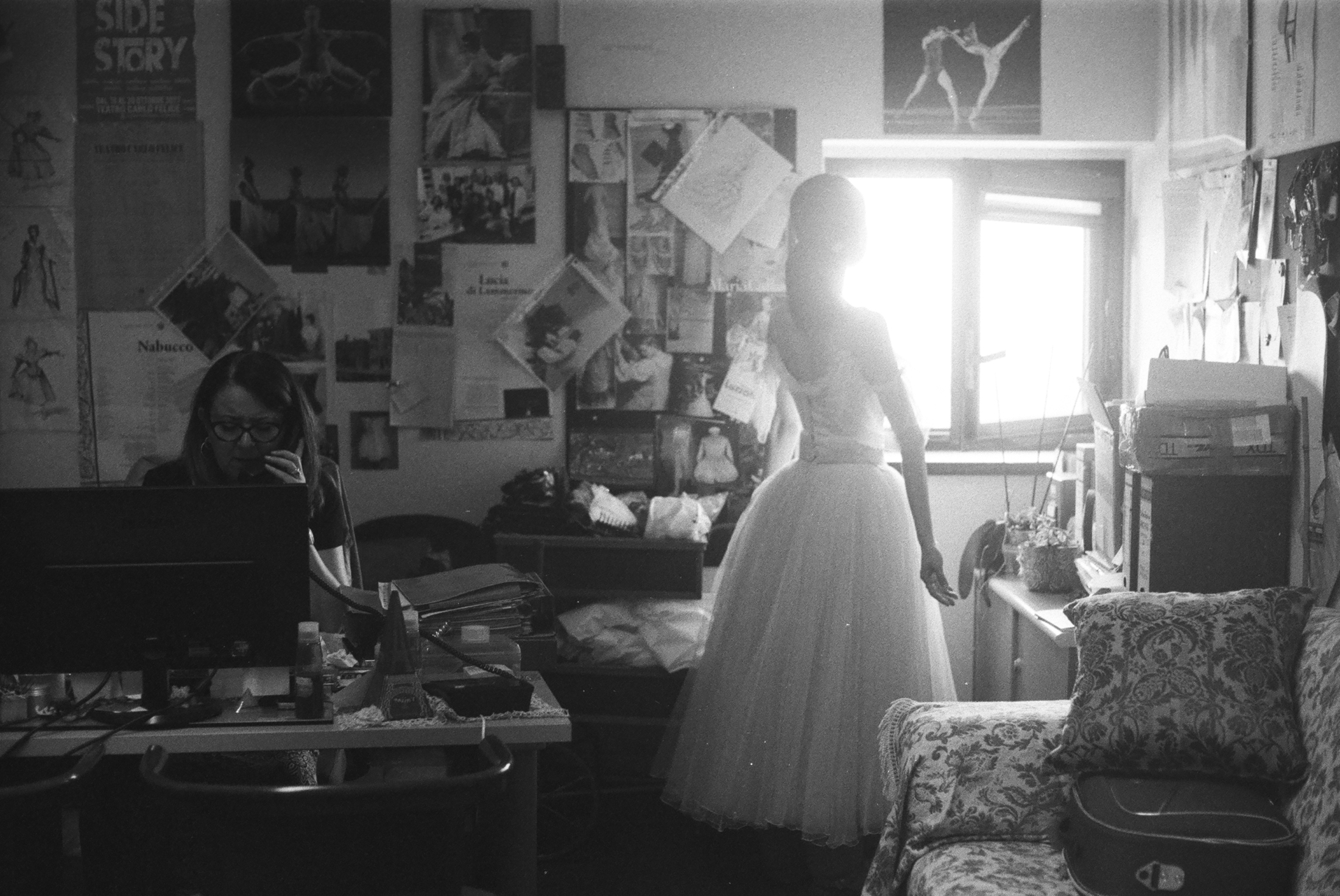
Jess in Office illuminates both the visible and invisible roles which bring the ballet to life:an administrative worker retreats into the shadows behind a black screen, while a dancer, standing up straight, is washed in the glow of the open window. When the world grows dark, obscured by madness, monotony, or wildfire smog, perhaps the work of the artist is to turn towards the light, wherever it may be found. Perhaps the work of the artist is to stay there as long as possible, perhaps for a touch too long.
Consider Dwelling Here Too Long is on view at Studio 9BC, 616 East 9th Street, New York, NY 10009, until August 20th, 2026.
ABOUT THE AUTHOR
Katya Borkov is a poet, multimedia artist, and facilitator whose interdisciplinary practice explores natural phenomena, interpretations of the divine, and elements of their queer, neurodivergent, and first-generation Russian-American experience. Her work includes the photo-poetry chapbook Flamingo Heights, alongside poetry, collage, criticism, and workshops presented through institutions including Poets House, Performance Space New York, and The Foundry.

FRAMES is a unique international photography community that combines the best of all worlds, bringing you print and digital publications, a global membership platform, access to live events, and a dedicated mobile application.
EXPAND YOUR PHOTOGRAPHIC VISION
JOIN FRAMES TODAY