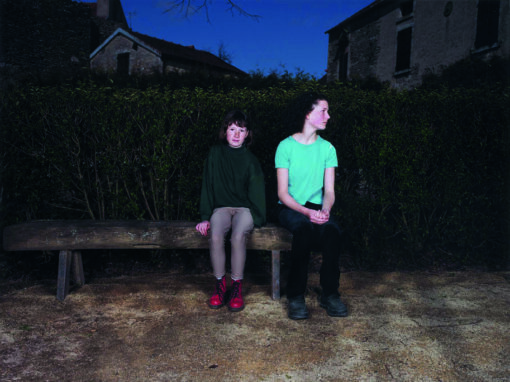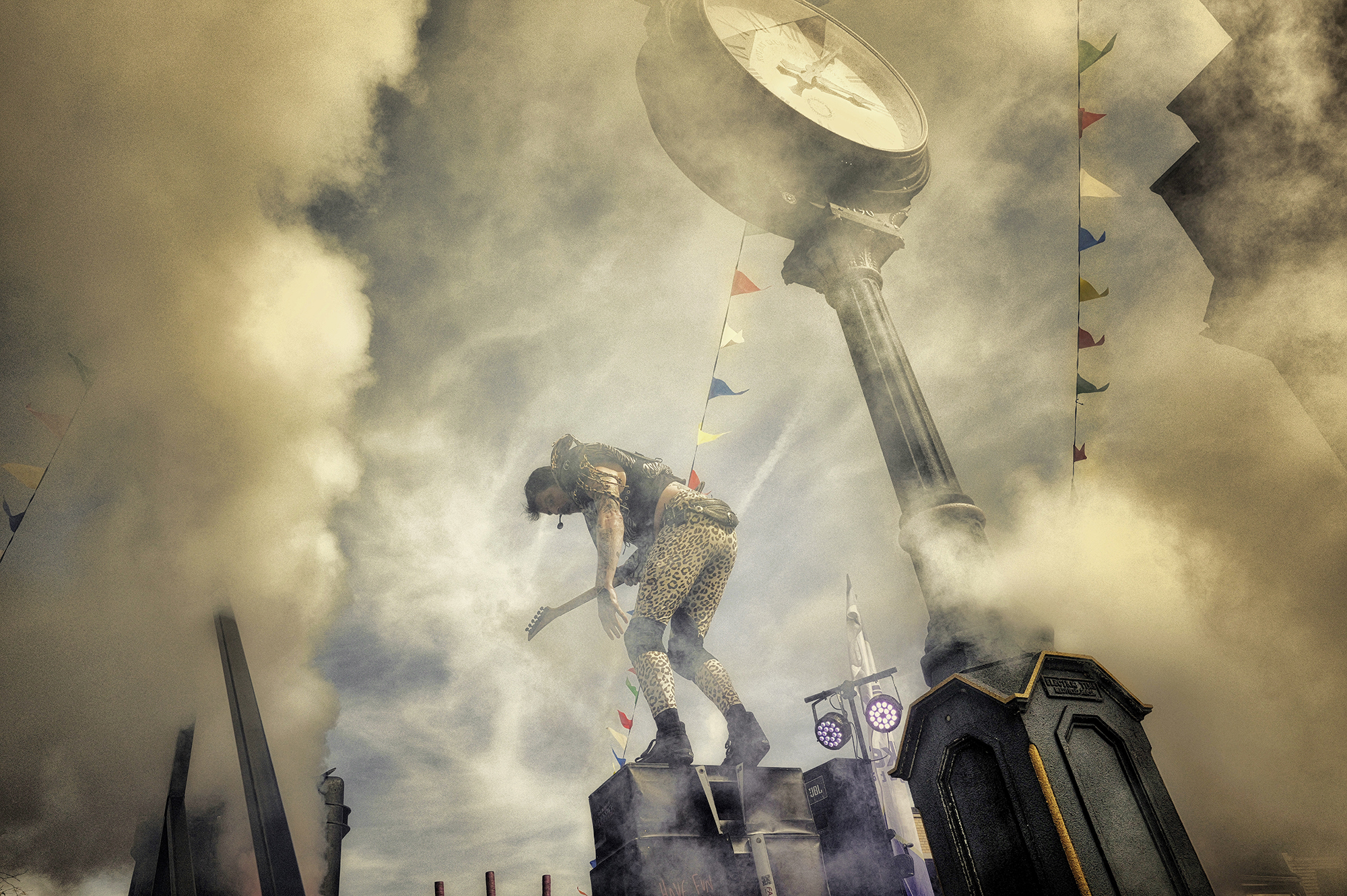
There’s nothing special, or even all that original, about saying that a photographer’s real subject is light. Light and shadow, captured on film or sensor, is the medium we work in—every one of us. But there is another way of looking at this idea. The interpretation of light can be as individual as a fingerprint. Photographers come to whatever subject presents itself, and their understanding of light and shadow and color can define the mood, the implications, the attitude.
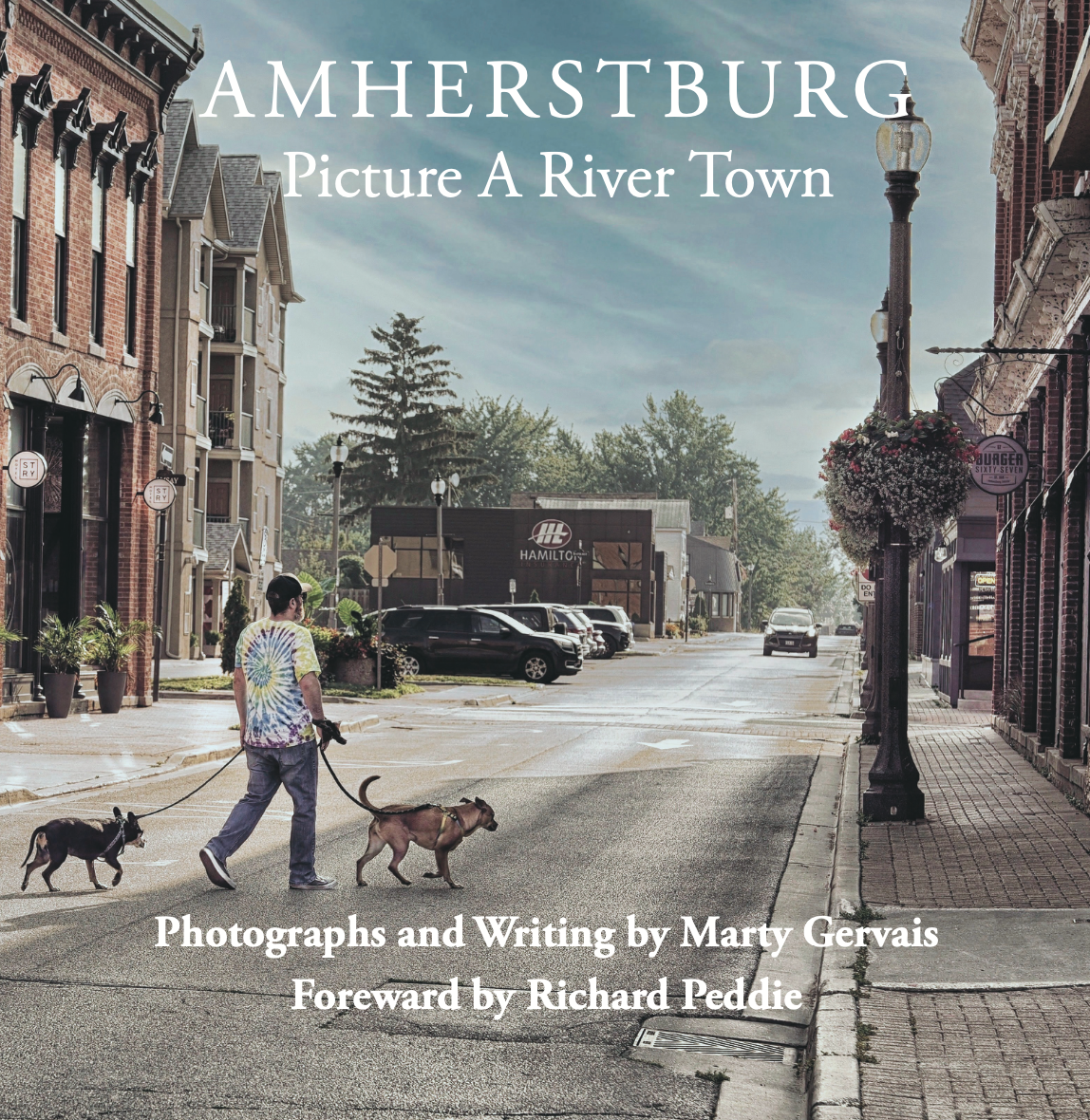
Marty Gervais – “Amherstburg: Picture A River Town”
Published by Black Moss Press, 2026
Review by W. Scott Olsen
There are 1000 ways to photograph any particular scene, each one individual and unique. Every now and then, however, an individual’s vision strikes us as being just a bit more original or a bit more different. Every now and then that interpretation strikes a little bit harder.
Amherstburg: Picture A River Town by Marty Gervais is, at its simplest level, a documentation of a small town in Ontario that Gervais has visited throughout a year’s time, a town of which he’s quite fond. The book is warm and admiring, without becoming sentimental, and filled with images of the small details that give particular definition to the town.
It’s also a great deal more.
I should admit the idea of a small town strikes very close to my own heart. I’ve lived in one for most of my life. There’s simply something more intimate, as well as more exposed, in a small town than you would find elsewhere. And small town photography, when it’s done well, gets at the core of something important. Still, when I picked this book up, I felt something quite different as well.
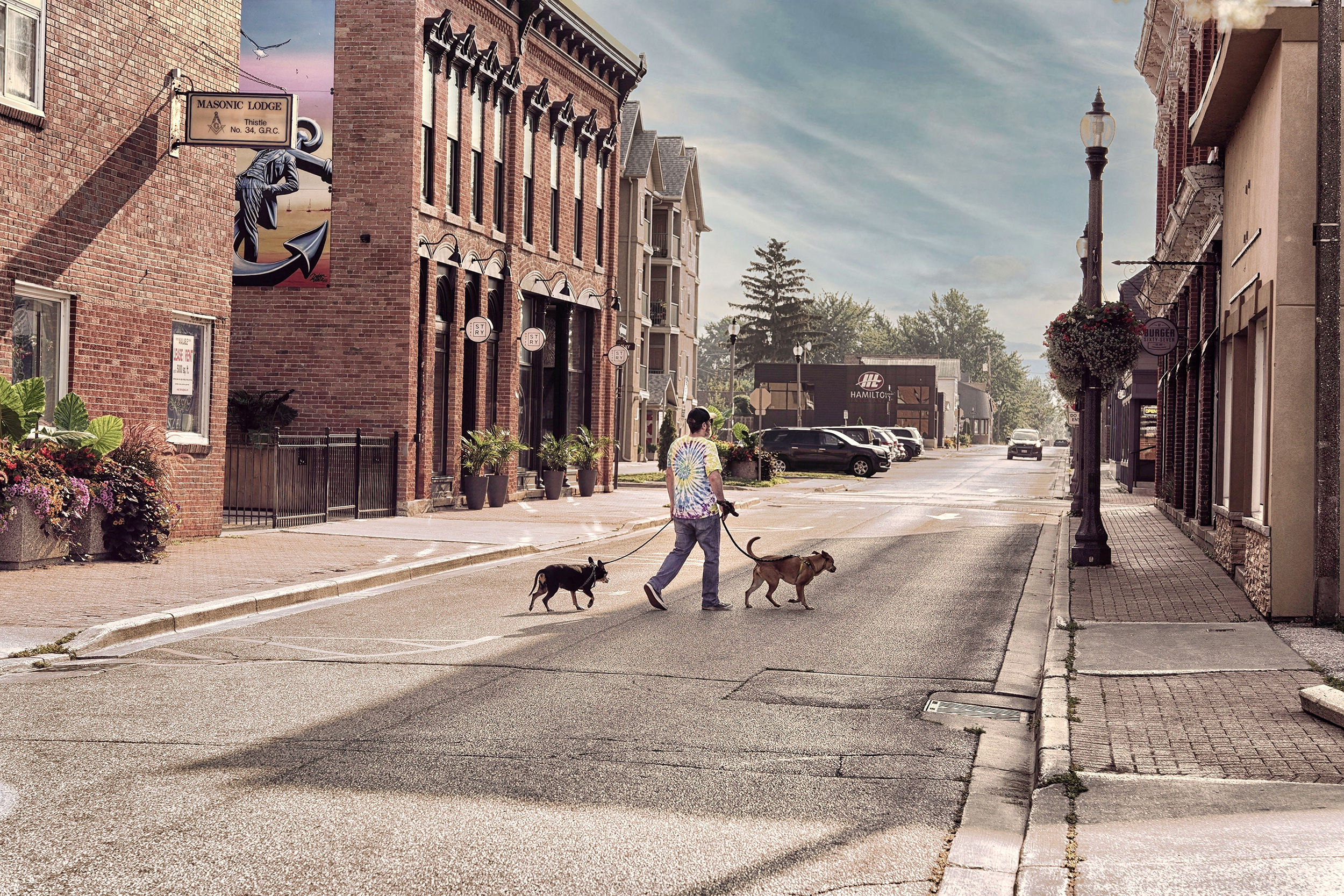
Turning the early pages, it struck me that color is being used in a way that is a bit more present, a bit more dynamic, and a bit more theme-forward than the usual fare. The colors are soft, but not blurred. They are also oftentimes quite bright. While I would not describe Gervais’s approach as akin to watercolor painting, I would argue the two forms share an aesthetic that values the invitation of a lenient edge. The colors are in the photographic subjects, of course. But Gervais treats them with what you could call a bright nostalgia.
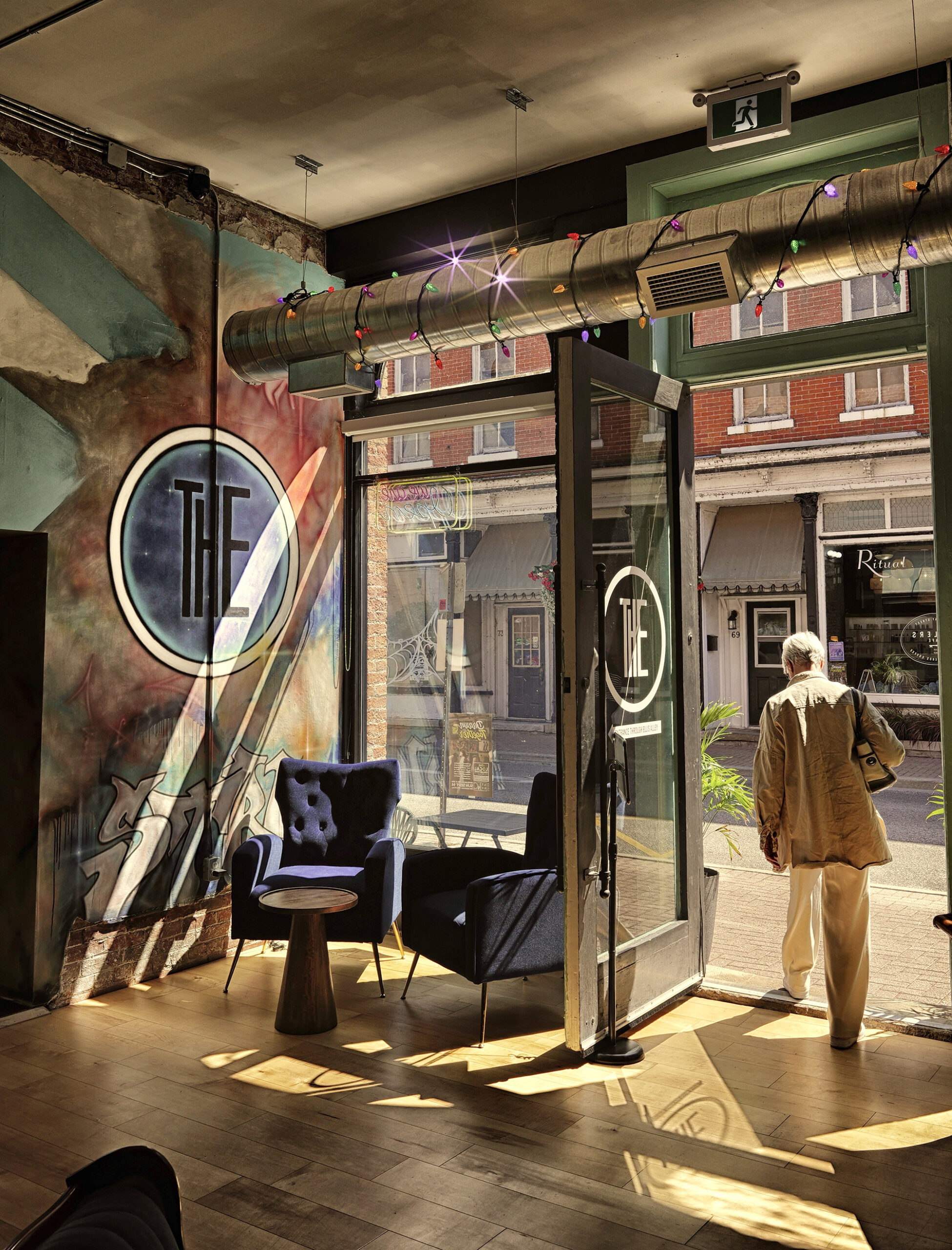
In an epigraph, Gervais writes—
For me, photography is both the action of the camera capturing the moment and also that poetic engagement with the imagination that transforms the picture into something other than simple documentation. It evolves into allegory, statement, and art. At its roots is that element that first caught your eye, and when all is said and done, no matter how many times you click the shutter, it’s often the first frame that says it all, and there’s no surprise because in that passing instant, you have somehow stepped into that rarified moment of grace.
Listen to that hope. Poetic engagement with the imagination. Rarified moment of grace. These are what this book is about.
Amherstburg, Picture A River Town is a collection of wonderful, quiet, simple images taken in a small Ontario town. The book also includes an essay by Gervais, split into parts throughout the book. In this essay, Gervais takes us through his history and explorations in Amherstburg, meeting locals and walking the streets, and he explains what is important as the town reveals itself to him.
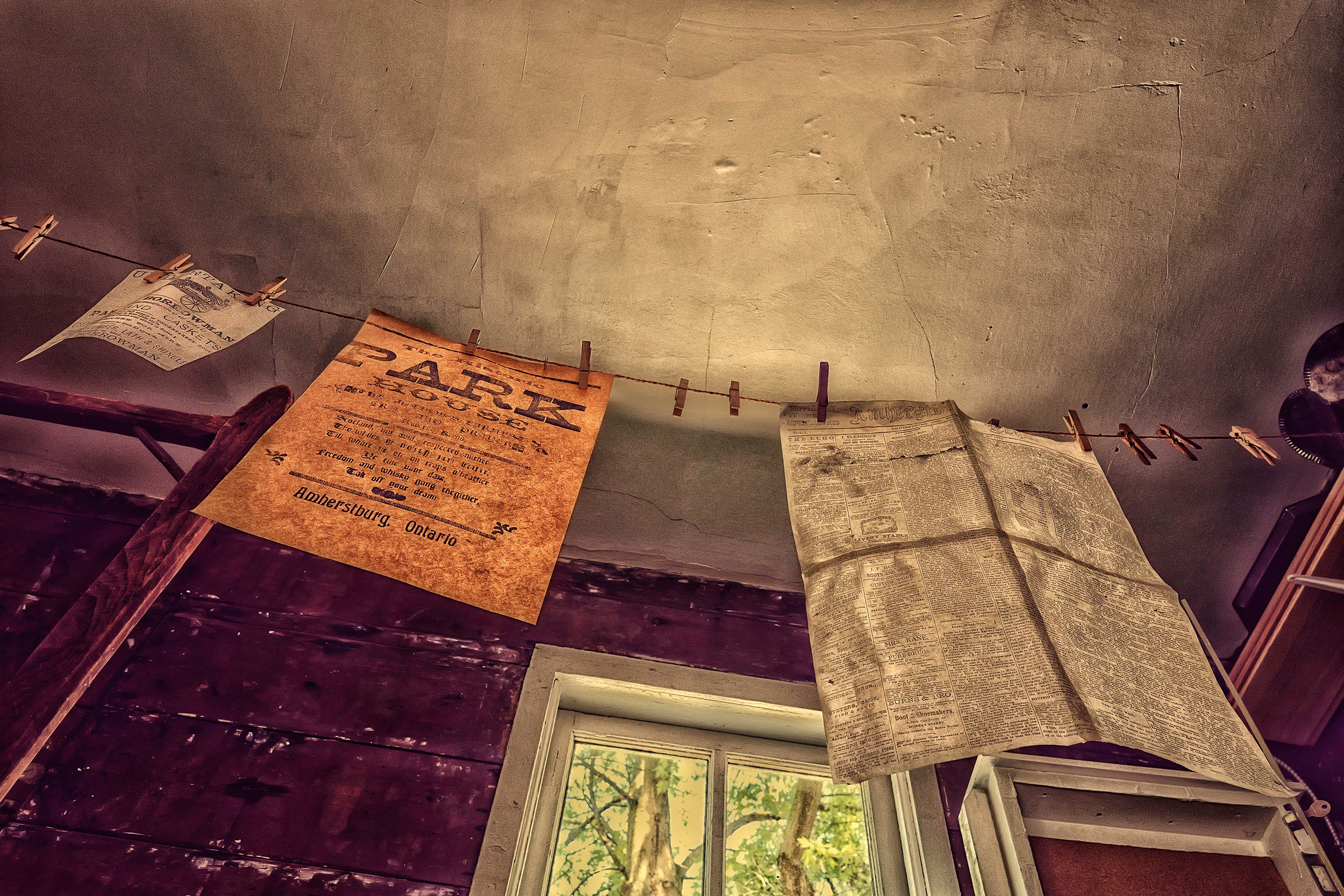
For example—
And with the sun hovering over my shoulder—as the Kodak rule dictates—I am struck by the vintage glow of the red brick 18th and 19th century buildings along Murray Street. When I turn, their mirrored image quickly blossoms in the dark windows of shops.
Vintage glow is what attracts him. Later on in the essay, he writes—
In that way, you become acquainted with the simplest gestures in the light and catch the slightest traces of colour twinkling and opening up in the shadows of any ordinary day.

Simplest gestures in the light, yes. A bit later in the essay, he writes about a library—
And when I opened the door of this one, I saw that. I felt I had come home with the morning sun softening the interior. The red and blue spines of shelved books were burnished by the slant of light from the tall windows. It held the ambience of being what the novelist W. O. Mitchell called a “sanctuary” for readers.
Amherstburg, Picture A River Town, is a love song to a small town in Ontario. There are cafes and street scenes, murals, and wonderful old homes. There are summer days as well as snow fields, street fairs, churches, historic sites, and a conservatory. This is not so much a book about Amherstburg as it is a book about what Amherstburg is like for Gervaise.
Finally, notice the subtitle for this book. “Picture a River Town” is not “pictures of a river town.” Picture, in this case, is a transitive verb. It’s something you are asked to do. And there’s a double meaning here, because while “picture” means to imagine, in this case, it is also a command to the artist: make pictures of a river town you admire.
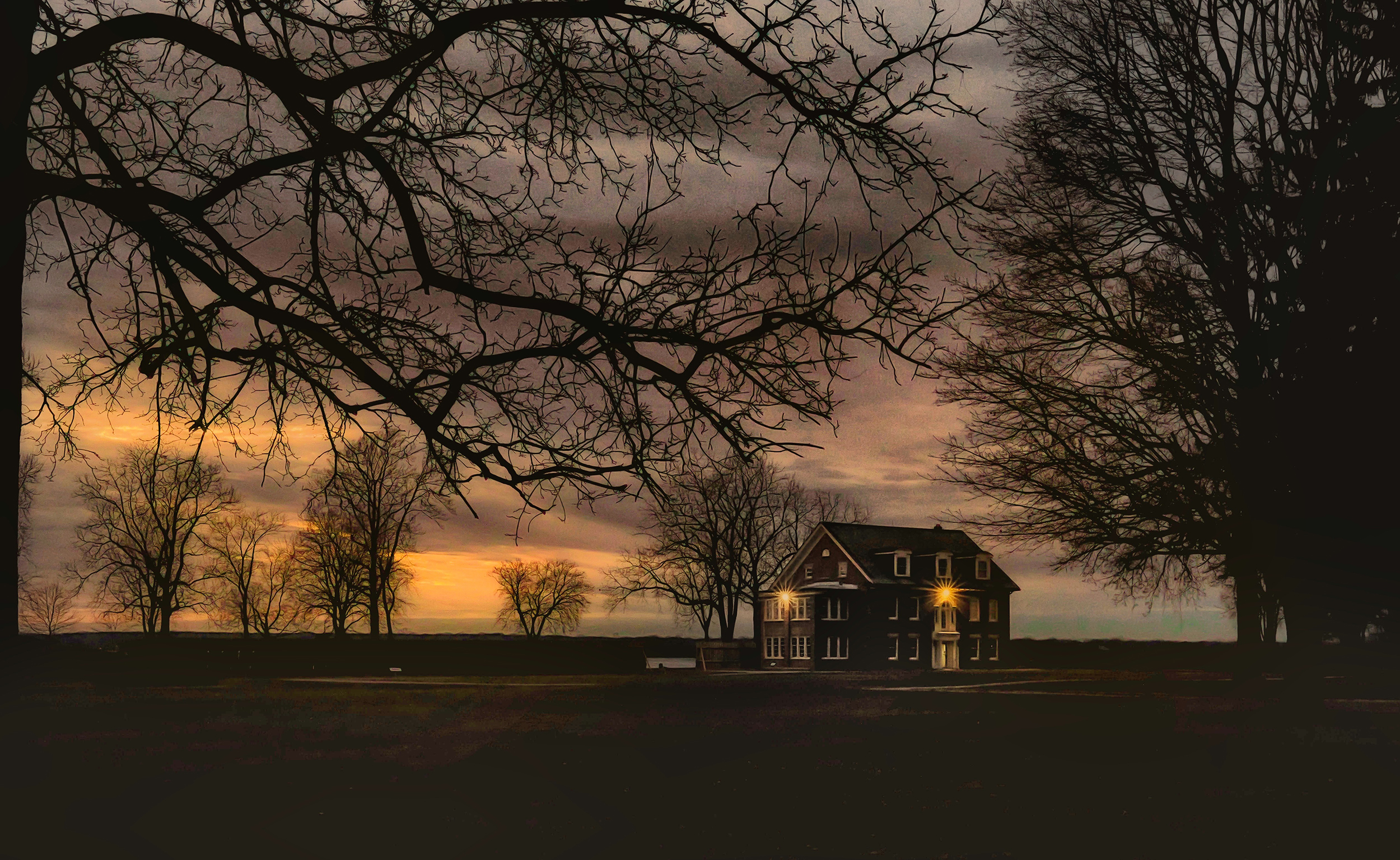
We all know that civic identity has little to do with bricks or lumber, and yet it’s the bricks and lumber that act as evidence of the humanity that shapes it. There are a few people in this book, more documentary than portraiture, but the majority of the images are images of buildings, exteriors and interiors, a table and chairs, doorways, a boat at mooring, and a staircase. Every one of them implies a narrative about small-town life.
This book allows us to picture not only Amherstburg, but the idea, hope, heart, and the very best of what we imagine a small town might be.
A note from FRAMES: Please let us know if you have an upcoming or recently published photography book.

FRAMES is a unique international photography community that combines the best of all worlds, bringing you print and digital publications, a global membership platform, access to live events, and a dedicated mobile application.
EXPAND YOUR PHOTOGRAPHIC VISION
JOIN FRAMES TODAY