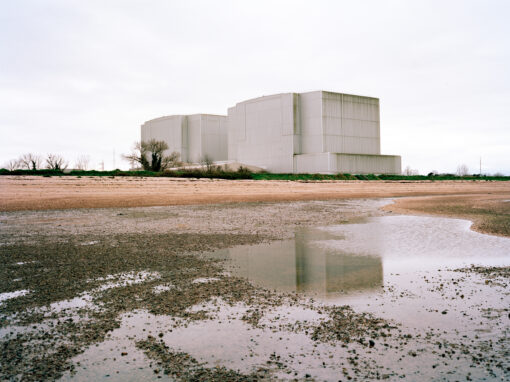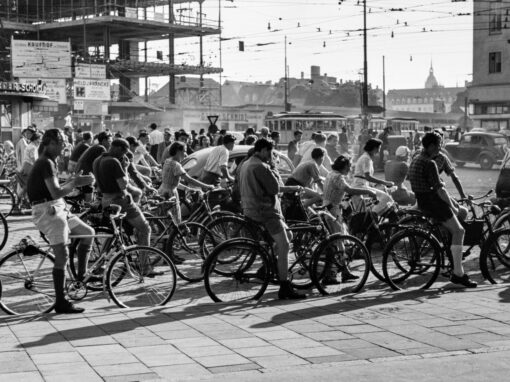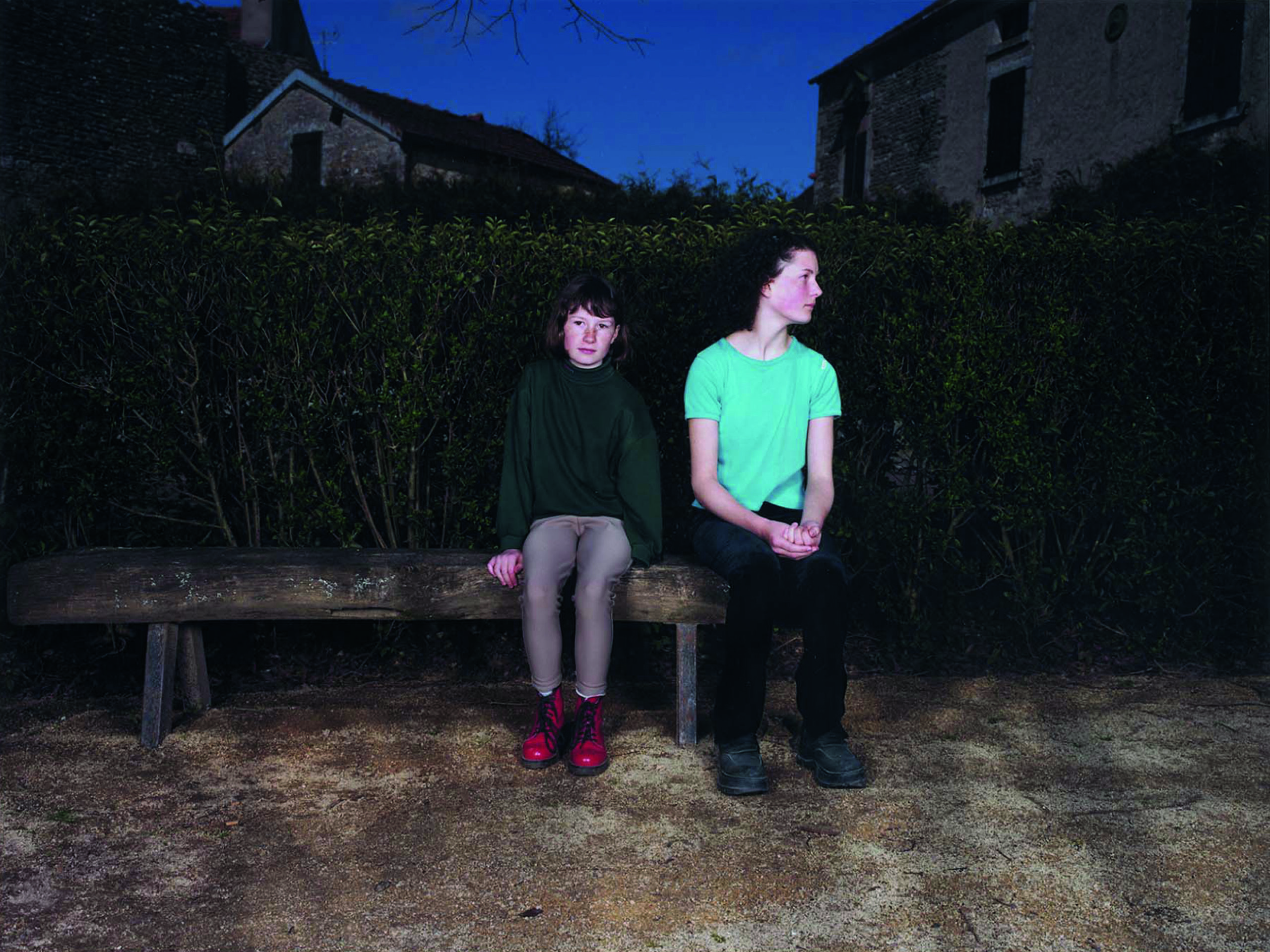
The exhibition “L’espace entre nous” at Le BAL establishes itself as a crucial visual essay, bringing the masterpieces of the Wilson Centre for Photography into dialogue with the historical tensions and urban complexities of a periphery in constant mutation.
The year 2026 will be etched into the history of visual culture as the moment France commemorates two centuries since the birth of photography. Far from being a mere academic celebration or an exercise in institutional nostalgia, this bicentenary is transforming into an extraordinary opportunity to redefine the theoretical status and social impact of the medium. Amidst this dense calendar of events, the exhibition L’espace entre nous, hosted at Le BAL, stands out for a curatorial rigor that eschews the anthological to firmly embrace the objectivity of images. Curated by Diane Dufour, the exhibition enacts a brilliantly evident critical operation: exploring the “right distance” between photographer, subject, and viewer, demonstrating how photography is, by its very nature, a space of ethical and political negotiation.
The choice of Le BAL as the stage for this exhibition appears particularly pertinent, representing a precise geopolitical positioning within the Parisian cultural map. Located in a historically peripheral, multi-ethnic neighborhood marked by deep socio-economic stratification, the exhibition space does not barricade itself behind the pristine walls of the white cube. On the contrary, the selected images establish a subterranean yet incredibly powerful dialogue with the outside world. The “outside”—understood as a complex territory—is reflected within the visual lacerations of the “inside.”
This is an iconography of vulnerability that resonates deeply with the daily life pulsing just beyond the museum doors. It can be glimpsed physically in the heavy legs and worn-out basements in Dorothea Lange’s images (Mended Stockings, 1934), or in the feet of Sergio Larrain’s street children (1950) sleeping on a grate in Santiago, Chile, where the viewer recognizes the same exhaustion, the same uprooting, and the incapacity for resistance that characterize marginal biographies in the contemporary periphery. The exhibition does not colonize the neighborhood’s gaze; instead, it offers a mirror in which historical urban precarity reflects today’s reality, transforming the act of looking into an exercise in active citizenship.
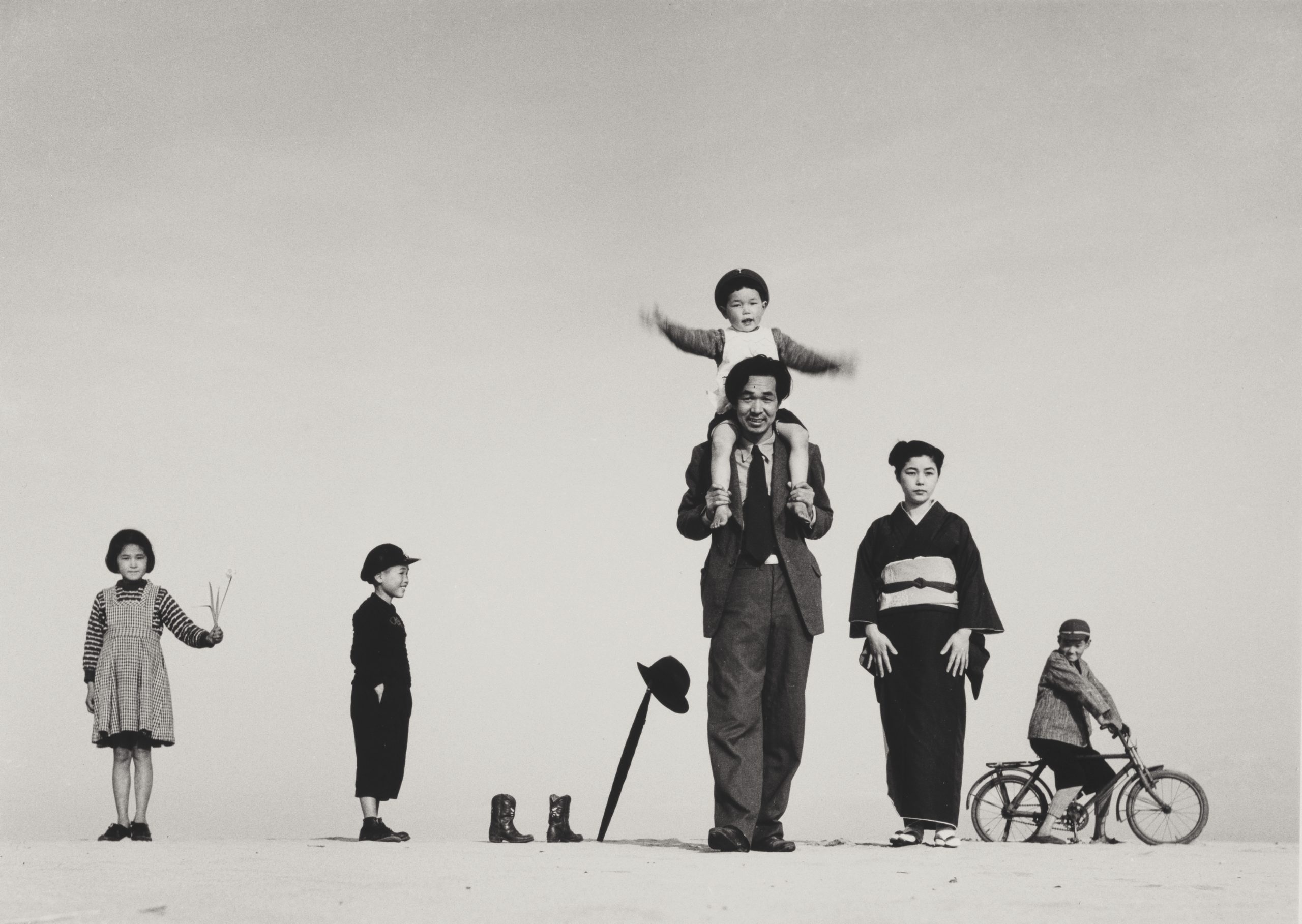
© Photo Shōji UEDA, Courtesy Wilson Centre for Photography
The conceptual and aesthetic backbone of the entire exhibition rests on an invaluable treasure trove from the Wilson Centre for Photography. All the works on display originate from this extraordinary private archive, shaped over the years by Michael Wilson’s encyclopedic and passionate vision. For a specialized journal, analyzing this collection provides an opportunity to reflect on the role of private collecting in safeguarding the medium’s historical memory. The Wilson Collection is not a mere accumulation of prized vintage prints, but an intellectual map connecting historical avant-gardes to street photography, social documentary to conceptual staging. The archive’s value lies in its capacity to preserve not only iconic images but also their variants, seemingly insignificant details, and thematic threads linking seemingly distant authors. Having access to this archive means accessing vintage prints of extraordinary material quality, where the silver embedded in the paper restores the physical truth of time. As Diane Dufour points out, the greatness of this collection lies in its founder’s ability to inhabit the space connecting him to the image, transforming the private act of collecting into a public gift for understanding the history of the medium.
The most disruptive core of the theoretical operation conducted at Le BAL lies in its bypassing of chronological order. The images on display, though not contemporary, are tremendously current, capable of capturing the social contradictions, isolation, and polarization that define our digital and hyper-capitalist era. Specifically, three visual chapters serve as a temporal short circuit.
First, the work of Chris Killip, particularly his famous image Youth on Wall, Jarrow, Tyneside (1976), taken from his masterpiece In Flagrante (1988). The boy portrayed by Killip, head shaved and forehead pressed against clenched fists, motionless against a brick wall in an England devastated by Thatcher’s economic policies, does not belong solely to Britain’s industrial past. That image is the exact metaphor for the enfermement (confinement) experienced today by youth in European peripheries—excluded from the labor market, deprived of structural welfare, and confined to an eternal present without prospects. The photograph itself, as writer Bertrand Schefer suggests in the accompanying essays, becomes a “brick.” Thus, Killip’s geometric and formal choice powerfully emerges not merely as a documentation of a brick wall, but as an act that transforms the very surface of the photographic paper into an oppressive architectural element—a brick, indeed—in which the destiny and anger of the young working-class Englishman remain sealed with no way out.
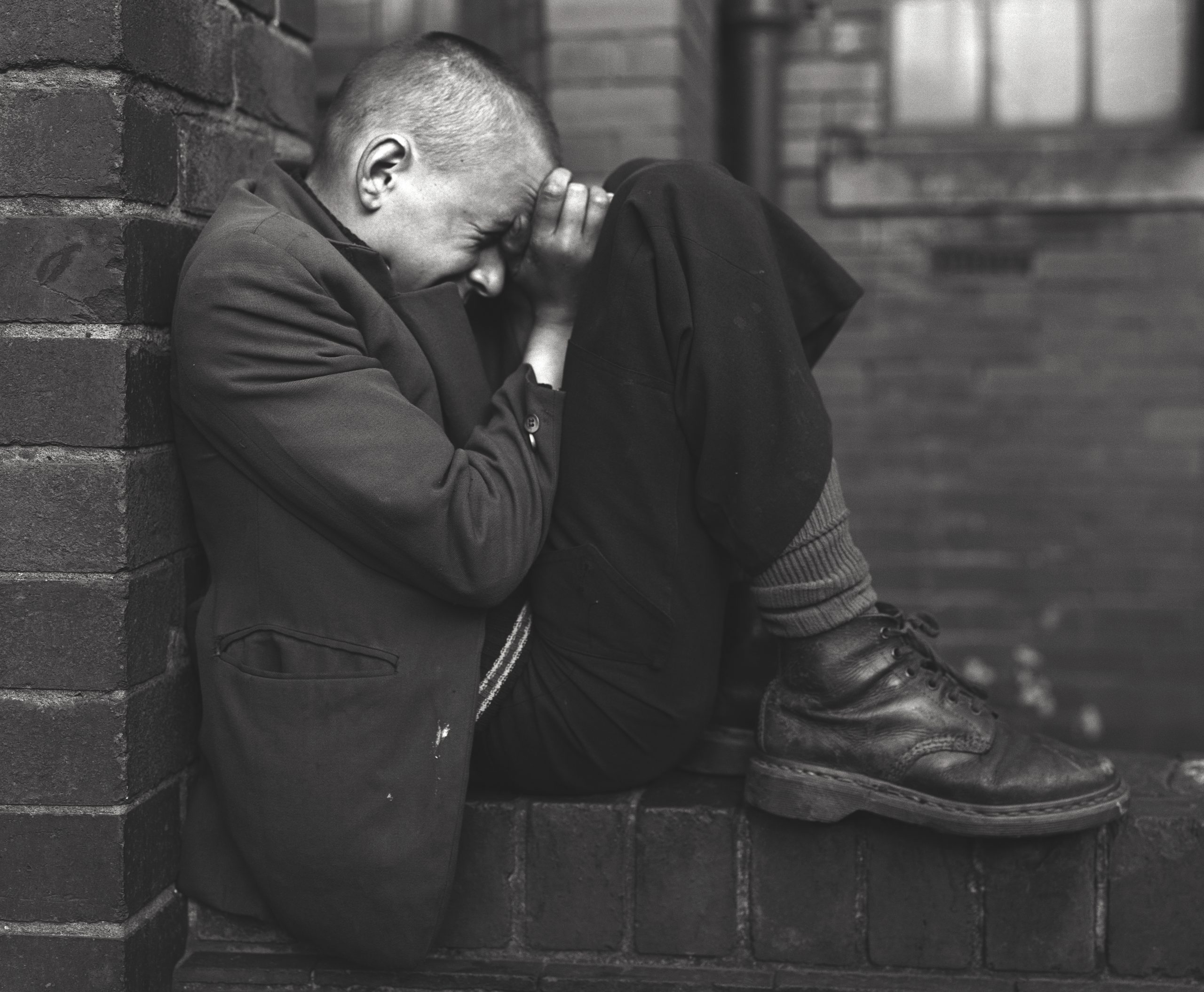
© Chris Killip Photography Trust / Magnum Photos, Courtesy Wilson Centre for Photography
Similarly, Graciela Iturbide’s series El Baño de Frida (2006), in which the photographer portrays her own suffering and wounded feet inside Frida Kahlo’s bathtub (baignoire), dialogues closely with current debates on the body, disability, and pain. In an era obsessed with performance and the reification of the perfect body on social media, Iturbide’s work forces a brutal reflection on vulnerable flesh and the necessity of a collective catharsis through empathetic identification. Finally, Rineke Dijkstra’s cold, profound gaze in her Brighton bather (1992) anticipates with pinpoint precision the identity anxiety of younger generations. Beneath the smooth and seemingly harmonious surface of the shot, the tension of the adolescent body—fingers contracted like claws, ready to dig into her arms—reveals the unease of an age and an era that does not know where to position its body within public and social space.
In celebrating two hundred years of photography, the exhibition at Le BAL reminds us that an image never explains anything on its own; rather, it is an inexhaustible invitation to deduction, speculation, and social consciousness. While contemporary algorithms reward the aesthetics of the ephemeral, the Wilson Collection asserts the resistance of content. It is from this friction that an urgent warning springs for new generations of visual creators. It is fundamental to understand that the power of an image lies neither in its “instagrammable” nature nor in palatable colors designed to capture distracted, superficial attention. Creating truthful and descriptive images means accepting the political weight of the gaze, getting dirty with the contradictions of reality, and rediscovering that “right distance” that transforms a simple visual fragment into an indestructible collective memory.
L’Espace entre nous
From the Wilson Centre for Photography Collection
Curated by: Diane Dufour with Julie Héraut
FROM JUNE 19, 2026 TO JANUARY 3, 2027
LE BAL
6 impasse de la Défense, 75018 Paris
ABOUT THE AUTHOR
Silvia Ionna is an independent Art Director. She writes about photography, art, and books for various online magazines.

FRAMES is a unique international photography community that combines the best of all worlds, bringing you print and digital publications, a global membership platform, access to live events, and a dedicated mobile application.
EXPAND YOUR PHOTOGRAPHIC VISION
JOIN FRAMES TODAY